Table of Contents
ToggleA beach patio isn’t just a place to sit, it’s where you escape the daily grind and soak in salt air and ocean views. But unlike a shaded backyard deck, coastal outdoor spaces face relentless sun, salt spray, wind, and humidity that break down standard furniture fast. The right beach patio furniture transforms your outdoor living area while standing up to Mother Nature’s toughest conditions. This guide walks you through material selection, design strategies, and maintenance routines that keep your coastal retreat looking fresh and functional for years.
Key Takeaways
- Beach patio furniture must withstand salt spray, UV exposure, and humidity, making material selection critical—teak, stainless steel, and powder-coated aluminum are top choices for durability.
- Teak and marine-grade stainless steel offer 15+ years of lifespan despite higher upfront costs, while cheaper materials may need replacement every 18 months in coastal conditions.
- Solution-dyed acrylic fabrics like Sunbrella resist fading and mildew better than standard outdoor textiles, making them essential for cushions in beach environments.
- Weekly fresh-water rinsing and monthly deep cleaning prevent salt buildup and mildew on beach patio furniture, with seasonal inspections of bolts and fasteners preventing structural failure.
- A functional coastal layout uses neutral color palettes (whites, creams, soft grays) combined with strategic shade and minimal patterns to enhance natural ocean views without visual clutter.
Why Coastal Outdoor Spaces Deserve Special Furniture Considerations
Beach environments are hostile to regular outdoor furniture. Salt-laden air corrodes metal, bleaches fabrics, and promotes mildew growth faster than inland climates. UV exposure is more intense near water due to reflection off sand and waves, which accelerates fade and material degradation.
Standard pressure-treated lumber, untreated metal, and natural cotton fabrics fail quickly in these conditions. A bench that lasts five seasons on a mountain patio might last 18 months at the beach. This reality means upfront investment in quality materials pays dividends, cheaper furniture ends up costing more when you’re replacing it every couple of years.
Building codes in coastal areas often address wind load and salt exposure, so check with your local building department before installing permanent structures or anchoring heavy pieces. High-wind zones may require bolted furniture or specific fastening methods rather than simple surface placement.
Best Materials for Beach Patio Furniture: Durability Meets Style
Weather-Resistant Fabrics and Finishes
Teak and shorea wood (also called cumaru) are the gold standards for coastal furniture. Both naturally resist rot and insects without requiring chemical treatment. They’re dense hardwoods that hold fasteners securely and won’t splinter as easily as softer woods. Teak develops a silvery patina over time, some love it, others apply teak oil annually to maintain the warm honey tone. Both woods cost 2–3× more than cedar or pressure-treated lumber, but they often last 15+ years with minimal maintenance.
Powder-coated aluminum is lightweight, won’t rust, and handles salt spray well when the finish is intact. Check that fasteners are stainless steel, regular steel bolts will corrode even if the aluminum frame doesn’t. Aluminum dents easily and can feel flimsy compared to wood, but it’s ideal if you need to move pieces frequently or live in a true high-wind zone.
Stainless steel frames resist corrosion, though grade matters. 304 stainless is decent: 316 stainless is marine-grade and worth the premium if budget allows. Both cost significantly more than aluminum but won’t degrade under salt exposure. Weld joints should be smooth and clean, rough welds trap moisture and corrode faster.
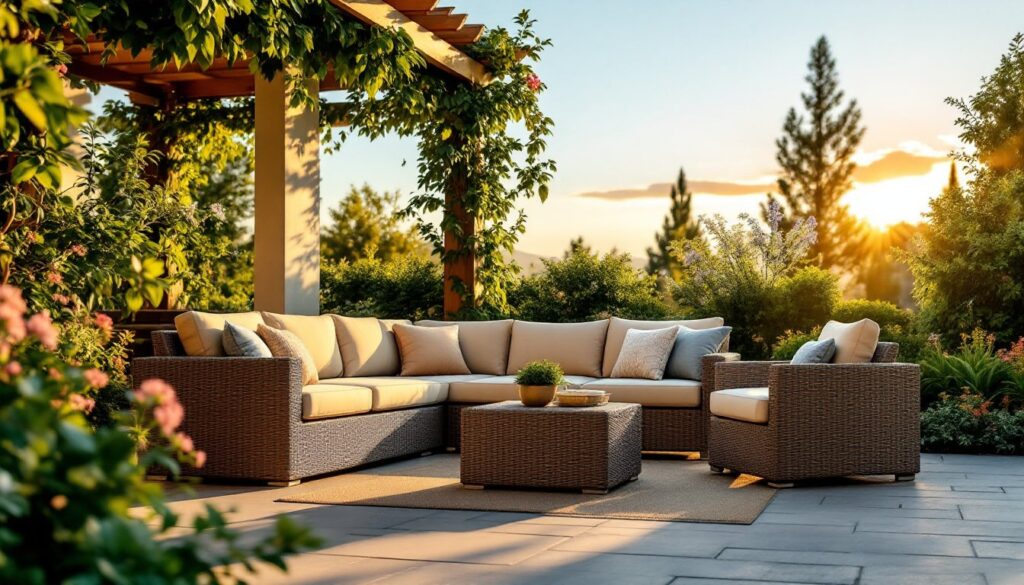
Synthetic wicker and rattan made from polypropylene or polyethylene hold up better than natural wicker in coastal climates. They won’t absorb water, resist UV fading better than natural fiber, and clean easily with a brush and fresh water. The downside: cheap synthetic wicker looks plasticky, while quality versions can mimic natural appearance convincingly. Feel the sample before buying, thickness and weave tightness indicate durability.
For cushion fabrics, Sunbrella and similar solution-dyed acrylic textiles are worth the premium. These fabrics have colorfast dyes throughout the fiber, not just on the surface, so fading is minimal. They resist mildew, dry quickly, and handle moisture exposure better than standard outdoor canvas. A stylish beach chair with weather-resistant upholstery, like those featuring foldable teak frames, combines durability with refined coastal aesthetics.
Avoid fabric that traps water. Choose covers with quick-dry properties or remove cushions after rain, sitting water promotes mildew growth even on treated fabrics. Store removable cushions in a sealed container over winter or during extended rainy periods.
Styling Your Beach Patio: Design Ideas and Layout Tips
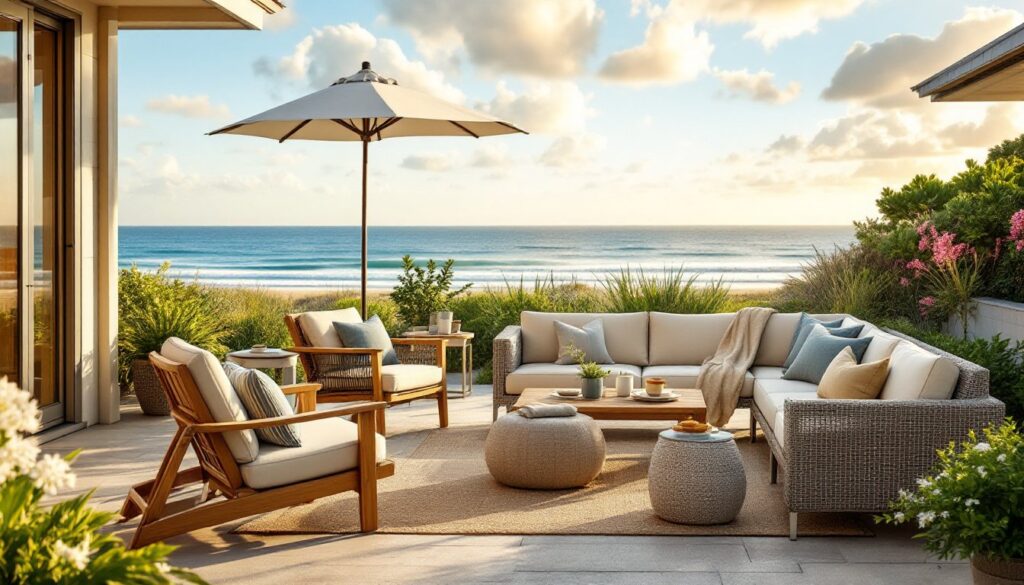
A functional beach patio layout starts with zones: a lounging area for sunbathing or reading, a dining or gathering area, and ideally a transitional space (like a side table or bar cart) for drinks and snacks. Group furniture to create conversation flows without blocking ocean or sunset views. Asymmetrical layouts feel more natural than rigid symmetry, and they’re easier to adapt as your needs change.
Color palette matters more in coastal settings because natural light is intense. Whites, creams, and soft grays reflect heat and feel fresh without fading as quickly as bold colors. Neutral tones also provide a calm backdrop that lets the landscape be the star. That said, muted blues, sage greens, and warm taupes complement coastal themes without screaming “beach cliché.”
For comprehensive design inspiration and maintenance tips, The Spruce offers home decor ideas and improvement guides that apply to outdoor living spaces. Similarly, Southern Living provides outdoor living ideas with a regional focus on coastal and waterfront design.
Use shade strategically. A pergola or shade sail reduces UV exposure and makes the space usable during peak sun hours. If permanent structure isn’t an option, high-quality umbrellas with UV-blocking fabric and weighted bases work well. In high-wind zones, secure umbrellas with tie-downs or remove them during storms.
Pattern and texture add interest without relying on color. A woven throw over a teak bench, striped outdoor pillows on aluminum loungers, or a jute rug under a seating area create depth. Keep patterns minimal, too many competing textures feel chaotic in an outdoor space where the environment is already visually complex.
Maintenance and Care for Long-Lasting Coastal Furniture
Regular rinsing is non-negotiable in coastal climates. Rinse furniture with fresh water weekly during summer, more often if you live right on the beach where salt spray is constant. Use a soft-bristle brush and mild soap for teak and hardwood, avoid pressure washers, which damage wood grain and push water into joints where it promotes rot.
For metal furniture, inspect fasteners and welds quarterly. Wipe down powder-coated aluminum and stainless steel with a damp cloth, dry thoroughly, and apply a light coating of automotive wax annually to protect the finish. If corrosion spots appear on aluminum, sand them gently with 220-grit sandpaper and touch up with clear automotive lacquer.
Fabric cushions need a dedicated routine. Brush off debris weekly, rinse with fresh water monthly, and deep-clean with diluted mild detergent twice per season. Allow cushions to air-dry completely before storage, damp cushions in an enclosed space invite mildew. Store cushions indoors during off-season or in breathable storage bags (not plastic, which traps moisture).
Teak benefits from annual oiling to maintain color, though this is optional, bare teak won’t deteriorate: it just grays. If you prefer the honey tone, apply teak oil in spring using a brush, then wipe away excess with a lint-free cloth. Two coats a year keep the finish looking fresh without buildup.
Check bolts and fasteners before the storm season starts. Tighten any loose connections, and replace corroded stainless-steel bolts immediately. A corroded fastener eventually fails, potentially destabilizing a piece or causing injury.
Conclusion
Beach patio furniture requires intentional material selection and consistent maintenance, but the investment pays off. Choose teak, quality stainless steel, or powder-coated aluminum with stainless fasteners: pair them with solution-dyed fabrics: and commit to monthly rinsing and seasonal care. A well-maintained coastal patio becomes the highlight of your home, a genuine retreat rather than a rotating inventory of replacements.