Table of Contents
ToggleWhen you invest in luxury bedroom furniture, you’re not just buying pieces, you’re creating a personal retreat that will anchor your home for years to come. A high-end bedroom set combines superior craftsmanship, premium materials, and thoughtful design to transform an ordinary bedroom into a sanctuary. Whether you’re refreshing your entire bedroom or upgrading key pieces, understanding what separates true luxury furniture from mid-range options helps you make confident purchases that deliver real value. This guide walks you through the essentials of luxury bedroom furniture sets, from what defines quality to how to design a cohesive, sophisticated space on a budget that works for you.
Key Takeaways
- True luxury bedroom furniture sets are defined by superior craftsmanship, solid hardwood construction with mortise-and-tenon joinery, and multi-stage finishing processes that ensure durability for decades rather than years.
- Invest most heavily in the bed frame, which is the focal point and most-touched piece in the room; a solid hardwood frame ($2,000–$5,000) will outlast multiple mattresses and deliver the best long-term value.
- Quality materials like kiln-dried walnut, cherry, or white oak, paired with high-density foam padding and performance fabrics, create a sophisticated bedroom sanctuary that ages beautifully and resists wear.
- Proper layout and spacing—including 18 inches between bed and dresser, nightstands at mattress height, and coordinated wood tones—transforms individual luxury pieces into a cohesive, polished design.
- A complete luxury bedroom furniture set ranges from $3,000–$15,000, but prioritizing one exceptional bed frame with matched nightstands and dresser creates a more luxurious impression than spreading the budget across mediocre pieces.
- Look for construction details like dovetail drawer joints, soft-close hardware, edge-banding on plywood, and warranty coverage (5–10 years) to ensure you’re purchasing genuine quality that improves your bedroom for 10–15 years.
What Defines Luxury Bedroom Furniture
Luxury bedroom furniture isn’t about flash or brand names, it’s about construction quality, material integrity, and design longevity. Premium pieces are built to last decades, not years, with solid wood or high-grade engineered components rather than particle board and veneers.
A luxury bed frame, for example, features hardwood construction (often kiln-dried oak, walnut, or maple) with mortise-and-tenon joinery at critical stress points. These joints create mechanical strength without relying solely on adhesive. Compare this to budget frames held together with staples and glue, which weaken over time.
Finishes matter too. Luxury pieces use multi-stage finishing processes, sanding progressively finer grits, applying stain or paint, then sealing with lacquer or polyurethane in multiple coats. This approach creates depth, durability, and a hand-finished appearance. The padding on upholstered headboards in luxury sets uses high-density foam (2.0–2.5 lbs per cubic foot) wrapped in quality fabric like linen, leather, or performance textiles that resist pilling and fading.
Dimensions and proportions also signal quality. Luxury bed frames sit at proper heights (typically 24–26 inches, platform to floor), with appropriate clearance around storage or under-bed drawers. Nightstands and dressers feature balanced proportions, neither spindly nor clunky, and hardware (drawer pulls, hinges, casters) feels substantial and moves smoothly. Poorly made furniture often has sloppy gaps, uneven doors, or hardware that binds.
Key Pieces to Look for in a High-End Bedroom Set
Premium Bed Frames and Headboards
The bed is the focal point and biggest investment in any bedroom set. Look for solid hardwood frames, at least 2 inches thick at the rails, or engineered hardwood with genuine hardwood veneers. Platform beds (solid slatted base) offer better mattress support and eliminate the need for a box spring, a practical advantage over traditional frames that require both.
Headboards in luxury sets range from upholstered to solid wood carved designs. Upholstered headboards should have a hardwood frame, high-density foam padding (at least 2.0 lbs/cubic foot), and fabric that complements your aesthetic. Solid wood headboards showcase joinery detail and grain, expect hand-carved or precisely routed profiles. Height varies (typically 48–60 inches above the mattress surface), so measure your wall and ceiling before committing.
Polishing and staining follow strict standards. Lacquer finishes are hand-rubbed and buffed between coats for a warm, living-finish appearance. Painted finishes on upholstered pieces use primer and multiple paint applications to prevent chipping.
Nightstands and Dresser Quality
Nightstands in luxury sets feature solid sides (not hollow), dovetail or mortise-and-tenon drawer joints, and full-extension drawer slides rated for smooth operation over thousands of cycles. Top surfaces should be thick enough to resist denting, typically ¾-inch solid wood or quality veneer over engineered substrate. Drawers don’t warp or sag: they glide effortlessly and close with a satisfying soft-close motion (hydraulic or magnetic dampening).
Dressers define both storage and style. Premium dressers have six to nine drawers with progressive sizing (shallow at top, deeper at bottom, matching the proportion of items stored). Interior drawer bottoms are often dovetailed hardwood plywood, not stapled particle board. Dust panels between drawers prevent debris from falling through and strengthen the overall frame.
Mirrors attached to dressers should be thick glass (¼-inch minimum) set in a solid frame, not glued to thin plywood. Expensive pieces sometimes feature beveled or framed mirrors that add a designer touch. Casters on the bottom allow for easy movement without scratching floors.
Materials and Construction That Define Luxury
The wood species you choose sets both the aesthetic and the price point. Solid hardwoods like walnut, cherry, white oak, and maple command higher prices because they’re durable and age beautifully. Walnut offers rich, chocolate-brown tones: cherry develops a deeper patina over time: white oak resists moisture well. Engineered hardwood with genuine hardwood veneers over a plywood core is more stable than solid wood (less expansion/contraction with humidity swings) and typically costs less while maintaining a premium appearance.
Upholstery fabrics deserve equal attention. Natural fibers like linen and wool age gracefully and breathe, but require more care. Leather, real full-grain or top-grain, develops character and patina but needs conditioning. Performance fabrics (polyester blends treated with stain resistance) resist spills and pets but may feel less luxurious. High-thread-count fabrics (300 threads and above for linen or cotton blends) feel softer and last longer.
Hardware finishes range from polished brass and brushed nickel to antique bronze and matte black, all should feel weighty and move smoothly. Cheap hardware is often thin, misaligned, or corrodes quickly. Luxury pieces use solid brass or stainless steel components.
Construction techniques separate premium from ordinary. Look for mortise-and-tenon joinery, which uses interlocking wood pieces rather than just nails or screws. Dovetail joints on drawers are a sign of hand-crafted care. Pieces assembled with wood glue and clamps rather than staples maintain structural integrity for decades. Edge-banding (applying solid wood trim to plywood edges) signals attention to detail, raw or thin veneer edges look cheap and wear quickly.
Finishes must be inspected closely. Run your hand over surfaces, a luxury finish feels smooth and warm, not plastic-y or rough. Open grain woods like oak should be properly filled before staining to achieve depth. Architectural Digest frequently showcases bedroom designs that highlight these material and construction nuances in high-end homes.
Designing a Cohesive Luxury Bedroom Layout
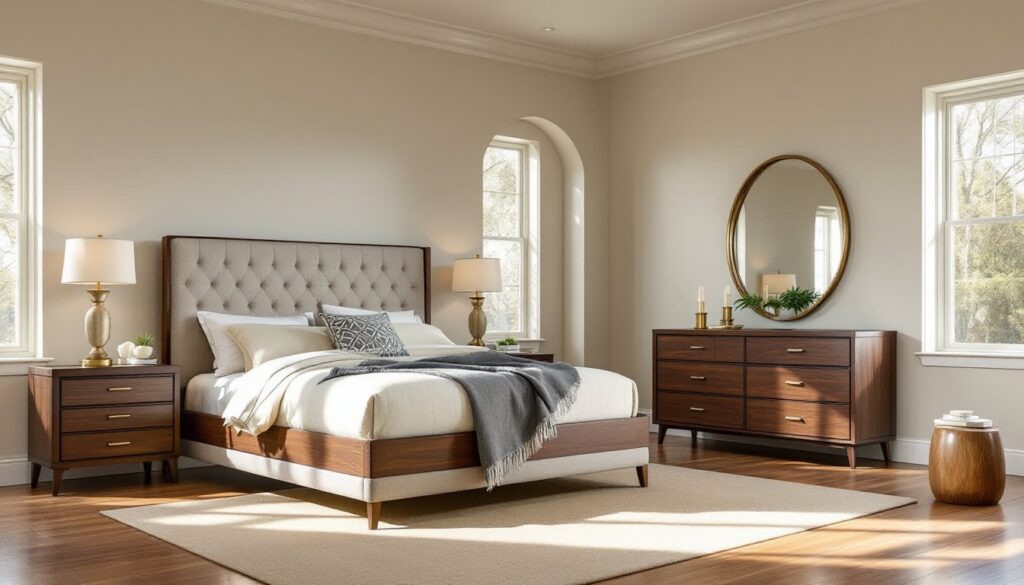
Once you’ve selected quality pieces, layout and spacing create that polished, intentional look. Start by measuring your room and accounting for door swings, windows, and closets. The bed should be the visual anchor, typically centered on the wall opposite the entry, with nightstands flanking it symmetrically.
Spacing matters. Leave at least 18 inches between the foot of the bed and a dresser or bench. Nightstands should sit at mattress height (so a 12-inch reach gets you a lamp) and ideally 6–12 inches from the bed edge. Dressers positioned opposite the bed create visual balance. If your bedroom is smaller, a low-profile dresser or a vanity set can serve double duty as both storage and a personal grooming station.
Color and finish coordination unifies the set. Matching wood tones across the bed frame, nightstands, and dresser creates a refined, intentional appearance. If you mix finishes (walnut bed with painted white nightstands), ensure the secondary color echoes elsewhere, in trim, art, or textiles. Upholstered headboards and bedding should complement, not clash. A neutral palette (creams, grays, soft taupes) reads sophisticated: bold accent colors work when restrained to pillows or a throw.
Layering textures adds depth without visual chaos. Combine smooth wood with soft upholstery, add a geometric throw or natural fiber area rug, and introduce sculptural elements like a brass lamp or wooden stool. This approach, often highlighted in Elle Decor‘s luxury bedroom spreads, makes a room feel curated and expensive without overdoing it.
Storage integration keeps the bedroom uncluttered. Dressers and nightstands with ample drawers reduce the need for visible baskets or bins. Under-bed storage on platform frames hides seasonal items. A design platform like Houzz offers thousands of bedroom layouts, browse and save images to clarify your style before buying.
Budget Considerations and Value
Luxury bedroom furniture sets range dramatically in price, from $3,000 to $15,000+ for a complete set, depending on wood species, customization, and brand. A realistic budget framework helps you prioritize.
Invest most in the bed frame. This is the piece you touch and see daily, and it sets the visual tone. A solid hardwood bed frame, $2,000–$5,000, will outlast several mattresses. Nightstands can be simpler: a quality pair might run $800–$1,500. A dresser with good construction and finish runs $1,500–$3,000 depending on size and wood species.
Quality over quantity matters. A bedroom with a premium bed frame, matched nightstands, and a good dresser looks and feels more luxurious than the same budget spread across six mediocre pieces. Start there: add supplementary pieces (benches, additional storage) over time.
Market fluctuations and region affect pricing. Hardwood lumber costs rise and fall with timber markets. Shipping costs vary by location. A designer-brand set might cost 30% more than an artisan-made set of equal quality, so research carefully.
Buying strategies matter. Direct-from-maker purchases often cost less than retail markup. Seasonal sales (January, July) offer 15–25% discounts on select items. Custom options (wood species, finish color, upholstery fabric) typically cost more but let you match your existing décor perfectly.
Warranty and returns signal confidence. Legitimate luxury furniture makers offer 5–10 year structural warranties, free delivery, and assembly. Check return policies, reputable makers stand behind their work. If a piece feels wobbly or poorly finished in person, don’t hesitate to decline.
Value isn’t just the price tag: it’s durability, aesthetics, and how long the set remains relevant to your lifestyle. A well-chosen luxury set improves your bedroom for 10–15 years: a cheap alternative might wear out in 3–5. The math favors investing in quality.