Table of Contents
ToggleA small patio doesn’t mean settling for cramped, uncomfortable seating or missing out on outdoor living. The right outdoor furniture small patio setup transforms a tight space into a functional retreat where you can relax, entertain, and actually use your property year-round. Whether you’re working with a balcony, courtyard, or postage-stamp-sized backyard, smart furniture choices and strategic layout make all the difference. This guide walks you through the best styles, materials, and tactics that turn limited square footage into an inviting outdoor room.
Key Takeaways
- Multi-functional outdoor furniture for small patios—such as storage benches, nesting tables, and corner banquettes—maximizes usable space while maintaining comfort and style.
- Choose lightweight, low-maintenance materials like aluminum, powder-coated steel, and UV-stabilized resin wicker to keep small patios visually open and easy to maintain.
- Strategic layout with angled furniture, varied heights, and defined zones makes compact patios feel larger and more inviting than pushing everything against walls.
- Secondhand pieces, off-season sales (August-September and February-March), and DIY projects can reduce costs by 30–50% while furnishing your small outdoor space.
- Regular seasonal maintenance—cleaning, rust prevention, cushion storage, and annual protective treatments—protects your outdoor furniture investment and extends lifespan in tight quarters.
Space-Saving Furniture Styles for Compact Patios
Multi-Functional Pieces That Work Harder
The most practical small patio furniture does double or triple duty. A storage bench holds cushions while serving as seating. An ottoman becomes a footrest, coffee table, and even extra seat for guests. Nesting tables stack when not in use but expand for dining or entertaining. Look for pieces with built-in storage underneath, aluminum or resin-wicker benches often hide weather-proof compartments perfect for storing tools, candles, or cushions.
Folding chairs and collapsible tables are DIY classics for a reason: they hang on a wall hook or tuck into a corner when you’re not using them. Choose sturdy metal or hardwood frames over flimsy plastic: cheap folding furniture creates a hand-me-down vibe and rarely lasts more than a season. Space Saving Furniture: Transform covers additional solutions for maximizing every inch.
Corner furniture is your secret weapon in small patios. A corner banquette (a built-in bench seat) takes up less visual real estate than separate chairs, and it anchors the space psychologically. Triangular side tables nestle into dead corners where standard rectangular tables would feel awkward. Hanging chairs or swings suspended from overhead beams reduce floor footprint while adding vertical interest, something you can’t achieve with conventional ground-level seating.
Best Materials for Small Outdoor Spaces
Material choice matters more in small areas because visual clutter multiplies fast. Lightweight aluminum and powder-coated steel frames create clean lines without the bulk of solid wood. These materials resist rust, need minimal maintenance, and feel less imposing in a tight footprint than heavy teak or cedar.
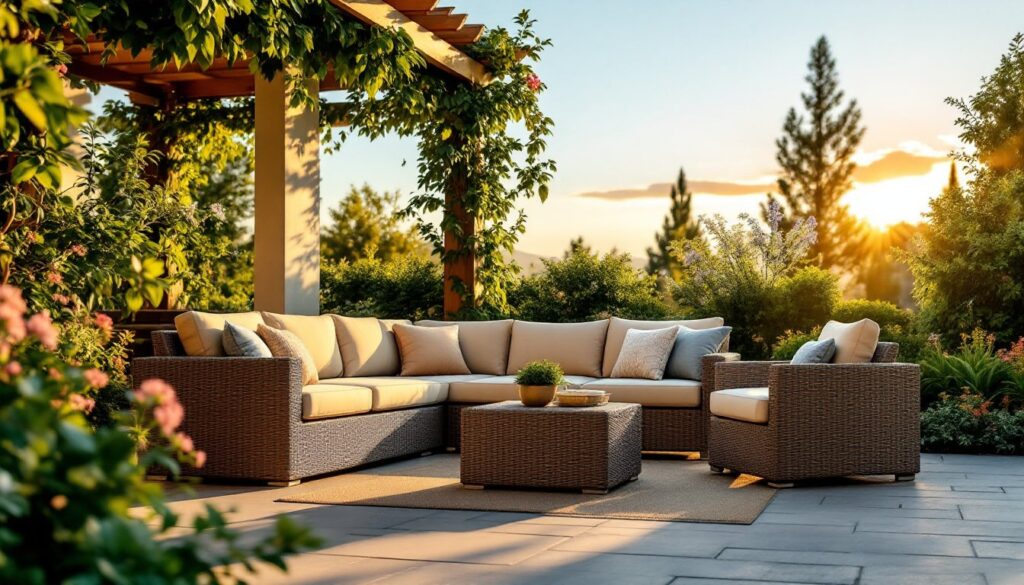
Resin wicker (synthetic rattan) checks multiple boxes: it mimics natural wicker aesthetics, withstands rain and UV exposure, and weighs significantly less than traditional wicker or wood. Brands using UV-stabilized resin resist fading over seasons. Cushions should be outdoor-grade polyester or Sunbrella fabric, real canvas absorbs moisture and mildews in humid climates.
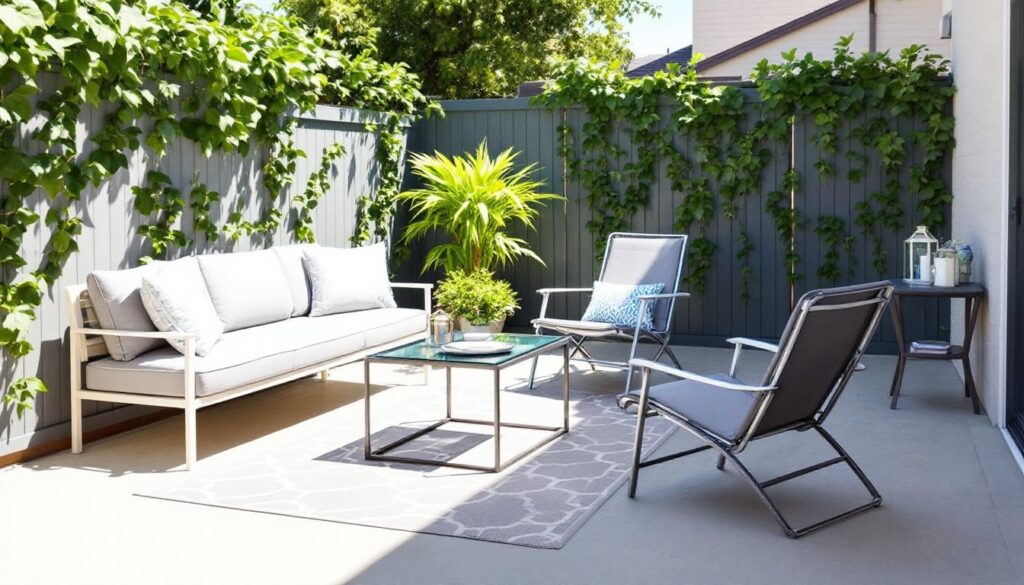
Glass or metal tabletops keep sightlines open compared to solid wood. A glass-top dining table with a slim metal frame barely registers visually, letting you see the fence or garden beyond. For small patios, visual transparency matters as much as actual space. Polished concrete or permeable pavers underfoot feel more intentional than scattered small pavers, and they’re easier to sweep and maintain when square footage is tight. According to home design trends on Apartment Therapy, minimalist materials and neutral finishes continue dominating small-space strategies in 2026.
Layout Strategies to Make Your Small Patio Feel Bigger
Layout is everything on a compact patio. Start by identifying your patio’s shape and traffic flow, does someone cut through it to reach the yard, or is it a true sitting zone? Arrange furniture to create a defined “room” without blocking sight lines.
Angle furniture slightly rather than pushing everything flush against walls. A 45-degree arrangement of chairs around a small fire pit or café table creates intimacy without feeling boxed in. Walls covered entirely with furniture visually shrink the space: instead, leave at least one wall open or use it for climbing plants (vertical greenery expands perceived space).
Vary furniture heights. If everything is the same level, seat height, table height, plant containers, the patio feels flat and cramped. A tall plant, a standing side table, and low seating create visual rhythm. Group furniture into zones rather than spreading pieces around the perimeter. One concentrated “lounge” area with seating and a table feels cozier and more functional than four chairs scattered like furniture showroom samples.
Rugs anchor outdoor spaces just as they do indoors. A durable outdoor rug (polypropylene or solution-dyed acrylic) defines the seating area and adds color or pattern without overwhelming the space. Keep the rug size proportional, too small and it looks accidental: too large and it dominates.
Budget-Friendly Tips for Furnishing a Compact Patio
New outdoor furniture carries sticker shock. Start with secondhand pieces from estate sales, Facebook Marketplace, or Craigslist, vintage metal chairs, solid wood benches, and cast-iron tables are often dirt-cheap and built to last. Sand and repaint a thrifted chair in an afternoon for under $30 in materials.
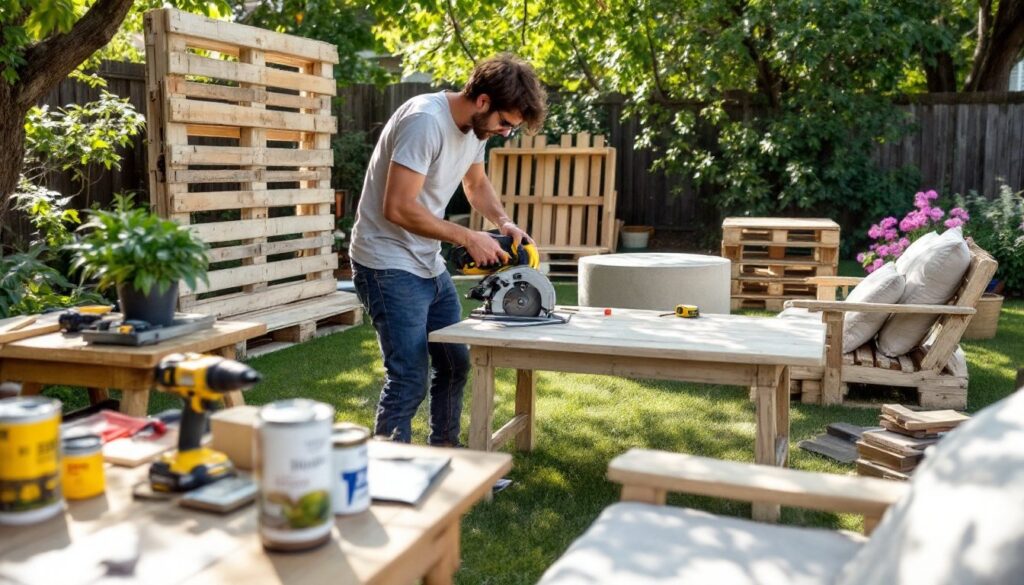
Mix high and low investments. Splurge on a quality dining table or sectional you’ll use daily: save money on accent pieces like side tables or plant stands. Painted pallet furniture feels trendy but requires regular maintenance (annual sanding and resealing). A simple concrete or composite bench, by contrast, requires almost zero upkeep.
DIY elements reduce costs dramatically. Build a basic planter box from untreated cedar, create cushions from outdoor fabric and a basic sewing machine, or assemble Sunbrella-fabric throw pillows from discounted remnants. Hunker offers DIY improvement guides covering budget patio projects from string lighting to raised planter beds.
Buy off-season. Late August and September see outdoor furniture sales as retailers clear inventory. February and March bring another wave as spring inventory arrives. Patience saves 30–50% on retail pricing. Invest in a weatherproof cover ($40–$80) to extend furniture lifespan: replacing one cushion cover beats buying an entire new set after two seasons.
Seasonal Updates and Maintenance for Small Patio Furniture
Small patios need seasonal maintenance more visibly than large yards because everything’s on display. At spring startup, clean all surfaces with mild soap and water (harsh pressure washers can damage resin finishes). Check metal frames for rust spots: sand and touch up with rust-preventative spray paint if needed.
Cushions should be stored indoors or in sealed storage boxes over winter in cold climates. Moisture trapped under cushions accelerates frame rot and fabric breakdown. Resin wicker benefits from an annual UV protectant spray (similar to car wax) to resist fading and brittleness.
Wood furniture requires more attention. Apply exterior stain or sealant every 1–2 years depending on sun exposure and rainfall. Teak and cedar develop natural silver-gray patina if left unsealed, which some prefer aesthetically: others refinish annually to maintain color. Avoid polyurethane finishes on outdoor wood, they peel and flake in UV light. Use marine-grade spar urethane or exterior paint instead.
Rotate cushions and reposition furniture seasonally to prevent color fading in high-sun areas. Store delicate pieces (wrought iron, thin-gauge metal) indoors in snow-heavy regions where freeze-thaw cycles weaken welded joints. Budget $100–$300 annually for cushion replacement and touch-up maintenance on a typical small patio setup.
Conclusion
A small patio isn’t a limitation, it’s permission to be intentional. Choosing multi-functional, weather-appropriate furniture and committing to smart layout pays off immediately in comfort and usability. Start with one quality anchor piece, add thoughtfully, and don’t fear negative space. Your small outdoor room will outperform sprawling setups that nobody actually uses.