Imagine stepping into a cozy cabin nestled in the woods, where the air smells like fresh pine and the decor whispers stories of simpler times. Rustic interiors bring that enchanting charm into homes, blending warmth with a touch of nature. It’s where reclaimed wood meets vintage finds, creating spaces that feel lived-in and loved.
If you’re tired of cookie-cutter designs that lack personality, rustic interiors might just be your new best friend. They invite creativity and character, allowing homeowners to express their unique style while embracing the beauty of imperfection. So grab your flannel shirt and let’s dive into the world of rustic charm—where every piece has a story, and every room feels like a warm hug.
Understanding Rustic Interiors
Rustic interiors evoke a sense of comfort and authenticity. These spaces prioritize natural materials and a warm, inviting atmosphere.
Definition of Rustic Interiors
Rustic interiors refer to design styles that emphasize natural elements while embracing simplicity and earthy aesthetics. Characterized by the use of raw materials, these designs often feature exposed beams, stone walls, and unfinished wood. The concept revolves around creating a warm environment that feels both lived in and genuine. Rather than striving for perfection, rustic design celebrates the beauty of imperfection, allowing for personal touches that tell unique stories about the space.
Key Characteristics of Rustic Design
Rustic design showcases specific traits that define its charm. Emphasis on natural materials, such as wood and stone, creates a strong connection to nature. Use of earthy color palettes, including browns, greens, and whites, enhances the cozy ambiance. Vintage decor elements like antique furniture and handcrafted items contribute to the lived-in feel. Open spaces with ample natural light foster an inviting environment. Lastly, imperfections in materials, such as distressed finishes, add character and authenticity to the overall aesthetic.
Popular Elements of Rustic Interiors
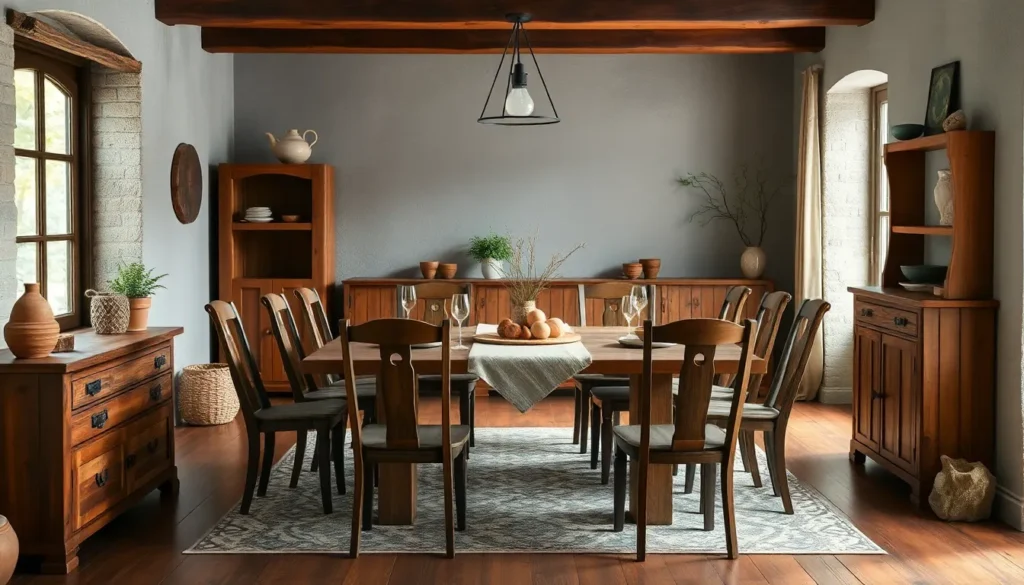
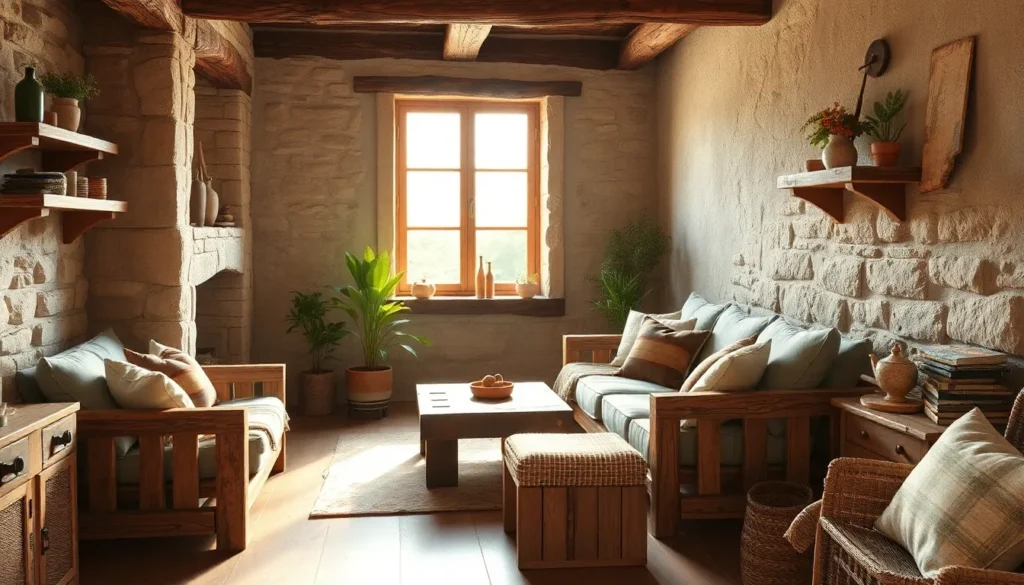
Rustic interiors feature unique elements that enhance their cozy and natural appeal. These components work together to create warm, inviting spaces.
Natural Materials
Natural materials play a fundamental role in rustic design. Wood from reclaimed sources adds character and warmth to any space. Stone accents contribute to a sense of permanence and authenticity. New materials like bamboo or cork also fit seamlessly within rustic interiors, offering sustainable options. Fabrics such as linen and cotton bring softness while maintaining a rustic feel. Combining these materials fosters a harmonious connection to nature, elevating the overall aesthetic.
Earthy Color Palettes
Earthy color palettes are essential in rustic interiors. Shades of brown, green, and beige form the foundation of this design style. Accents in muted hues like terracotta or deep red add depth and interest. Warm whites and soft grays serve as neutral backdrops, allowing natural materials to shine. Layers of color emulate the beauty of nature, creating a soothing atmosphere. Emphasizing these palettes enhances the inviting essence found in rustic spaces.
Designing Rustic Interiors
Designing rustic interiors involves thoughtful selection of elements that bring warmth and authenticity. Each aspect contributes to a charming atmosphere that feels both inviting and natural.
Furniture Selection
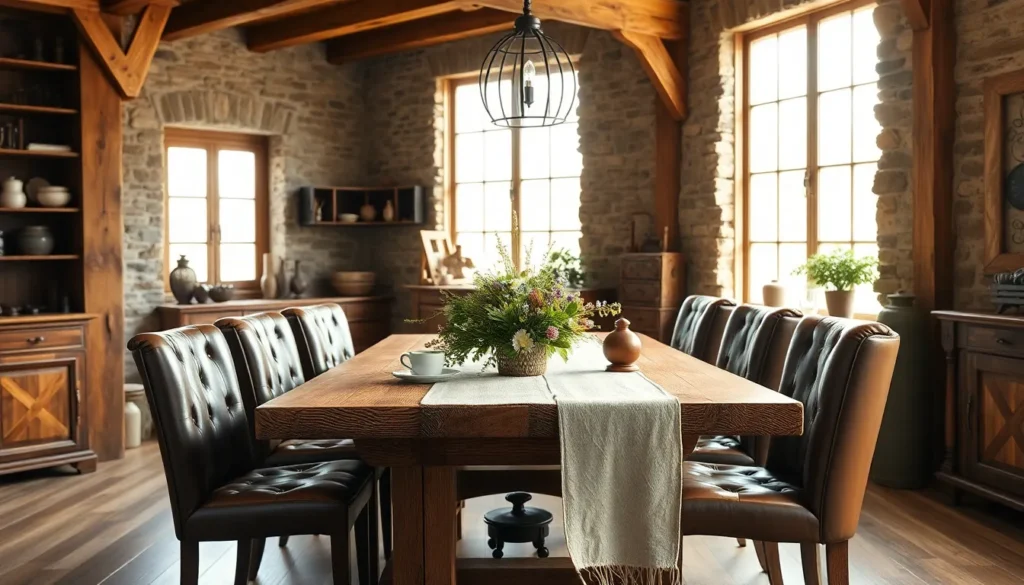
Choosing furniture is essential for rustic design. Solid wood pieces define the character of the space. A long reclaimed wood dining table suits communal gatherings effectively. Comfortable leather armchairs add a touch of rugged elegance. Opt for pieces that show imperfections like knots or distressed finishes, which enhance the lived-in feel. Mixing vintage finds with modern items creates an eclectic but cohesive look. For instance, mismatched dining chairs alongside a sturdy table can provide visual interest. Prioritize durability as well; materials like oak or reclaimed pine offer longevity and sustainability.
Decor and Accessories
Incorporating decor and accessories is vital for completing rustic interiors. Vintage items tell stories and add personality to the space. A collection of antique books or weathered pottery serves as unique focal points. Textiles play a crucial role as well; linen throws or woolen rugs introduce warmth and comfort. Use natural fibers like jute for a more organic touch. Plants also enhance the rustic vibe, bringing a sense of life indoors. Consider large potted greens or small succulents for varied textures. Thoughtfully chosen art pieces and handcrafted decorations reinforce the rustic charm while reflecting individual style.
Maintaining Rustic Interiors
Maintaining rustic interiors requires attention to detail and a commitment to preserving natural elements. Care ensures these spaces remain welcoming and authentic.
Care for Natural Materials
Natural materials need regular upkeep to retain their beauty. Wood surfaces benefit from periodic cleaning with damp cloths and natural soaps. Avoid harsh chemicals that could damage finishes. Stone surfaces require gentle scrubbing and sealing to prevent stains. Fabrics, such as linen or cotton, should be laundered according to care instructions to maintain their texture. Regular dusting helps prevent buildup, allowing the rustic charm to shine. Ensuring proper ventilation also combats moisture issues that may affect materials over time.
Seasonal Updates
Seasonal updates provide fresh energy to rustic interiors. Each season presents opportunities for new decor and textiles. Incorporating warm throws or heavier fabrics during winter emphasizes coziness. In contrast, lighter colors and airy fabrics during summer create a bright, refreshing atmosphere. Seasonal plants also enhance the rustic feel; consider adding pumpkins in fall or fresh blooms in spring. Rotating decor pieces ensures the space feels current while maintaining the inherent rustic charm. These small changes strengthen the connection between the interior and the surrounding environment, making the space feel alive and inviting.