Owning a pool is like having a personal oasis, but without proper maintenance, it can quickly turn into a swampy mess. Nobody wants to dive into a pool that looks like it’s hosting a family of frogs. A solid pool maintenance checklist is essential for keeping that sparkling blue water inviting and free of unwanted guests.
Importance Of A Pool Maintenance Checklist
A pool maintenance checklist plays a vital role in ensuring a safe and healthy swimming environment. Regular checks help identify potential issues before they escalate, minimizing costly repairs and downtime. Clean water, achieved through routine maintenance, promotes swimmer safety and prevents algae growth.
Tracking maintenance tasks contributes to water clarity and chemical balance. Following a checklist ensures that all essential tasks, such as testing water pH and chlorine levels, are completed consistently. Regular skimming removes debris, providing a more inviting pool experience.
Prioritizing maintenance on a set schedule enhances overall pool performance. Scheduled inspections allow for the monitoring of equipment like filters and pumps, ensuring they function optimally. When maintenance routines are established, pool owners can enjoy peace of mind knowing their pool remains in excellent condition.
Creating a checklist encourages accountability among pool staff or service providers. Various tasks, like brushing walls and vacuuming, require attention to detail. Documenting these efforts leads to a more systematic approach, fostering a sense of accomplishment.
Adhering to a maintenance regimen safeguards investments in pool infrastructure. Lifespan extends for pool components when regular care is applied, translating to long-term savings. Guests and family members appreciate a well-maintained pool, leading to a more enjoyable experience.
Utilizing a checklist turns pool maintenance from a chore into a straightforward process. Simplifying the management of pool tasks ensures nothing critical gets overlooked. Ultimately, a solid checklist enhances both functionality and enjoyment for all pool users.
Essential Components Of A Pool Maintenance Checklist
A comprehensive pool maintenance checklist includes several vital components. Prioritizing these areas ensures the pool remains inviting and safe for users.
Water Chemistry
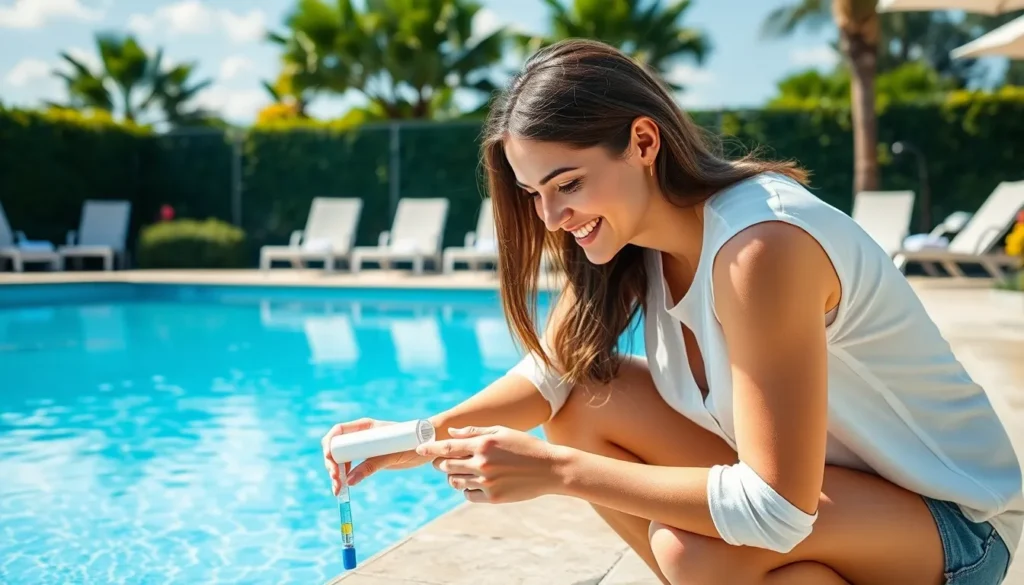
Maintaining proper water chemistry ensures swimmer safety and prevents algae growth. Testing water pH levels should occur weekly, keeping the pH between 7.2 and 7.8 for optimal sanitation. Additionally, chlorine levels require regular monitoring, ideally between 1 and 3 parts per million (ppm). Balancing alkalinity, between 80 and 120 ppm, supports pH stability. Regular testing kits or digital testers facilitate tracking these levels accurately. Adjustments, like adding pH increasers or decreasers, help maintain equilibrium, protecting pool surfaces and equipment.
Filtration System
The filtration system plays a crucial role in keeping water clear. Inspecting filters weekly for clogs or debris prevents poor circulation. Maintaining a clean filter enhances efficiency, with a backwash schedule of every 4-6 weeks depending on usage. Regularly check pump and skimmer baskets, removing any buildup of leaves or dirt. Observing water flow through the system indicates whether a system issue exists. Replacement of filter cartridges may be necessary annually or as needed, ensuring optimal filtration performance.
Cleaning Tasks
Regular cleaning tasks contribute to a pristine pool environment. Skimming the surface for leaves or insects should happen daily to prevent debris accumulation. Vacuuming the pool floor weekly removes dirt and algae buildup. Brushing walls and tiles once a week helps discourage algae growth and stains. Inspecting the pool area for snapped or damaged tiles allows for prompt repairs, improving overall aesthetics. Ordering necessary cleaning supplies, like brushes and vacuums, ensures task completion, promoting a welcoming atmosphere for all.
Seasonal Pool Maintenance Considerations
Proper seasonal maintenance plays a critical role in keeping a pool functional and inviting throughout the year. Each season requires specific attention to ensure optimal conditions for swimming.
Spring Maintenance
Spring maintenance prepares the pool for the upcoming swimming season. Begin by removing debris from the pool cover and any accumulated water. Next, inspect and clean the filtration system to ensure efficiency. It’s essential to test the water chemistry, focusing on pH and chlorine levels. Adjusting these levels early prevents algae growth. Check pool equipment, such as pumps and heaters, for functionality, identifying any repairs needed. Add a shock treatment to jumpstart the sanitizing process, promoting clear water. Routine cleaning tasks like skimming and vacuuming enhance water clarity and readiness for swimmers.
Winterization Tips
Proper winterization protects the pool during colder months. Start by thoroughly cleaning the pool, removing debris and scrubbing surfaces. Next, lower the water level below the skimmer to prevent freezing. Drain and store equipment like pumps and filters to avoid damage. Use winterizing chemicals to maintain water balance and prevent algae growth in colder temperatures. Cover the pool securely with an appropriate cover, minimizing the chance of debris accumulation. Regular inspections throughout winter can help identify potential issues early.
Common Mistakes To Avoid
Overlooking water chemistry is a common mistake. Ignoring pH and chlorine levels can lead to algae and bacteria growth. Testing these levels weekly prevents such issues.
Neglecting the filtration system also causes problems. Regular inspections ensure filters remain clean and efficient. A well-functioning filter is crucial for maintaining water clarity.
Skipping routine cleaning tasks is another frequent error. Regular skimming, vacuuming, and brushing keep debris from accumulating. Clean surfaces enhance aesthetics and swimmer safety.
Failing to properly winterize the pool is detrimental. Thorough cleaning and securing the pool cover are essential steps. Using winterizing chemicals also protects the water and equipment.
Inconsistent maintenance routines can create confusion. Establishing a clear schedule promotes systematic task completion. Consistency leads to better overall pool health.
Disregarding equipment checks leads to costly repairs. Regular monitoring of pumps and heaters extends their lifespan. Timely repairs keep the pool system functioning smoothly.
Ignoring seasonal tasks is another pitfall. Each season requires specific actions to maintain pool readiness. Spring demands thorough cleaning, while winter focuses on proper coverage and chemical use.
Overlooking documentation of maintenance activities creates accountability issues. Keeping a checklist aids memory and ensures all tasks are completed. Documenting actions helps track the overall health of the pool.
Prioritizing these avoidable mistakes enhances pool maintenance efficiency. With proper attention, pool owners can ensure clean, inviting swimming environments without unexpected complications.
Maintaining a pool requires diligence and attention to detail. A well-structured maintenance checklist is essential for ensuring water clarity and safety. By following a consistent routine, pool owners can prevent common issues that lead to costly repairs and downtime.
Regular inspections and cleaning not only enhance the pool’s appearance but also contribute to a healthier swimming environment. Seasonal tasks and proactive measures further extend the life of pool components, making it a worthwhile investment.
Ultimately, embracing a systematic approach to pool maintenance fosters enjoyment and peace of mind for everyone who uses the pool.