Owning a pool can feel like having your own slice of paradise, but it comes with its fair share of responsibilities. Just like a pet, your pool needs regular TLC to keep it sparkling and ready for cannonballs. Neglecting maintenance can turn your oasis into a murky swamp faster than you can say “dive in.”
Overview of Pool Maintenance and Repair
Pool maintenance and repair are essential for ensuring a safe and enjoyable swimming environment. Regular upkeep prevents deterioration and enhances the longevity of pool systems.
Importance of Regular Maintenance
Scheduled maintenance plays a critical role in pool health. Consistent cleaning eliminates debris and prevents algae growth. Checking pH levels ensures water is balanced, reducing skin irritation and extending the life of pool equipment. Regular inspections catch potential issues before they escalate, saving time and money on repairs. A well-maintained pool improves aesthetic appeal, providing a welcoming space for family and friends.
Common Issues in Pool Repair
Every pool owner encounters specific repair issues. Leaks are often difficult to detect, but they can significantly increase water bills. Clogged filters lead to inefficient circulation, straining pumps and causing added wear. Cracks in the structure can compromise safety and lead to more extensive damage if not addressed promptly. Failing pumps disrupt filtration, increasing the risk of water quality problems. Identifying these issues early creates opportunities for timely and cost-effective solutions.
Essential Tools for Pool Maintenance
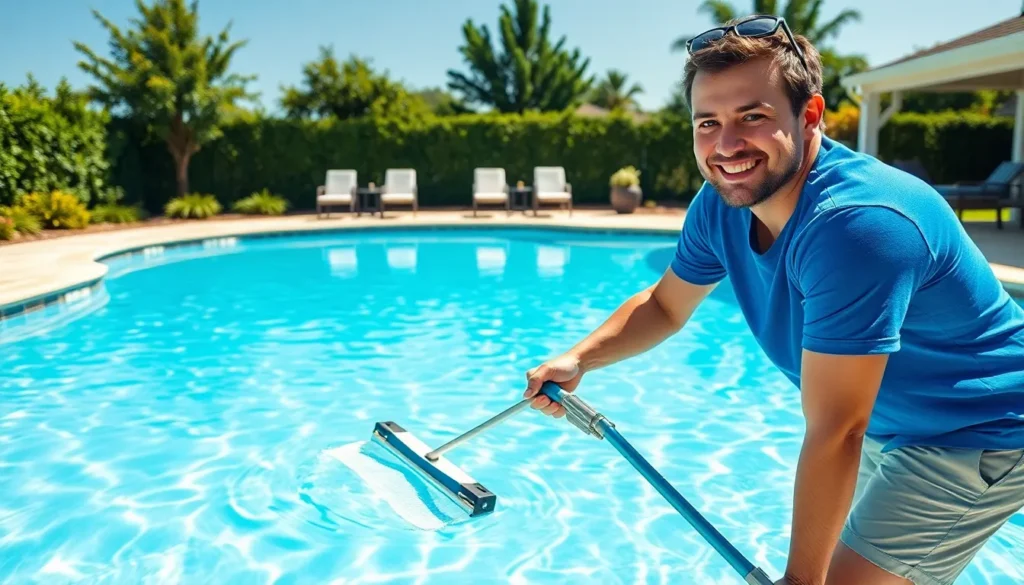
Using the right tools enhances pool maintenance and repair efficiency. Here’s a look at essential hand and power tools for pool care.
Hand Tools
Skimmers are vital for removing debris from the pool surface. A brush helps keep walls and floors clean, preventing algae buildup. Vacuum heads work effectively with hoses to clean the pool’s bottom. Testing kits allow for monitoring water chemistry, ensuring balanced pH and chlorine levels. Additionally, pliers and wrenches assist with plumbing fittings and pool equipment adjustments. Having these hand tools on hand simplifies routine maintenance tasks, ensuring longevity for pool systems.
Power Tools
Automatic pool cleaners save time by effortlessly suctioning dirt and debris. Pressure washers can clean tiles and patio areas surrounding the pool. Leaf blowers quickly clear leaves and dirt from pool decks. For repairs, a reciprocating saw cuts through materials during necessary replacements. Using a drill facilitates easy installation of hardware or equipment. Each power tool helps streamline maintenance, leading to a safer, more enjoyable swimming experience.
Routine Pool Maintenance Tasks
Routine maintenance ensures a clean and safe swimming pool environment. Consistent tasks include cleaning, skimming, and water testing.
Cleaning and Skimming
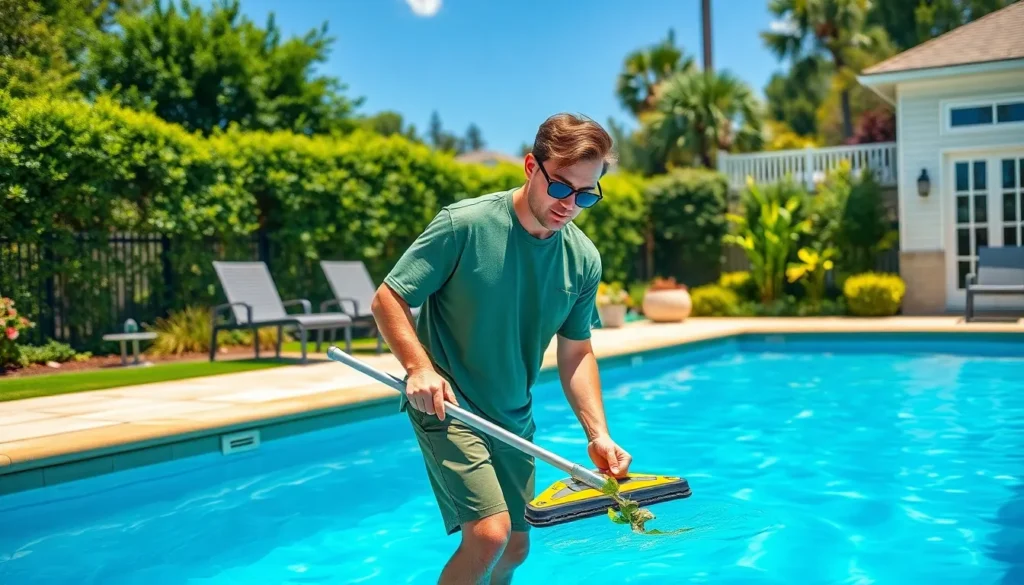
Cleaning and skimming remove debris from the water surface. Regular use of a skimmer net captures leaves, insects, and other floating contaminants. Pool brushes help maintain clean walls and floors, preventing algae growth. Cleaning the filters at least once a month promotes optimal water circulation. A vacuum cleaner, whether manual or automated, aids in eliminating dirt from the pool’s bottom. By incorporating these cleaning methods, pool owners enhance water clarity and safety while extending the lifespan of pool equipment.
Water Testing and Conditioning
Water testing and conditioning maintain proper chemical balance. Testing kits measure levels of pH, chlorine, and alkalinity. Regular tests ensure safe swimming conditions, with ideal pH levels being between 7.2 and 7.8. Adjusting chemicals as needed prevents corrosion and scaling. Conditioners help stabilize chlorine levels, enhancing disinfection efficiency. Maintaining optimal water chemistry promotes swimmer comfort and protects pool surfaces from damage. Regular monitoring keeps the pool inviting, ensuring it remains a refreshing retreat.
Common Pool Repairs
Pool ownership necessitates addressing various repair issues to maintain an enjoyable swimming environment. Focusing on common problems enhances the longevity and usability of the pool.
Leak Detection and Repair
Identifying leaks represents a crucial aspect of pool maintenance. Signs like water loss and damp areas around the pool can signal potential leaks. Methods such as the bucket test can help determine if evaporation is occurring. Once a leak is detected, repair options include patching with sealant or replacing damaged sections of the pool surface. Professional assistance may be required for substantial leaks, ensuring the repair is durable and effective.
Equipment Troubleshooting
Troubleshooting pool equipment ensures optimal functionality and safety. Common issues include pump failure, heater malfunctions, and filtration problems. Regular inspection of filters can prevent improper water circulation. Clogged filters often lead to reduced efficiency, so cleaning them routinely is essential. If the pump makes unusual noises, checking for blockages or mechanical failures can resolve performance issues. Addressing these problems promptly prevents more significant repairs and enhances overall pool enjoyment.
Professional Pool Maintenance Services
Professional pool maintenance services provide necessary expertise to maintain pools effectively. These services ensure pools remain clean, safe, and enjoyable throughout the swimming season.
When to Hire a Professional
Recognizing when to hire a professional saves time and prevents further issues. If cleaning and maintaining a pool becomes overwhelming, professional help can simplify the process. Complex repairs, such as leak detection or equipment malfunction, warrant expert intervention. Additionally, scheduling routine maintenance with a professional can keep the pool in optimal condition. When faced with persistent water clarity issues or unbalanced chemical levels, reaching out for professional assistance is advisable. Regular inspections and preventative measures from specialists can significantly enhance the pool’s longevity and enjoyment.
Cost Considerations
Understanding the costs associated with professional pool maintenance helps in budgeting effectively. Pricing varies depending on service frequency and pool size. Monthly maintenance typically ranges from $100 to $300, depending on factors like the pool’s condition and geographical location. More extensive repairs, such as resurfacing or major equipment replacements, could cost significantly more, sometimes exceeding $1,500. Homeowners should also consider additional expenses for chemicals or specialty treatments outside standard services. Balancing the costs of professional services against potential savings from avoided repairs creates a practical approach for pool owners.
Maintaining a pool is a rewarding endeavor that ensures a safe and enjoyable environment for all. Regular upkeep not only enhances the pool’s appearance but also prolongs its lifespan. By staying vigilant with maintenance tasks and addressing repairs promptly, pool owners can avoid costly issues down the line.
Utilizing the right tools and knowing when to seek professional help can make a significant difference in the overall experience. With proper care and attention, a pool can remain a refreshing sanctuary for years to come. Embracing the responsibilities of pool ownership ultimately leads to countless enjoyable moments and cherished memories.