Table of Contents
ToggleStepping onto a patio should feel like a reward, not a compromise. Patio furniture with thick cushions transforms hard chairs and benches into genuine outdoor living spaces where you’ll actually want to spend time. Whether you’re hosting a long dinner party or collapsing into a lounger with a book on a Sunday afternoon, the right cushioning makes all the difference. This guide walks you through everything you need to know about selecting, maintaining, and maximizing thick-cushion patio furniture for year-round comfort and durability.
Key Takeaways
- Patio furniture with thick cushions (4–6 inches) provides genuine comfort and support comparable to indoor furniture while reducing stress on frames and extending overall durability.
- High-density polyurethane foam paired with solution-dyed acrylic covers like Sunbrella creates the best combination for outdoor longevity, lasting 5–7 years or longer with proper care.
- Box-construction cushions with piping hold their shape significantly better than loose fills and can outlast cheaper alternatives by 3–4 years despite higher upfront costs.
- Store thick cushions indoors during winter or use weatherproof covers with air circulation to prevent moisture, mold, and mildew that accelerate foam breakdown.
- Match cushion thickness to frame quality—solid teak, ironwood, or hardwood frames can support substantial 6-inch padding, while lightweight aluminum frames work best with thinner cushions.
- Regular maintenance including monthly fluffing, 4–6 week cleaning cycles, and annual seam inspections extends cushion lifespan and prevents small repairs from becoming costly replacements.
Why Thick Cushions Transform Your Outdoor Spaces
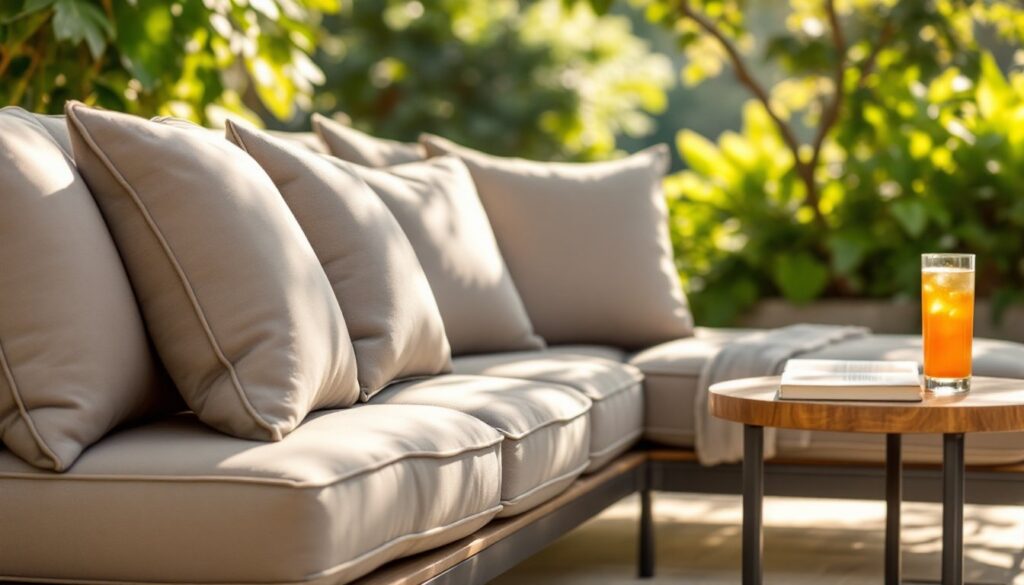
Thin, flat cushions compress after a season or two, leaving you perched on barely-padded frames. Thick cushions, typically 4 to 6 inches deep, provide genuine support and comfort comparable to indoor furniture. They also create visual impact, softening the hard geometry of frames and making outdoor seating feel inviting rather than utilitarian.
Beyond aesthetics, substantial padding extends the life of your furniture by distributing weight more evenly across the frame. This reduces stress on joints and fasteners, preventing the wobble and creaking that plague cheaper seating. Thicker cushions also absorb impact better when you sit down, protecting both you and the underlying structure from repetitive strain.
Comfort isn’t luxury, it’s practical. A well-cushioned seat draws people outside more often, increasing the actual use and enjoyment of your outdoor space. Designers at companies focused on outdoor living, such as Mitchell Gold + Bob Williams, recognize that genuine comfort drives the shift toward investing in quality outdoor seating rather than treating the patio as an afterthought.
Best Materials for Durable Cushions
The filling inside your cushion determines comfort, longevity, and how it responds to moisture and sun exposure. Understanding the options helps you pick cushions that won’t flatten or deteriorate within a few seasons.
Memory Foam vs. Traditional Filling Options
Memory foam (polyurethane-based) conforms to body shape and provides excellent support, but it can absorb and retain moisture, problematic in humid climates or wet seasons. It also breaks down faster outdoors than indoors, typically lasting 3 to 5 years before noticeable sagging occurs. Best used in covered patios or drier regions.
High-density polyurethane foam is a solid middle ground. It’s denser than standard foam (often 2.5 to 3.5 lb per cubic foot), resists compression better, and sheds water more effectively. Most commercial outdoor cushions use this material. It won’t mold as easily as memory foam and holds its shape for 5 to 7 years with proper care.
Fiber-filled (polyester batting or down alternative) cushions feel soft initially but compress predictably. They’re lighter and easier to move, but they require seasonal fluffing and may need restuffing after a few years. Common in casual, budget-friendly outdoor sets.
Polyfill blends combine polyester with small amounts of memory foam or latex. They balance comfort and durability reasonably well. Check the cover material: solution-dyed acrylic (like Sunbrella) repels water and resists fading far better than untreated fabric or cotton blends. A good outdoor cushion pairs dense foam with a weather-resistant cover, this combination extends cushion life to 8+ years.
Styles and Designs That Maximize Comfort
Beyond the filling, the shape and construction of your cushion affect how comfortable it truly is. Seat cushions (4 to 6 inches) work best for dining chairs or standalone benches. They provide enough padding for extended sitting without overwhelming the frame. Back cushions (2 to 3 inches, often tapered) support your lumbar region without pushing you off-balance.
For loungers and deep seating, look for chaise or lounger cushions (5 to 8 inches thick, contoured). These are thicker because you’re distributing weight over a longer surface and reclining, which increases pressure on specific areas. Cushions with piping (finished edges with contrasting or matching trim) last longer because the thread-bound edge resists unraveling when fabric flexes.
Box cushions, where foam is wrapped in fabric and sewn into a structural shape, hold their form better than loose fills. They’re pricier but worth it if durability is your priority. Piped, box-construction cushions in quality outdoor fabrics can outlast cheaper alternatives by 3 to 4 years.
Color and pattern matter for usability too. Darker fabrics show dust and mildew more readily, while lighter colors fade faster in direct UV. Mid-tone, solution-dyed fabrics (grays, taupes, earth tones) are forgiving and fade slowly. Check that cushion covers are removable and machine-washable, life happens, and easy cleaning extends the lifespan of both fabric and foam.
Maintenance Tips to Extend Cushion Lifespan
Thick cushions represent a real investment, so treating them properly pays dividends. Store cushions indoors over winter or in a waterproof storage box during the off-season. Moisture trapped inside foam promotes mold and mildew, which accelerate breakdown. If your cushions must stay outside year-round, use a weatherproof cover or tarp, ensuring air circulation to avoid trapping humidity.
Clean cushions every 4 to 6 weeks during heavy-use seasons. Hose them down gently or wipe with a soft brush and mild soap solution. For stubborn stains, use a fabric cleaner designed for outdoor textiles, test it on a hidden corner first. Never use bleach on solution-dyed fabrics, as it can strip color. Allow cushions to air-dry fully (typically 4 to 6 hours in direct sun) before storing or adding new cushions to the stack.
Fluff and rotate cushions monthly if they’re in constant use. This distributes compression and prevents permanent indentations. Inspect piping and seams annually: small tears or loose stitching are easy fixes now but become expensive problems if moisture enters the foam. Many fabric shops or upholstery services can rebind edges or patch covers for under $50, extending cushion life by years. Resources like Homedit showcase modern furniture care strategies and design-forward living spaces where outdoor comfort is prioritized alongside aesthetics.
Choosing the Right Patio Furniture for Your Space
Selecting cushioned patio furniture isn’t just about comfort, it’s about fit, materials, and realistic maintenance commitment. Measure your space first. A sectional with thick cushions looks inviting but becomes a burden if it crowds your patio or blocks traffic flow. Ensure at least 18 to 24 inches of clearance around seating for comfortable movement.
Match cushion thickness to frame quality. Lightweight aluminum frames with thin gauge tubing won’t handle the weight and leverage of 6-inch cushions long-term. Solid teak, ironwork, or hardwood frames support substantial padding without flexing or stressing joints. Conversely, premium frames deserve matching cushion investment: pairing a $2,000 teak sectional with cheap, thin cushions wastes the frame’s durability potential.
Consider your climate. Humid or rainy regions benefit from high-density foam with removable, solution-dyed acrylic covers. Dry climates are more forgiving: you have more flexibility with fabric choice. Cold winters? Store cushions indoors. Year-round outdoor use? Invest in commercial-grade, UV-stabilized covers and frames.
Budget for the full package. Thick cushions often cost $300 to $1,500+ per seat depending on size and material. Factor in a weatherproof storage solution (another $100 to $300), potential reupholstering or cover replacement (every 5 to 7 years), and occasional foam replacements for long-term pieces. Platforms like Southern Living highlight cohesive outdoor living that balances investment with practicality, good design lasts when built on honest material choices.
Conclusion
Patio furniture with thick cushions isn’t an indulgence, it’s the difference between a neglected outdoor space and a genuine extension of your home. Quality cushions, proper materials, and regular maintenance turn your patio into a place you’ll actually use and enjoy for years. Invest thoughtfully, choose durable materials, and commit to basic care, and your outdoor seating will repay you with genuine comfort and longevity.