Table of Contents
ToggleAtlanta’s humid subtropical climate creates unique challenges for outdoor living. High moisture, intense summer heat, and occasional freezes mean the patio furniture you choose must handle serious weather stress. Whether you’re upgrading a tired back deck or designing a fresh entertaining space, picking the right patio furniture for Atlanta conditions, and your budget, requires more than just picking pretty pieces. This guide walks you through the styles, materials, and strategies that local homeowners are actually using to create durable, comfortable outdoor rooms.
Key Takeaways
- Atlanta’s humid subtropical climate requires patio furniture with materials that resist rust, mold, and UV fading—making weather-resistant choices essential for durability.
- Synthetic wicker, powder-coated aluminum, sealed hardwoods like teak, and solution-dyed Sunbrella fabrics are the top-performing materials for patio furniture atlanta homeowners should prioritize.
- Buy patio furniture off-season (late August-September or October-November) to save 30–50% and invest quality money in cushions and frames rather than entire sets.
- Maintenance is key to longevity: store cushions indoors during winter, rinse synthetic wicker monthly, oil hardwoods annually, and touch up paint or rust-preventive coatings on metal frames promptly.
- Mix price points by pairing affordable aluminum frames with premium weather-resistant cushions, since frames last longer and cushions are easier and cheaper to replace.
Why Atlanta’s Climate Demands Specific Patio Furniture Choices
Atlanta isn’t a low-humidity zone. Summer temperatures routinely hit 90°F with dew points that feel sticky, and that moisture accelerates rust, mold, and fabric deterioration on cheaper furniture. Winter freezes are mild by northern standards, dipping into the 30s, but they’re hard enough that untreated wood and certain metals can crack or corrode.
You also get heavy afternoon thunderstorms, especially April through July. Furniture left exposed to repeated soaking and drying cycles will warp, splinter, or shed paint. Even “outdoor” fabric on lounge chairs can develop mildew if it doesn’t dry quickly or sits in humidity. The sun’s UV intensity in Atlanta is nothing to downplay either: bright colors fade fast without UV-protective coatings.
The take-home: Atlanta patio furniture needs to shed water fast, resist rust and mold, and tolerate both heat and occasional freeze-thaw cycles. Flimsy stuff won’t last more than a season.
Top Patio Furniture Styles and Materials for Georgia Homes
Atlanta neighborhoods range from Midtown modern to suburban family homes to Historic Druid Hills, so style is personal. But material choice isn’t, it’s practical.
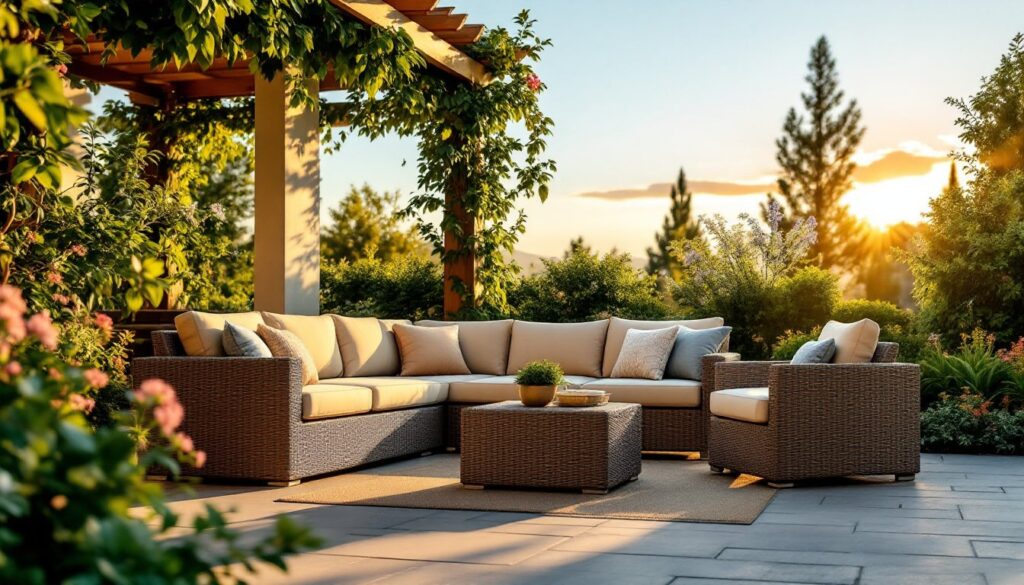
Wicker and synthetic rattan (also called all-weather wicker) are popular because they mimic the look of natural wicker but resist the moisture issues that real rattan can’t survive. Look for pieces with powder-coated aluminum or steel frames and UV-stabilized resin. These handle humidity well and won’t soften or mildew the way natural materials do.
Teak and other hardwoods remain premium choices. Teak oil naturally repels water and insects, and the wood actually gets prettier as it weathers to silver-gray. Real teak is expensive but lasts decades outdoors. Lower-grade pine or cedar demand regular sealing, doable, but higher maintenance.
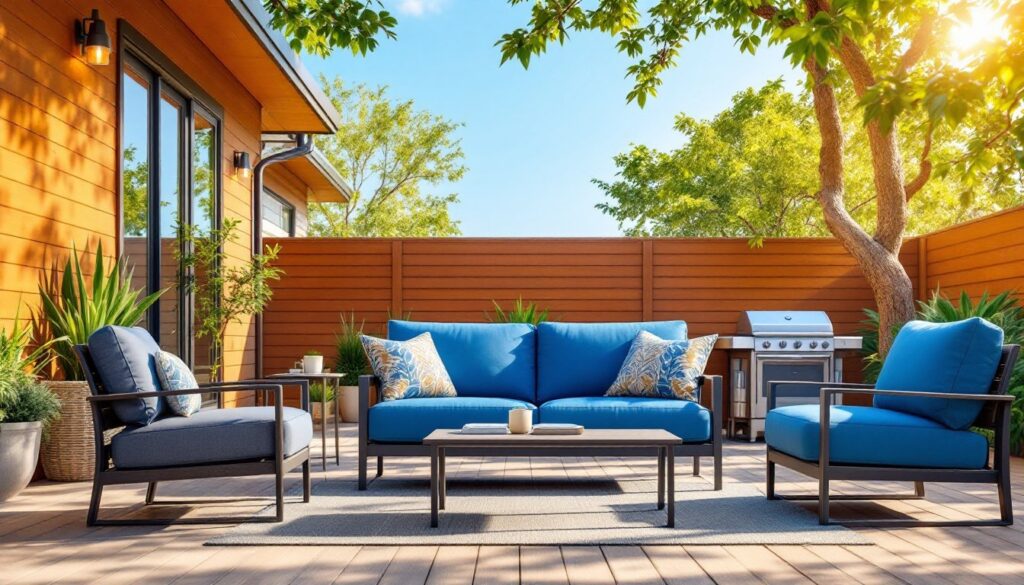
Aluminum furniture is lightweight and rust-free, though bare aluminum can pit over time. Look for powder-coated finishes for better durability. It won’t rot, won’t rust easily, and moves around your deck without a second person.
Steel is stronger than aluminum but needs a good paint or powder coat to fight rust. Once that coating chips, rust spreads fast in Atlanta’s humidity. If you go steel, keep touch-up paint handy.
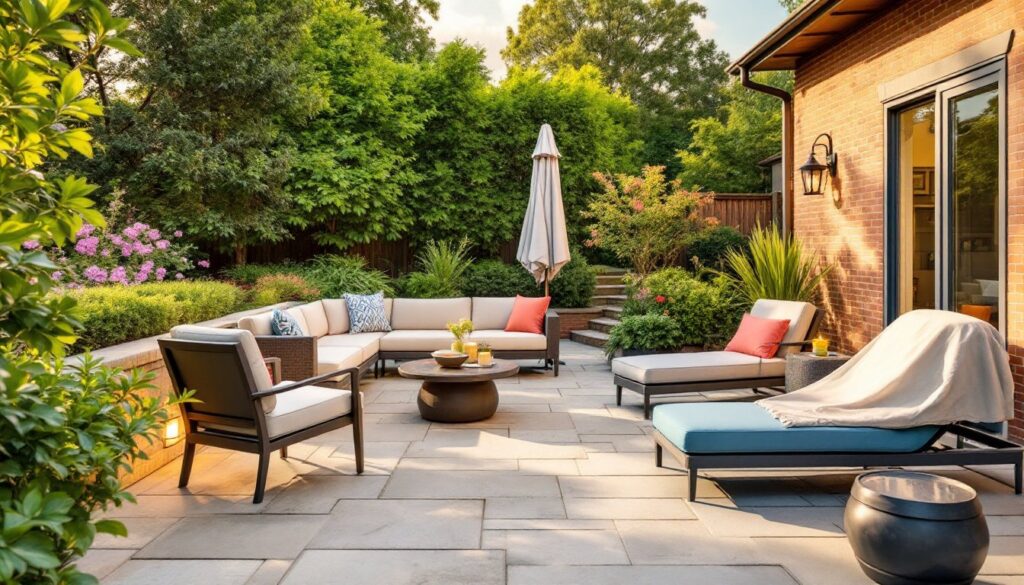
Concrete and stone (benches, side tables, planters) are indestructible in Atlanta and pair well with modern or contemporary designs. They’re heavy and won’t move, which is fine for fixed installations.
Weather-Resistant Materials That Thrive in Atlanta
Sunbrella and similar solution-dyed fabrics are your best bet for cushions and lounge slings. Solution-dyeing means the color goes all the way through the fiber, so fading is minimal even in Atlanta’s intense sun. These fabrics also dry fast, mold and mildew can’t take hold on a surface that doesn’t stay wet. Expect $200–$400 for a set of quality outdoor cushions.
Powder-coated metal (aluminum, steel, wrought iron) handles humidity far better than bare or painted finishes. The powder coating is baked on and creates a harder, more resilient barrier than spray paint. It chips less easily and the underlying metal resists corrosion better.
Sealed or naturally rot-resistant wood (teak, ipe, cumaru) survives Atlanta’s moisture. Pressure-treated lumber is cheaper but does eventually rot outdoors: it works for built-in benches or planters you’re willing to replace in 10–15 years. Naturally durable hardwoods last 20+ years with minimal fuss.
Polypropylene (plastic) resin furniture is affordable, lightweight, and tough. Cheap plastic turns brittle and fades in sun, so pay the bit extra for UV-stabilized resin. It’s not fancy, but it works and you can hose it down.
Where to Shop for Patio Furniture in Atlanta
Atlanta has a solid range of furniture options, from big-box home improvement stores to local specialty shops.
Home Depot and Lowe’s stock entry-level patio furniture year-round. Quality varies, but you’ll find serviceable wicker sets and aluminum pieces in the $300–$800 range. Return policies are easy, which matters if a cushion fails early.
Outdoor specialty retailers like Ballard Designs, Ethan Allen Outdoor, and local Atlanta outdoor furniture dealers (check Google Maps for “outdoor furniture near me”) carry mid-to-premium lines. Prices run $1,000–$5,000+ for a dining set, but you get design guidance, better materials, and usually longer warranties.
Online sources, Wayfair, Overstock, Amazon, offer convenience and selection, but you can’t inspect fabric or aluminum quality in person. Shipping heavy furniture can add $200–$400 to the bill, so factor that in. Return shipping is pricey too.
Reclaimed and antique sources like Southern Living style guides and local estate sales sometimes turn up solid teak or wrought iron pieces at decent prices. Houzz connects you with local designers and showrooms in the Atlanta area if you want professional help sourcing pieces. A 19th-century Swedish shop bench or salvaged cast iron settee can be a statement piece if you’re patient and can restore it.
Budget-Friendly Tips for Furnishing Your Atlanta Patio
You don’t need to spend $3,000 to get a solid patio setup in Atlanta.
Start with essentials. You need seating and a table, that’s it. A dining set or conversation grouping costs less than trying to furnish a space with seven different accent pieces. A good aluminum dining set with weather-resistant cushions runs $600–$1,200 and will last through years of Atlanta weather.
Buy off-season. Patio furniture goes on sale in late August and September (back-to-school overlap) and again in October-November as retailers clear inventory for the holidays. You can save 30–50% if you buy then instead of spring.
Mix price points. A $300 no-frills aluminum frame with a $150 set of quality Sunbrella cushions beats a $450 mid-grade set with cheap fabric. Cushions wear out and can be replaced: frames last longer.
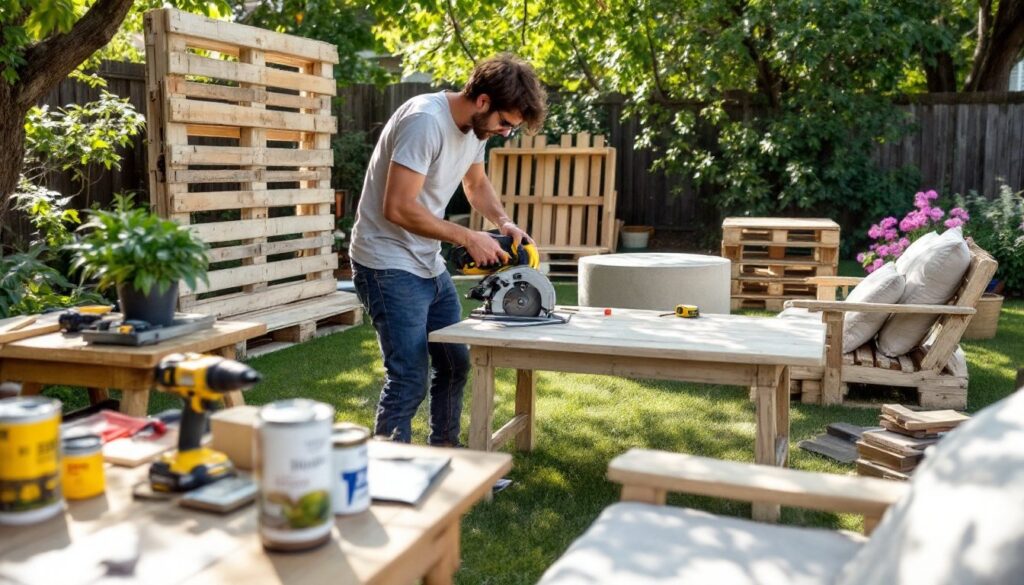
DIY cushion covers. If you find a frame you love but hate the included fabric, buying yards of Sunbrella fabric and having a local upholsterer re-cover cushions can be cheaper than buying a whole new set. Budget $200–$400 for that service.
Watch for bulk deals. Some retailers offer discounts if you buy a full set (dining + lounge + side tables) at once. It’s not always a better deal, but it’s worth asking.
Maintenance and Care for Long-Lasting Outdoor Furniture
Atlanta humidity means maintenance keeps your investment alive.
Cushions: Store cushions indoors during winter (November–March) or when heavy rain is forecast. If they get soaked, let them dry fully before storing, moisture trapped inside leads to mildew. Hose them down once a month during warm months and spot-clean stains with mild soap and water. Sunbrella fabric can take a gentle brush.
Wood: Teak and hardwoods benefit from an annual oil treatment (teak oil, Danish oil, or specialized exterior wood conditioner) in late spring, before the hottest months hit. This refreshes the look and deepens water resistance. If your wood frames are stained or painted, touch up any chips as soon as you see them: exposed wood absorbs water fast in Atlanta’s humidity.
Metal frames: Powder-coated aluminum and steel need just a rinse with the hose and occasional mild soap cleaning. If you spot rust forming on steel edges or welds, sand it lightly, wipe clean, and touch up with rust-preventive spray paint. Wrought iron benefits from a coat of rust-resistant outdoor enamel every couple of years.
Wicker: Synthetic rattan resists mold far better than natural wicker, but rinse it regularly (monthly is good) to prevent dust and pollen buildup. Spray with an anti-mildew solution if you notice any dark spots forming in humidity. Avoid pressure washers: the high-pressure stream can damage the resin weave.
Covers: A fitted furniture cover protects while pieces are not in use, especially during wet months. Good covers breathe (so moisture doesn’t get trapped underneath), cost $40–$100 per piece, and add years to your furniture’s life.
Conclusion
Atlanta’s climate rewards thoughtful patio furniture choices. Stick with weather-resistant materials, synthetic wicker, powder-coated aluminum, sealed hardwood, quality solution-dyed fabrics, and your outdoor space will thrive. Shop smart by buying off-season, mix quality pieces with budget finds, and commit to simple maintenance routines. A well-chosen patio furniture set will give you years of comfortable outdoor living without constant replacement or frustration.