Table of Contents
ToggleModular living room furniture has quietly revolutionized how homeowners approach their spaces. Gone are the days when a sectional meant committing to a bulky, immovable beast that dominated the room for a decade. Today’s modular systems let you reconfigure, expand, and adapt as your life changes, a move, a growing family, a hobby that needs space, or simply a refresh in taste. Unlike traditional furniture setups, modular pieces work as independent building blocks, giving you genuine flexibility without the waste of constantly replacing your sofa. Whether you’re working with a 400-square-foot apartment or a sprawling suburban living room, modular furniture scales to meet you where you are.
Key Takeaways
- Modular living room furniture consists of independent, self-contained pieces that connect together and can be reconfigured as your life changes, eliminating the need to replace entire sets.
- Modular furniture allows you to spread costs over time by purchasing starter sets first and adding pieces later, making it more budget-friendly than committing to a full sectional upfront.
- Quality matters when selecting modular pieces—look for kiln-dried hardwood frames, eight-way hand-tied springs, and reinforced joints to ensure durability and longevity.
- Plan your modular living room layout by measuring your space carefully, considering traffic flow, and leaving at least 18 inches for walkways to avoid furniture blocking pathways.
- Style your modular sofa with intentional layering of pillows, blankets, rugs, and accent pieces to create warmth and personality without over-decorating.
- Modular pieces hold better resale value than traditional sectionals, making them a smarter long-term investment for homeowners who may downsize or refresh their spaces.
What Is Modular Living Room Furniture?
Modular living room furniture consists of individual, self-contained pieces that connect together to form larger configurations. Think of it like LEGO blocks for grown-ups: a single armless chair, a corner unit, an ottoman, and an end seat can be arranged dozens of ways. These pieces typically share consistent leg styles, fabric types, and arm heights, ensuring they look cohesive when assembled.
Unlike a traditional sectional, which is one massive, pre-built unit, modular sofas let you buy components separately. You might start with a two-seater and an ottoman, then add a third piece six months later. Some modular systems even let you swap out individual cushion covers or reupholster sections without replacing the entire piece. The quality and construction matter here: look for kiln-dried hardwood frames, eight-way hand-tied springs (or high-density foam cores), and reinforced corner joints. Budget modular furniture sometimes uses particle board and staples, which won’t hold up to actual living.
Key Benefits of Choosing Modular Pieces for Your Home
Flexibility and Adaptability
Modular pieces grow with your life instead of against it. If you move to a smaller space, you’re not forced to sell an oversized sectional at a loss. Rearrange the modules to fit the new dimensions. Adding a nursery? Shift your seating to open up floor space. Hosting more often? Extend your setup. This adaptability also applies to damage: if one cushion gets stained beyond repair, replace just that section rather than the entire sofa.
Mixing and matching works too. Modern modular systems often coordinate with complementary pieces, a modular sectional might pair seamlessly with a matching storage ottoman or accent armchair. You’re not locked into a single brand’s ecosystem either: many modular sofas work with neutral frames that accept various pillow styles, throws, and covers from different manufacturers.
Cost-Effective Furniture Solutions
Modular furniture forces a different spending pattern, and that’s actually a strength. Instead of dropping $3,500 on a full sectional you’re unsure about, buy a two-piece starter set for $1,200 and see how it lives in your space. Add pieces as your budget allows. Many homeowners find that spreading the cost over months or years is far more manageable than a single, furniture-store hit.
When you eventually do want to refresh, modular components hold resale value better than massive sectionals. A standalone modular armchair or ottoman is easier to sell or move to another room than a sprawling sectional that few buyers want. Space-saving furniture trends show that adaptable pieces are increasingly sought after, making them smarter long-term investments.
How to Plan Your Modular Living Room Layout
Start with measurements and an honest inventory of your space. Measure the room length, width, ceiling height, and note doorways, windows, and outlets. Sketch the layout on graph paper or use a free app like RoomSketcher or MagicPlan. This prevents the expensive mistake of buying a three-piece modular set only to find it dominates half the room.
Consider traffic flow. A sofa blocking the path between the living room and kitchen isn’t flexible, it’s frustrating. Leave at least 18 inches for walkways, and ensure the seating doesn’t create an awkward L-shape that makes conversation difficult. If your room is L-shaped itself, modular pieces let you follow the walls naturally without forcing a traditional “facing-the-TV” setup.
Think about future changes. Will you downsize in five years? Choose modular pieces that work well as both a full set and in smaller groups. Do you entertain frequently? Look for configurations that open up the space or create cozy subsections. Transform your living space with modular pieces that adapt, rather than pieces that anchor you to one layout permanently.
Visit a furniture showroom before ordering online. You need to sit on it, feel the depth, and assess whether the cushion firmness suits your back. Furniture showroom tips help you test scale and comfort in person. Many modular sofas have lead times of 8–12 weeks, so ordering with confidence matters.
Styling and Decorating with Modular Furniture
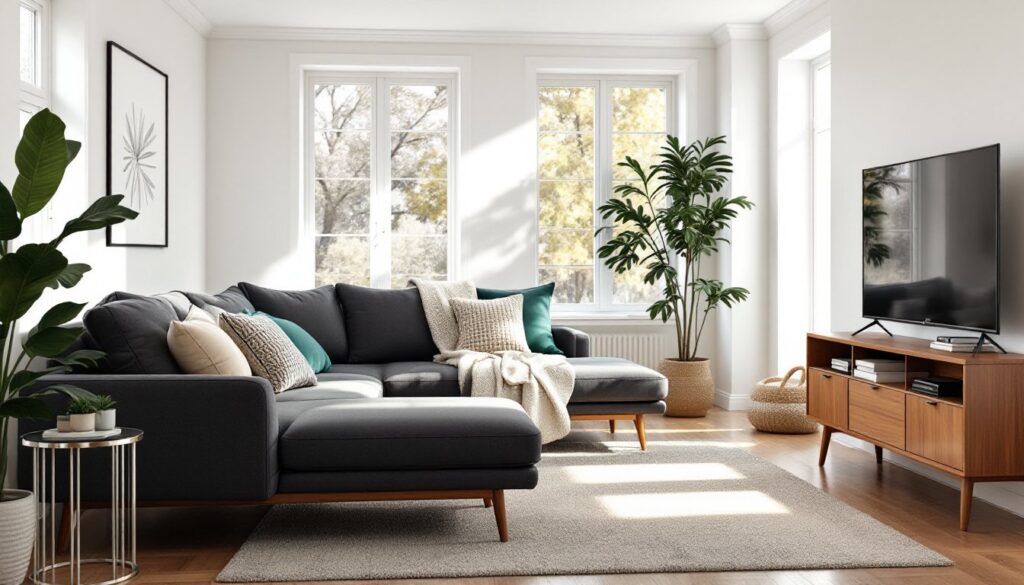
Modular furniture is the foundation, not the whole story. Layer in pillows, blankets, and accent pieces to create warmth and personality. A neutral charcoal modular sofa can feel completely different with emerald-green pillows versus soft grays and whites. Don’t shy away from mixing textures: linen, velvet, leather, and knit all work together if you’re intentional about it.
Color coordination starts with the room. If walls are white or light gray, your modular piece has freedom to be bold or subtle, your call. Darker walls anchor things visually and can make large modular sofas feel less imposing. Sites like Design Milk and Apartment Therapy showcase real rooms where modular furniture shines: scroll through to see palettes and arrangement ideas that resonate.
Add legs visually by pairing your modular sofa with a low, floating media console or a sleek side table. Modular pieces often have clean lines, so complement them with similarly contemporary or mid-century accents. Avoid over-styling: three carefully chosen throw pillows beat a dozen mismatched ones. A single large-scale piece of wall art or a statement plant can anchor the seating area without competing for visual real estate.
Storage ottomans within your modular system serve double duty, seating and concealed organization. Discount furniture options and budget retailers increasingly offer modular pieces with built-in storage, saving you from buying separate storage furniture. Layer a rug under your modular set to define the seating zone and add warmth underfoot. Read modern design inspiration at Decoist for fresh takes on contemporary layouts that highlight modular pieces.
Conclusion
Modular living room furniture isn’t a trend, it’s a practical response to how people actually live in 2026. Life changes, spaces shift, and budgets fluctuate. Choosing modular means you’re investing in flexibility, not fighting it. Measure carefully, sit on what you’re buying, and remember that the best modular setup is the one that adapts as you do. Your living room should work for you, not the other way around.