Table of Contents
ToggleMission style furniture brings honest craftsmanship and understated elegance to any living room. Unlike trendy pieces that feel dated within a season, mission style living room furniture emphasizes solid wood joinery, visible construction, and functional beauty that speaks to homeowners seeking durability and timeless appeal. Whether you’re drawn to its clean lines, sturdy construction, or the way it anchors a room with quiet sophistication, understanding what makes mission furniture tick, and how to choose well-made pieces, ensures your investment lasts decades. This guide walks through the fundamentals, history, and practical tips for selecting and styling mission pieces that work as hard as they look.
Key Takeaways
- Mission style living room furniture prioritizes solid wood joinery, visible construction, and functional beauty over trendy designs, ensuring durability and timeless appeal that lasts decades.
- Authentic mission furniture features straight lines, exposed through-mortise and tenon joints, minimal ornamentation, and quality materials like quarter-sawn oak, walnut, or cherry—characteristics that make it instantly recognizable.
- When selecting mission pieces, inspect frames for tight joints with no gaps, choose solid wood throughout rather than veneered surfaces, and verify upholstered furniture uses eight-way hand-tied springs or sinuous coils for long-lasting support.
- Mission style living room design thrives on visual restraint and cohesion: anchor the room with a quality sofa or credenza, layer complementary pieces like coffee tables and shelving, and let furniture breathe without excessive ornamentation.
- Warm lighting, neutral wall colors (soft grays, sage greens, warm ochres), and simple textiles in linen or wool complement mission’s honest aesthetic while keeping the focus on the furniture’s craftsmanship.
What Defines Mission Style Furniture
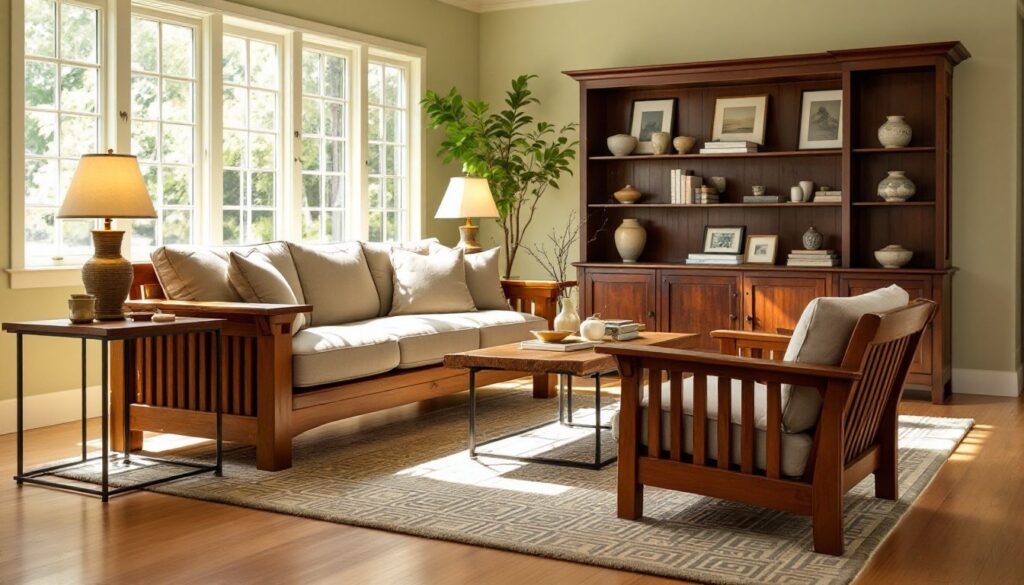
Mission style furniture is recognizable at a glance: straight lines, exposed joinery, minimal ornamentation, and honest materials, typically quarter-sawn oak, walnut, or cherry. Unlike ornate Victorian pieces, mission embraces the “form follows function” principle. You’ll see through-mortise and tenon joints left visible as design elements, not hidden. Panels are often flat or feature simple grid patterns rather than curves or carving. The legs are substantial and straight: the hardware is simple, usually copper or iron.
Craftspeople in this tradition prioritize structural integrity over decorative flair. A mission coffee table isn’t just pretty: its robust frame can handle the weight of feet, spilled drinks, and years of daily use without wobbling. The wood grain becomes the ornament. This philosophy makes mission furniture feel honest, you see exactly how it’s built, and you trust that it’ll hold up.
The History and Heritage Behind Mission Design
Mission style emerged in the late 19th and early 20th centuries as a pushback against mass-produced, poorly made furniture flooding American homes. Pioneered by craftspeople like Gustav Stickley, the Arts and Crafts movement, and its American “Mission” offshoot, celebrated the value of the maker’s hand and quality materials. Stickley’s workshops produced furniture using traditional joinery and solid wood, sold alongside philosophy: good design serves people, not profit margins.
The style takes its name from the Spanish missions in the Southwest, though the connection is more aesthetic than historical. Early mission pieces recall that rustic, handmade quality. This heritage matters because it shapes how mission furniture is made today. Reputable craftspeople still honor those principles: solid wood throughout (not veneer on particleboard), joinery that’s built to last, and transparency about how a piece is constructed. When shopping for mission furniture, knowing this history helps you spot authentic construction versus mass-market imitations that copy the look but skip the substance.
Essential Mission Style Pieces for Your Living Room
Sofas and Seating Options
A mission sofa anchors the room. Look for hardwood frames (oak, walnut, or hickory), mortise-and-tenon joinery at the corners, and eight-way hand-tied springs or high-quality sinuous coils beneath the cushions. Legs should be substantial, typically 4 to 6 inches tall, with visible joinery where the arms meet the frame. Upholstery choices matter: leather ages beautifully and suits mission’s no-fuss aesthetic, but linen or heavy cotton blends work too. Avoid thin fabric: mission furniture expects durability.
Mission armchairs and recliners follow the same principles: solid frame, visible joinery, quality springs or suspension. If you’re eyeing upholstered furniture for a mission room, stick with pieces that show their bones. Tufting is fine: fluffy cloud-like cushions feel at odds with mission’s honest aesthetic.
Tables and Storage Solutions
Mission coffee tables, side tables, and dining tables are workhorses. A typical mission coffee table measures 36 to 48 inches long by 18 to 24 inches deep, sits 16 to 18 inches high, and has a solid top (often live-edge or recessed panel) supported by a frame with visible joinery. Shelving units and bookcases follow suit: sturdy back panels, through-mortises showing where shelves meet sides, minimal embellishment.
Storage is where mission design truly shines. A mission credenza or media console typically features frame-and-panel construction (where solid wood frames hold flat panels, allowing for seasonal wood movement), doors with simple hardware, and shelving inside for practical organization. Because mission prioritizes function, these pieces naturally accommodate real living, books, remotes, throw blankets, without looking cluttered.
How to Choose Quality Mission Furniture for Durability
Start by inspecting the frame. Run your hand along joints: they should be tight with no gaps. Tap gently on the frame, it should feel solid, not hollow or springy. Pick up a chair and see if it flexes: a tiny bit of movement is normal, but excessive give signals weak construction. Check underneath: is the wood throughout solid, or are the bottom panels plywood or particleboard? Mission tradition uses solid wood because it ages beautifully and can be repaired: veneered surfaces, once damaged, are harder to fix.
Ask about joinery specifics. Authentic mission uses mortise and tenon or dowel joinery: cheaper imitations may rely on staples or pocket screws alone. Neither is inherently evil, pocket screws are actually quite strong, but visible quality joinery is a hallmark of mission design. Also ask about spring construction in upholstered pieces: eight-way hand-tied springs are the gold standard, sinuous (serpentine) coils are solid, and mesh-and-foam combinations work but don’t last as long.
Fit and finish matter. Does the wood have a natural oil or water-based finish, or is it plastic coating? Mission furniture should age: oil finishes deepen and improve over decades. When visiting a furniture showroom, take time to sit in chairs, open doors and drawers, and observe how a piece feels. Reputable retailers can speak to construction details and won’t dodge questions about materials or joinery.
Creating Cohesion: Styling Tips for a Mission Living Room
Mission furniture naturally groups well because of its visual restraint. Start with one anchor piece, typically a sofa or large credenza, then layer in complementary pieces. Pairing a mission sofa with a mission coffee table and side tables creates visual harmony: mixing mission with mid-century modern occasionally works if pieces share straight lines and minimalist spirit, but hodgepodge style dilutes the effect.
Color and texture carry weight in mission rooms. Because the furniture isn’t busy with ornamentation, walls, lighting, and textiles set the mood. Warm whites, soft grays, sage greens, and warm ochres pair beautifully with oak and cherry. Textiles, throw pillows in linen or wool, area rugs with simple patterns, add comfort without clashing. Lighting should be straightforward: simple pendant fixtures, table lamps with mission-style bases (often wood or bronze), or floor lamps with clean lines.
Incorporate books, plants, and artwork sparingly. A well-styled mission living room feels curated, not sparse. Simple framed prints, pottery, or natural elements (branches in a vase, stacked books) align with mission philosophy. Avoid overstuffing shelves or hiding the furniture beneath clutter. The beauty of mission pieces lies partly in how they’re displayed: let them breathe. If you’re sourcing diverse pieces, exploring affordable discount furniture options or visiting local showrooms can help you find statement pieces that complement existing mission items without breaking budget.
Consider lighting placement carefully. Mission rooms benefit from warm, indirect light: table lamps on side tables and soft overhead fixtures reduce harsh shadows that make solid wood look cold. If your room needs visual depth, a sectional sofa in mission-adjacent design (straight lines, solid construction) can anchor a larger space while maintaining the style’s clean aesthetic.