
Table of Contents
ToggleKing size bedroom furniture has become the default choice for modern bedrooms, and for good reason. A king bed measures 76 inches wide by 80 inches long, offering nearly 16 inches more width than a queen on each side. That extra space means genuine comfort for couples, room to spread out alone, or space for a restless sleeper to stop kicking their partner. But buying king bedroom furniture isn’t just about the bed frame itself. It’s about assembling a cohesive set of pieces, nightstands, storage, a headboard, and supporting décor, that transform your bedroom from a place to sleep into a sanctuary. This guide walks you through selecting, planning, and arranging king furniture to maximize both function and style in your space.
Key Takeaways
- King bedroom furniture provides couples with 16 inches more width per side than a queen, resulting in better sleep quality and fewer sleep disruptions.
- A cohesive king bedroom furniture setup requires proportional nightstands (26–32 inches wide), adequate storage solutions, and a coordinated headboard to balance the bed’s commanding scale.
- Measure your room carefully before purchasing, position the king bed against the longest wall with at least 30 inches of walking space on all sides to avoid a cramped feel.
- Prioritize a quality mattress ($800–$1,500) over an expensive frame, and mix furniture tiers by combining investment pieces like headboards with budget-friendly options from discount outlets.
- Shop during furniture sales in January or August, consider platform beds for cost savings and modern aesthetics, and inspect floor models or clearance items for cosmetic discounts up to 40 percent.
Why King Size Furniture Transforms Your Bedroom
The jump from a queen to a king fundamentally changes how a room feels and functions. A king bed commands space, literally and psychologically. Couples sleep better with more square footage per person: manufacturers and sleep scientists consistently note that partners wake each other less frequently when they have adequate room. That matters for long-term health and relationship satisfaction.
Beyond the bed itself, king furniture demands purposeful layout choices. Nightstands, dressers, and storage pieces need to balance the bed’s scale: a delicate end table next to a king looks undersized and awkward. This pushes you toward bedroom furniture with presence and proportion. Most homeowners find themselves investing in nightstands at least 28 to 32 inches wide, storage benches at the foot of the bed, or wall-mounted shelving to avoid cramming the floor.
A properly furnished king bedroom also sets a tone of intentionality. Rather than filling a room with mismatched pieces, a curated king setup, matching nightstands, a coordinated headboard, and thoughtful storage, signals that you’ve planned your rest space. It’s not luxury for its own sake: it’s functionality married to comfort. When you spend eight hours a night in a room, investing in the right furniture pays dividends in how you start and end each day.
Essential King Bedroom Furniture Pieces You Need
Beds, Frames, and Headboards
The king bed frame is your foundation, literally. Standard king frames accept a king mattress (76″ × 80″) and sit 12 to 18 inches off the floor, depending on the design. Platform beds sit lower and provide support across the entire base: traditional frames use a center rail and leg structure, which costs less and allows airflow under the mattress.
Headboards serve both form and function. A solid headboard prevents pillows from sliding, adds visual weight to the room, and can hide messy wall space behind the bed. Upholstered headboards (fabric or faux leather) cost $300 to $800+ but dampen noise and offer comfort if you read in bed. Wooden headboards run $200 to $600 and work with almost any décor style. Floating headboards (mounted to the wall rather than the frame) suit modern aesthetics but require wall studs and proper anchoring: they’re a design choice, not a structural necessity.
Storage Solutions and Nightstands
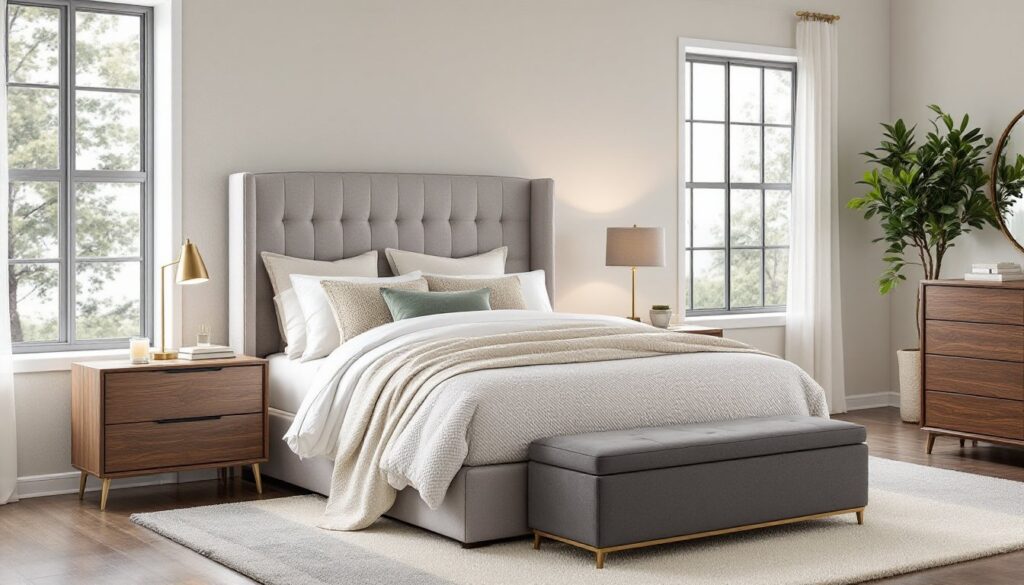
Nightstands flank the bed and hold lamps, water glasses, books, and personal items within arm’s reach. For a king bed, choose nightstands at least 26 inches wide and 24 to 28 inches tall, matching the approximate height of your mattress top plus pillows. Mismatched heights look intentional only if it’s a design statement: most bedrooms work better with two identical nightstands.
Storage is where bedroom furniture earns its keep. A dresser or chest of drawers (typically 36 to 60 inches wide) holds everyday clothing and keeps closet overflow organized. A low-profile bench at the foot of the bed (18 to 24 inches tall, 48 to 60 inches wide) adds seating and storage without blocking the view from the doorway. Wall-mounted shelving or floating nightstands free up floor space in smaller rooms but require solid wall anchoring, don’t use drywall anchors alone for heavy furniture.
Design Styles and Decor Inspiration
King bedroom furniture comes in a spectrum of styles, and your choice should reflect both your taste and your room’s architecture. Contemporary designs emphasize clean lines, neutral tones, and minimalist hardware: platform beds and simple wooden frames dominate this category. Mid-century modern furniture combines tapered legs, warm woods (walnut, teak), and functional design, think compact nightstands with a single drawer and a dresser with splayed legs.
Traditional and transitional styles layer more ornament into frames and case pieces: carved details, turned legs, and darker wood finishes. These pieces work beautifully in master bedrooms with crown molding or hardwood floors. Farmhouse and rustic styles feature reclaimed or distressed wood, wrought-iron details, and a deliberately aged patina. They pair well with soft linens and warm lighting.
Your décor inspiration, paint color, rug, bedding, lighting, should coordinate with your furniture’s undertones. A warm-white upholstered headboard suits soft gray walls and cream bedding. A dark walnut dresser and nightstands call for deeper accent colors or richer textiles. Contemporary design resources like modern design inspiration and interior design ideas offer galleries of finished rooms to test combinations before committing. When selecting bedding, Egyptian cotton sheets and jacquard weaves (like those reviewed in luxury bedding collections) pair well with upholstered frames and add tactile luxury without major furniture updates.
Measuring, Planning, and Layout Tips
Before buying a single piece, measure your bedroom carefully. You need the wall-to-wall distance (length and width), doorway width (for moving furniture in), window placement (to avoid blocking natural light), and electrical outlet locations (nightstands with lamps need power).
A king bed typically dominates one wall: most bedrooms position it against the longest wall opposite the doorway. That creates visual balance and lets you see the room when you enter. Leave at least 30 inches of walking space on either side of the bed and at the foot, tighter than that, and the room feels claustrophobic.
Nightstands should sit 24 to 36 inches from the headboard on either side (some sources vary: adjust based on your mattress overhang and personal preference). A dresser or storage bench works best opposite the bed or along an adjacent wall, where it doesn’t compete visually with the headboard.
Scale matters: In a room under 100 square feet, oversized bedroom furniture will overwhelm the space. Opt for narrower nightstands (20 to 24 inches) and a more compact dresser. In rooms over 150 square feet, smaller pieces can look lost: larger nightstands and a substantial headboard anchor the space better. Sketch your layout on paper (or use a simple room-planning app) and verify measurements before ordering. It’s far cheaper to move pencil lines than to return a dresser that doesn’t fit.
Budget-Friendly Shopping Strategies
King bedroom furniture costs vary wildly: a basic frame-and-mattress combo runs $600 to $1,200, while a high-end upholstered bed, nightstands, and dresser easily exceed $3,000. Smart shopping stretches your budget.
Prioritize the mattress. You’ll spend a third of your life on it: a quality mattress ($800 to $1,500 for a king) pays dividends in sleep quality. A simpler frame costs less but holds an excellent mattress just fine.
Mix furniture tiers. Buy a solid headboard and nightstands: source a dresser from a discount furniture outlet or online retailer. Matching pieces needn’t come from the same brand, coordinating style and wood tone matters more.
Buy off-season. Furniture sales spike in January, after the holidays, and in August, before back-to-school spending. That’s when to negotiate or find clearance deals.
Consider platform beds. They cost less than traditional frames with center rails, eliminate the need for a box spring, and suit modern design.
Check store clearance sections and floor models. Damaged packaging or minor finish imperfections often mean 20 to 40 percent discounts. Inspect carefully, cosmetic flaws are fine: structural issues are not.
Assemble vs. White Glove delivery. Some retailers offer free assembly: others charge $200 to $400. If you’re handy, assembly is straightforward and saves money. Bed frame assembly typically involves screwing the headboard and footboard to side rails, which takes an hour or two with a power drill.