
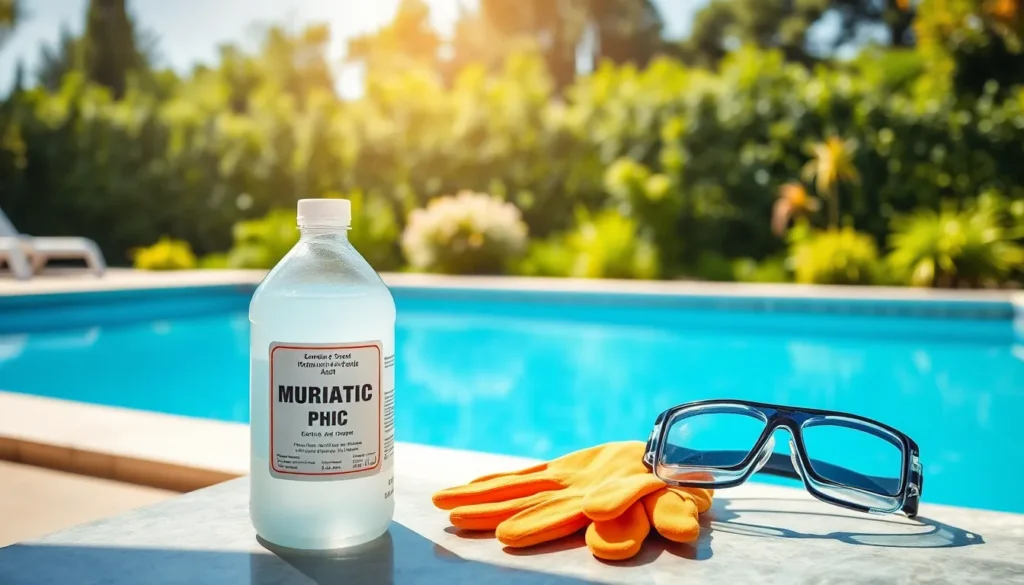
When it comes to balancing pH levels, muriatic acid is like that friend who always shows up uninvited but somehow manages to fix everything. Whether it’s a pool party gone wrong or a garden that’s more acidic than a lemon, this powerful chemical can swoop in and save the day. But does it really lower pH, or is it just a myth perpetuated by overly enthusiastic pool owners?
Overview of Muriatic Acid
Muriatic acid, also known as hydrochloric acid, serves various purposes in home maintenance and industrial applications. This strong acid is primarily used for cleaning surfaces, balancing pool chemistry, and adjusting the pH levels of water. Pool owners often utilize muriatic acid to lower high pH readings, which can lead to issues such as cloudiness and scaling.
The compound effectively dissociates in water, releasing hydrogen ions. These ions contribute to a reduction in pH when added to alkaline solutions. Users should add muriatic acid slowly and carefully to avoid sudden fluctuations in pH levels. Maintaining optimal pH helps ensure a safe and comfortable swimming environment.
Safety precautions are crucial when handling muriatic acid. It’s important to wear protective gear like gloves and goggles. Proper ventilation also plays a key role in minimizing inhalation risks. While muriatic acid provides benefits, it poses risks without appropriate safety measures.
Understanding the correct usage is essential for successful results. Regular testing of water pH encourages effective management. Adjusting the amount of acid based on pH levels fosters balance in pools and gardens alike. Homeowners often find that despite initial concerns, muriatic acid becomes a reliable ally in ongoing maintenance tasks.
Understanding pH Levels
pH levels measure the acidity or alkalinity of a solution. A scale from 0 to 14 signifies whether a solution is acidic, neutral, or alkaline. A pH under 7 indicates acidity, while a pH above 7 indicates alkalinity. This measurement plays a crucial role in various applications, including pools and gardens.
What is pH?
pH, or potential hydrogen, quantifies hydrogen ion concentration in a solution. Concentration reflects how acidic or basic the environment is. Solutions with a pH of 7 are neutral, meaning they contain equal amounts of hydrogen and hydroxide ions. Understanding this scale helps in managing the chemistry of water effectively.
Importance of pH Control
Controlling pH levels is essential for maintaining healthy environments. A pH that’s too low can harm aquatic life and lead to corrosion in plumbing systems. Conversely, high pH levels can cause scaling and cloudiness in pools. Proper pH management ensures optimal conditions for plants, aquatic life, and human activities. Regular testing and adjustments promote balance, enhancing overall performance in pools and gardens alike.
Effects of Muriatic Acid on pH
Muriatic acid significantly influences pH levels in various solutions. Its strong acidic nature allows it to effectively lower the pH, correcting imbalances in water chemistry.
Mechanism of Action
Muriatic acid dissociates in water, releasing hydrogen ions. These ions increase the acidity of the solution, which effectively drives down the pH level. The interaction with alkaline substances neutralizes excess bases, creating a more balanced environment. Pools and aquariums benefit from this process, maintaining ideal conditions for aquatic life. Lowering the pH also prevents scaling and reduces cloudiness, common issues in poorly managed water systems. Regular application ensures consistent control over pH levels, promoting overall health in aquatic ecosystems.
Comparison with Other Acids
Muriatic acid stands out among acids used for pH adjustment. Compared to acetic acid, commonly found in vinegar, muriatic acid is significantly stronger and more effective. While acetic acid offers mild pH changes, it lacks the potency required for immediate adjustments. Conversely, sulfuric acid, though more concentrated, presents safety concerns due to its corrosiveness. Muriatic acid strikes a balance between effectiveness and practicality, making it the preferred choice for pool maintenance. With its ability to rapidly alter pH levels, it serves essential functions in both residential and industrial settings.
Practical Applications
Muriatic acid serves multiple practical purposes in various settings, effectively addressing pH balance issues. Its versatility makes it a valuable tool in pool maintenance and industrial applications.
Use in Pool Maintenance
Pool maintenance relies heavily on muriatic acid for balancing pH levels. Testing shows pools with high pH can lead to cloudy water and scale build-up. Homeowners benefit from rapid adjustments, as muriatic acid effectively lowers pH, restoring clarity and comfort. A typical dosage ranges from one quart to one gallon, depending on the pool’s volume and the initial pH levels. Regular use promotes overall aquatic health, ensuring a safe environment for swimmers.
Industrial Uses
Muriatic acid plays a critical role in various industrial applications, particularly in cleaning and surface preparation. Industries employ it to remove rust, scale, and mineral deposits from metal surfaces. Solutions often contain concentrations around 15 to 30 percent, ensuring effectiveness in heavy-duty cleaning tasks. Beyond cleaning, muriatic acid adjusts pH in wastewater treatment, contributing to environmental safety. Its potency makes it essential for maintaining optimal chemical processes in industrial settings.
Safety and Handling Precautions
Handling muriatic acid requires awareness and adherence to specific safety measures. Always wear appropriate protective gear, including gloves, goggles, and face shields. These items shield against splashes and potential burns. Using a respirator is advisable in poorly ventilated areas to avoid inhaling harmful fumes.
Storing muriatic acid should occur in a cool, dry place away from incompatible substances like bleach or ammonia. Containers must remain tightly sealed to prevent leaks and evaporation. It’s crucial to label containers clearly to avoid accidental misuse.
Accidental spills demand immediate attention. Neutralize spills with baking soda before cleaning the area thoroughly with water. Ventilation plays a vital role during diluting or using the acid, so ensure windows are open and fans are running to disperse any fumes.
In emergencies, rinsing the affected area with copious amounts of water can alleviate burns or exposure effects. Seek medical attention for any injuries resulting from contact with the acid, especially if symptoms persist.
Following local regulations regarding disposal is important. Muriatic acid should never enter standard waste streams. A local hazardous waste facility can provide guidance on proper disposal methods.
Accurate measurements are essential when using muriatic acid for pH adjustments. Using a calibrated jug or dispenser helps avoid overuse, which could drastically lower pH levels, leading to further complications. Adhering to recommended dosages ensures safety and effectiveness in maintaining water chemistry.
Muriatic acid proves to be a powerful tool for managing pH levels effectively. Its ability to lower pH not only enhances the clarity of pools but also supports the health of aquatic life. By understanding its role and following safety precautions, homeowners can utilize this strong acid confidently for maintenance tasks. Regular testing and careful adjustments ensure optimal conditions in both residential and industrial settings. For anyone looking to balance pH levels, muriatic acid remains a reliable option that delivers quick results while promoting a safe and enjoyable environment.