Table of Contents
ToggleIf you’re shopping for patio furniture that’ll last through seasons of entertaining and weather, Castelle patio furniture is a name that keeps surfacing, and for good reason. These pieces are engineered for durability, blending quality craftsmanship with designs that work whether your style leans modern or traditional. Before you invest, it helps to understand what sets Castelle apart, what collections match your space, and how to keep everything looking sharp. This guide walks you through the essentials so you can make an informed choice for your outdoor living area.
Key Takeaways
- Castelle patio furniture uses cast aluminum construction with multi-step UV-protective coatings designed to last 10+ years with proper care, outlasting budget alternatives that degrade within 2-3 seasons.
- Modern and traditional collections suit different aesthetic preferences, with contemporary designs featuring clean lines and mesh seats, while classic options offer ornamental details and rolled arms that complement heritage properties.
- Regular maintenance—monthly cleaning, seasonal cushion care, and touch-up coatings every 3-6 years—preserves the finish and prevents rust on cast aluminum pieces.
- Castelle’s mid-to-premium pricing ($300-$600 per chair, $1,500-$8,000+ for complete sets) reflects long-term value when spread across a decade of use, making it a smart investment for outdoor living.
- You can build a cohesive patio setup incrementally by starting with key seating pieces and adding dining sets or sectionals later, as Castelle’s consistent design language integrates well across collections.
What Makes Castelle Patio Furniture Stand Out
Castelle has built a reputation on cast aluminum construction, a material choice that matters more than most people realize. Cast aluminum is lighter than wrought iron, resists rust naturally, and won’t splinter like wood. The manufacturing process allows for detailed, intricate designs without the weight penalty of heavier metals.
The brand’s finishing process is where durability gets locked in. Each piece undergoes a multi-step coating application: primer, topcoat, and often a UV-protective clear layer. This isn’t a quick spray-paint job: it’s industrial-grade protection meant to withstand sun, humidity, and temperature swings. When you’re comparing Castelle with budget patio sets, you’re looking at furniture designed to hold up for 10+ years with reasonable care, not look shabby after two seasons.
Castelle pieces also prioritize comfort without sacrificing structure. Cushions fit snugly, chair proportions are thought through (seat heights, back angles, armrest width), and weight capacity is typically generous, usually 300+ pounds per seat. That’s not accidental: it reflects actual testing and user feedback built into the design.
Popular Castelle Collections and Styles
Modern and Contemporary Designs
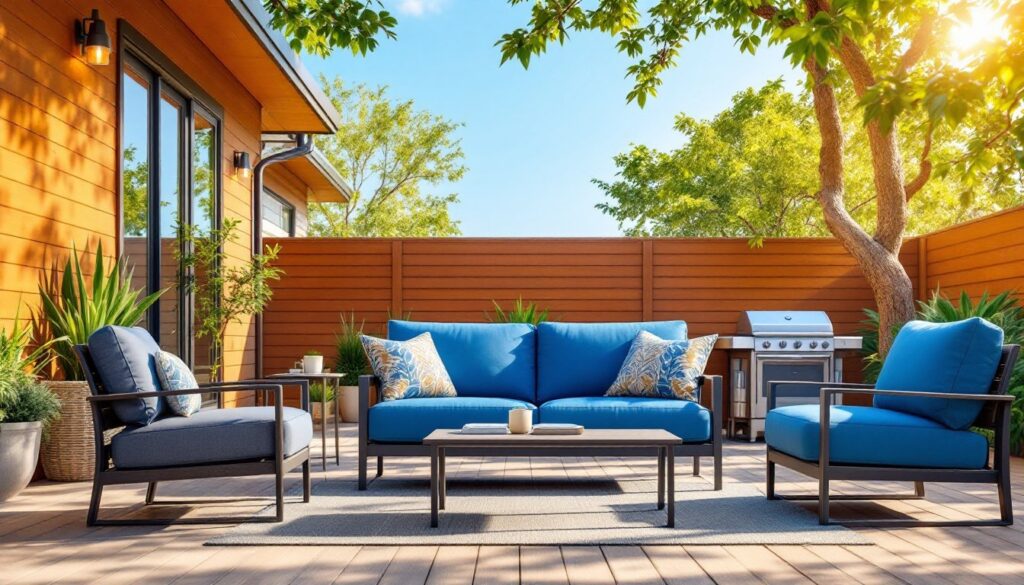
If clean lines and minimal ornamentation appeal to you, Castelle’s modern collections deliver. These pieces often feature slatted or mesh seats, geometric armrests, and finishes like bronze or graphite that complement contemporary home exteriors. The appeal here is straightforward: they look fresh, match mid-century or Scandinavian-influenced decor, and don’t clutter visual space.
Modern Castelle sofas and sectionals work particularly well on covered patios or in poolside settings where you want the furniture to read as an extension of indoor living. Cast aluminum patio furniture in contemporary styles tends to photograph well for Instagram-worthy outdoor spaces, but Castelle’s versions prioritize actual comfort and longevity over trend-chasing.
Classic and Traditional Options
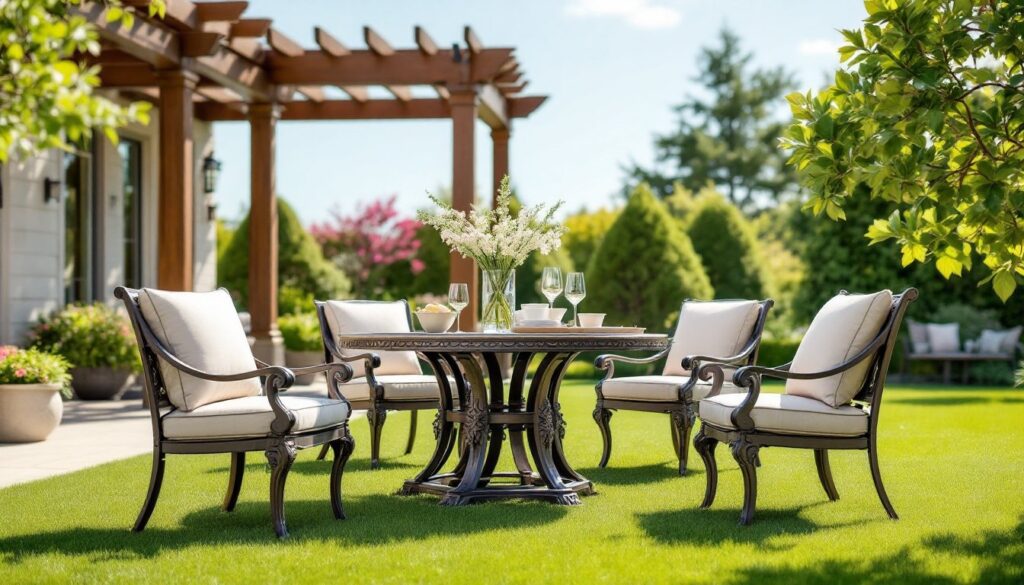
Castelle’s traditional lines honor classic outdoor furniture proportions: rolled arms, detailed leg work, and ornamental touches that echo garden furniture from decades past. These pieces suit cottages, colonial-era homes, and yards where heritage matters aesthetically. Finishes often lean toward antique bronze, black, or aged copper tones that weather beautifully over time.
Traditional Castelle collections integrate well into established landscapes. If you’re building around existing stonework, mature plantings, or period architecture, these designs feel purposeful rather than added-on. The downside is that ornamental pieces demand more frequent inspection, crevices can trap water, so you’ll need to stay on top of cleaning to prevent corrosion. That trade-off is worth it if the look matters to your overall outdoor vision.
Maintenance and Care Tips
Cast aluminum’s rust resistance is a real advantage, but it’s not a pass on maintenance. Regular cleaning extends the life of finish and keeps cushions from developing mildew.
Start with basic cleaning: every month or so, wipe down frames with a soft cloth and mild soapy water. Pay attention to crevices where dust settles, a soft brush works here without scratching the finish. Rinse thoroughly and let air dry. For stubborn grime, a pressure washer on low setting (below 1500 psi) won’t damage cast aluminum, but skip high-pressure streams that can force water into joint cavities.
Cushions need their own routine. Brush off debris, wash covers in cool water with mild detergent, and allow full air-drying before putting them back. If you’re in a humid climate or near salt water, store cushions indoors during off-season months, UV fading is one thing, but moisture trapped inside filling can lead to mold. Castelle cushion covers are typically solution-dyed or treated fabrics that resist mold better than standard cotton, but they’re not immune.
For deeper restoration, how to clean Castelle patio furniture involves removing old wax buildup and reapplying protective coatings. This isn’t required annually, but every 3–4 years in harsh climates or 5–6 years in mild ones is reasonable. Touch-up paint (clear coat or topcoat formulated for aluminum) is inexpensive and prevents small dings from becoming rust spots.
Budget Considerations and Value
Castelle patio furniture sits in the mid-to-premium range. A single dining chair runs $300–$600, four-person dining sets $1,500–$3,000, and larger sectionals or complete outdoor living suites $4,000–$8,000+. These aren’t impulse purchases, but they’re not ultra-luxury either.
The value proposition hinges on longevity. A $2,000 Castelle dining set will look and function like new after 5 years with basic care: a $600 resin set will likely show fading, loose joints, and cracked plastic by year three. Spread the cost over a decade, and Castelle’s annual price drops dramatically while durability increases.
Budget flexibility matters too. You can start with seating and a side table, then add a dining set or sectional later. Castelle pieces layer well because the design language is consistent across collections, mixing modern and traditional isn’t ideal, but grouping contemporary pieces together or building a traditional suite is straightforward. Southern Living style inspiration often showcases outdoor spaces with mixed-quality furniture: Castelle collections make it easy to upgrade incrementally without everything clashing.
Don’t skip the cushion budget. Quality outdoor cushions (Sunbrella or equivalent) add another $100–$300 per seat or major piece, but they’re removable and replaceable, a smart hedge against wear patterns or color trends.
Conclusion
Castelle patio furniture delivers durability, thoughtful design, and reasonable comfort at a price that reflects the quality built in. Whether you’re drawn to contemporary lines or classic ornament, there’s a collection that fits your aesthetic and space. The upfront investment pays dividends through years of reliable performance, minimal corrosion headaches, and outdoor entertaining spaces that still feel solid a decade down the road. Start with one or two key pieces, maintain them properly, and you’ll build a patio setup you’ll actually want to spend time in.