
Table of Contents
ToggleBuying bedroom furniture used to mean either dropping thousands at a showroom or spending your weekend deciphering flat-pack instructions. Today’s assembled bedroom furniture splits the difference, it arrives ready to use without the premium price tag or the assembly headache. Whether you’re furnishing a master bedroom, a guest room, or downsizing to a smaller space, pre-assembled options give you quality, design flexibility, and the peace of mind that everything’s built correctly from day one. This guide walks you through what makes assembled furniture worth considering, how to spot quality that’ll outlast trends, and how to choose pieces that actually fit your space and lifestyle.
Key Takeaways
- Assembled bedroom furniture eliminates assembly hassles and arrives ready to use, saving time and reducing error-prone DIY installation while maintaining quality standards through factory stress-testing.
- Quality assembled furniture is determined by solid wood frames, dovetail joints, ball-bearing drawer glides, and consistent finishes—details you can inspect before purchase to ensure durability beyond five years.
- Pre-assembled bedroom furniture trends for 2026 favor warm wood tones, rounded edges, and integrated storage solutions that work well in modern homes without dated styling.
- Space-saving assembled furniture solutions like platform beds with storage drawers, vertical dressers, and multifunctional nightstands maximize small bedrooms by providing dual functionality without compromising style.
- Assembled bedroom furniture offers cost savings compared to professional assembly services while providing warranty protection and easier inspection windows—making it an efficient choice for modern homeowners.
- Reputable assembled furniture manufacturers provide 1–5 year warranties and allow 30–60 day returns, so prioritize sellers offering transparent policies and domestic-made options with stricter quality controls.
Why Pre-Assembled Bedroom Furniture Works for Modern Homeowners
Pre-assembled furniture removes friction from the buying and setup process. You’re not wrestling with hardware packets at 11 p.m., troubleshooting misaligned panels, or discovering you’ve got leftover screws and no idea where they belong. That peace of mind alone is worth something, especially for anyone who’s had the pleasure of assembling a dresser with six drawers only to find it wobbles.
Beyond the convenience, assembled bedroom furniture works because it’s been stress-tested during manufacturing. Factory assembly catches defects, alignment issues, and structural weak points before anything reaches your home. If something’s wrong, you’re dealing with a return or replacement, not a weekend of disassembly and reassembly.
Key Benefits of Choosing Pre-Assembled Options
- Saves time and frustration: You unbox, place it, and use it. No instruction booklet decryption required.
- Reduces assembly errors: Professional assembly catches misalignments, overtightened fasteners, and missing components before shipment.
- Better quality control: Factory workers follow the same assembly process every time, reducing variability that plagues DIY assembly.
- Immediate functionality: Beds are ready for sleep, dressers ready for clothes, nightstands ready for lamps, no “I’ll finish this tomorrow.”
- Lower overall cost for quality pieces: You skip the labor cost of professional assembly without sacrificing the finished product quality.
- Easier to inspect before purchase: With floor models or detailed photos, you can assess construction quality, finish consistency, and joint tightness upfront.
For most homeowners, the calculus is simple: the time and mental energy saved outweighs the small premium over raw unassembled kits.
Finding Quality Assembled Bedroom Furniture That Lasts
Not all assembled furniture is created equal. The difference between a dresser that holds up for five years and one that lasts fifteen often comes down to details you can spot before buying.
Start by checking the frame construction. Solid wood frames (oak, maple, pine) are heavier and more durable than plywood or particleboard, especially for large pieces like bed frames and dresser bases. Look at how drawers are joined, dovetail joints or mortise-and-tenon connections are far stronger than butt joints held together with pocket screws alone. Run your hand along edges and joints: they should feel solid and aligned, not loose or hollow.
Drawer glides matter more than most people think. Ball-bearing full-extension glides (the kind that let you open a drawer all the way without tipping it forward) are standard on better assembled furniture. Cheaper pieces often have side-mounted plastic guides that bind and wear out quickly. If you can test a piece in a showroom, open drawers fully and notice whether they slide smoothly under their own weight when extended.
Finish quality, whether stain, paint, or veneer, should be consistent across all surfaces. Run your fingers along table tops and drawer fronts. Rough spots, orange-peel texture, or obvious drips signal rushed finishing. A quality finish feels smooth, looks uniform, and resists fingerprints reasonably well.
Essential Quality Markers to Look For
- Frame material: Solid hardwood or high-quality plywood, not particleboard for structural components.
- Joint construction: Dovetails, mortise-and-tenon, or reinforced butt joints rather than simple pocket screws.
- Hardware: Ball-bearing glides, solid metal handles or pulls, and rust-resistant fasteners.
- Finish consistency: Smooth, even stain or paint with no drips, sanding marks, or color variation between pieces.
- Weight and density: Heavier pieces generally indicate denser wood and better construction: a dresser should feel anchored, not tippy.
- Warranty coverage: Reputable manufacturers offer at least a 1-year structural warranty. Better brands extend to 3–5 years.
- Return and inspection windows: Buy from retailers that let you inspect delivered furniture before finalizing the purchase. Many sellers allow 30–60 day returns for damaged or defective items.
When buying assembled bedroom furniture, ask the seller about the manufacturing location and materials certification. Domestic manufacturers typically use stricter quality controls than overseas mass-market producers, though they cost more. Check customer reviews specifically for mentions of durability, finish quality, and assembly issues, real-world feedback beats marketing copy every time. Understanding Ashley Furniture Warranty terms can also help you gauge what the manufacturer stands behind, even if you’re buying a different brand.
Style and Design Trends for Bedroom Furniture in 2026
Bedroom furniture design in 2026 leans toward flexibility, warmth, and durability over trend-chasing. The days of “statement pieces” that’ll feel dated in two years are fading in favor of solid, adaptable designs that work with various decor styles.
Minimalist frames with clean lines remain dominant, but they’re softening. Rounded corners, curved legs, and softer edges are replacing sharp geometric forms. This shift makes rooms feel less sterile and more livable, important when you’re spending eight hours a night in the space.
Color palettes have shifted too. Warmer tones (honey oak, walnut, warm grays) are outselling cool white or black finishes. This isn’t just aesthetic: warm wood tones hide dust and minor scratches better than glossy finishes, which matters if you’ve got kids or pets.
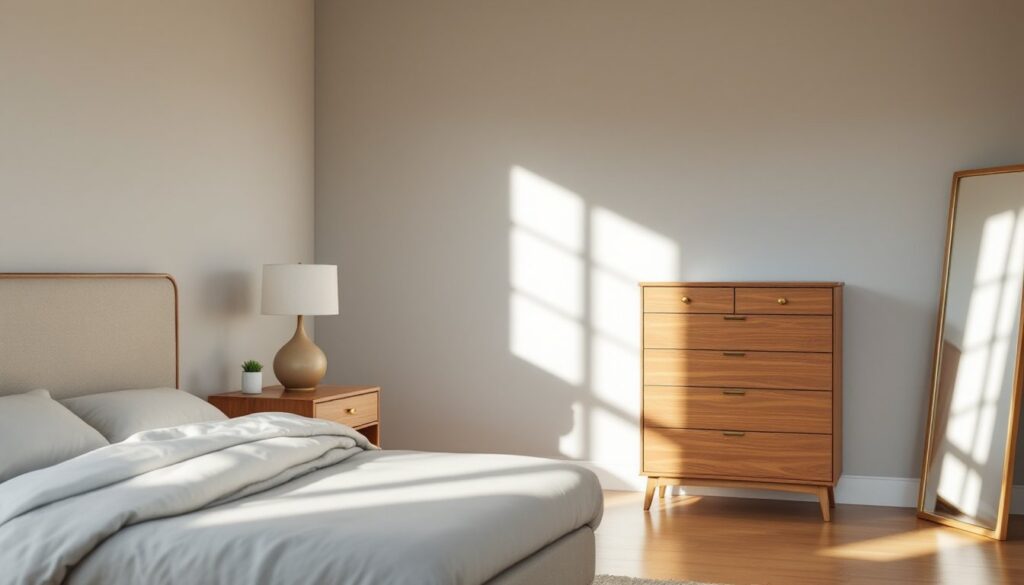
Material blending, combining wood with metal, upholstered headboards with solid wood frames, gives personality without overwhelming a small room. A walnut dresser with brass pulls and a linen-upholstered bed frame reads as thoughtful, not cluttered.
Storage integration is huge. Beds with drawers underneath, nightstands with shelving, and dressers with internal dividers are now standard on mid-range and better pieces. People want furniture that works harder, especially in smaller homes where every square inch counts.
Resources like The Handyman’s Daughter and Fix This Build That showcase how these design principles translate into custom builds, which can inspire your choices when selecting assembled pieces that fit your space and taste.
Space-Saving and Functional Furniture Solutions
Small bedrooms demand every piece pull double duty. Fortunately, assembled bedroom furniture makers have gotten smart about solving spatial constraints without compromising on form or durability.
Beds with built-in storage are foundational. Platform beds with storage drawers underneath add serious capacity without eating floor space. Drawers work better than shelving for bed bases because they keep bedding and seasonal items dust-free and organized. Look for beds with 4–6 deep drawers rather than shallow ones: depth matters when you’re trying to maximize what you can actually store.
Multi-function nightstands are another space-saver. A nightstand with a shelf, a drawer, and even a small cabinet can replace a separate dresser in a tight bedroom. Vertical nightstands (taller, narrower models) also feel less bulky than squat, wide designs in rooms with low ceilings.
Dressers with vertical orientation (taller than they are deep) take up less floor space than traditional wide designs while holding the same amount of clothing. A 5-drawer vertical dresser with a 30-inch-wide footprint beats a 6-drawer horizontal dresser at 48 inches wide.
For really constrained spaces, consider a bedroom storage system rather than separate pieces. Modern wall-mounted shelving, cubbies, and hanging rods can replace a bulky dresser entirely. These systems are often more affordable than assembled furniture and feel less “heavy” in a small room.
Maximizing Small Bedrooms With Smart Furniture Choices
- Bed placement: Float your bed away from the wall if the room is narrow: it feels more spacious than pushing it into a corner.
- Vertical storage: Use tall, slender pieces (bookcases, armoires, narrow dressers) instead of wide, low furniture.
- Open designs: Furniture with exposed legs (rather than skirting) creates visual lightness and makes cleaning easier.
- Mirrors and light: Pair compact furniture with strategic mirrors and good lighting to make the room feel bigger than it is.
- Multifunctional pieces: Ottoman beds, storage benches, and combination dresser–mirror units replace two pieces with one.
- Wall-mounted solutions: Floating shelves, hanging rods, and wall-mounted nightstands free up floor space.
- Less is more: Resist the urge to fill every inch. Negative space makes a small room feel intentional, not cramped.
Projects like those found on Ana White’s woodworking collection show how thoughtful design maximizes functionality in compact footprints. If you’re considering a custom or semi-custom piece to fit an awkward space, that mindset, prioritizing function and proportion over quantity, applies whether you’re buying assembled furniture or building it yourself.