Table of Contents
ToggleLiving in an apartment doesn’t mean sacrificing comfort or style. The key lies in choosing apartment size furniture, pieces specifically designed to fit compact layouts without overwhelming a room. Whether you’re furnishing a studio, a one-bedroom, or a cozy urban unit, the right furniture transforms tight quarters into functional, inviting spaces. Rather than forcing standard-size pieces into cramped quarters, smart apartment dwellers select scaled-down sofas, storage solutions, and multi-functional items that work with their floor plan instead of against it. This guide walks you through selecting, measuring, and arranging apartment size furniture that actually fits your life.
Key Takeaways
- Apartment size furniture is specifically scaled to compact layouts—typically sofas 72 to 78 inches long with shallower depths of 28 to 32 inches—preventing visual clutter and maximizing livable space.
- Accurate room measurements and a scaled floor plan are essential before purchasing; measure doorways, ceiling height, and fixed elements to ensure every piece actually fits your layout.
- Multi-functional pieces like storage ottomans, sofa beds, nesting tables, and storage benches serve double duty in small spaces, combining seating, sleeping, and storage functions.
- Vertical storage solutions such as tall bookshelves and wall-mounted shelving use the same floor footprint as shorter pieces while providing significantly more volume for apartments lacking closet space.
- A floating layout that pulls apartment size furniture 12 to 18 inches from walls with clear 24-inch pathways feels more open and creates better sightlines than pushing everything against walls.
Why Apartment Size Furniture Matters
A standard 7-foot sofa might look fine in a showroom but become a dominating eyesore in a 400-square-foot apartment. Apartment size furniture solves this problem by respecting the realities of compact living, scaled-down dimensions, efficient designs, and pieces that serve double duty.
When furniture is too large for a space, it creates visual clutter, blocks natural light, and makes movement awkward. A properly scaled loveseat or apartment sectional, by contrast, anchors a living area without consuming it. Small-space pieces are engineered with tight apartments in mind: shallower seat depths (around 28 to 32 inches instead of 36+), narrower arm widths, and higher legs that create sightlines through the room.
Beyond aesthetics, appropriately sized furniture improves function. Storage ottomans replace bulky dressers. Murphy beds or sofa beds handle dual duties. Nesting tables and slim consoles offer surface space without permanent footprint. This approach to furnishing an apartment means you’re not choosing between living and storing: you’re choosing pieces that do both. Websites like Apartment Therapy showcase countless examples of how the right scale transforms tight spaces into homes that feel open and livable.
Choosing the Right Dimensions for Your Space
Before you buy a single piece, you need accurate measurements. Too many apartment dwellers order a sectional online or spot a desk in a store, assume it’ll fit, and end up returning it, or worse, keeping a misfit piece they resent.
Measuring Your Room Before You Shop
Grab a metal tape measure, not a soft one, and measure from corner to corner at floor level. Note the room length and width, then measure the height of the ceiling. These three dimensions form your basic box. Next, identify fixed elements: doorways, windows, radiators, light switches, and closet openings. Mark their exact positions and dimensions on a simple floor plan sketch or use a tape measure app on your phone.
Measure doorway openings where furniture will pass through, the width of a sofa arm might not fit if your entry is narrow. Mark entryways at 32 inches wide on either side (a standard interior door frame). When evaluating a piece online or in-store, check depth first. Apartment sofas typically run 28 to 32 inches deep: sectionals stay under 36 inches. For dining, a 36-inch-wide table fits small apartments better than a 42-inch or 48-inch standard.
Create a to-scale floor plan on paper or using free tools like Floorplanner. Cut out scaled furniture shapes and test arrangements before committing. This 15-minute exercise saves headaches and returns. Measure twice, order once, and always confirm return policies before purchasing anything.
Essential Apartment Furniture Pieces That Work
Sofas and Seating Solutions
A sofa is often an apartment’s centerpiece, so choosing the right one matters enormously. An apartment-size sofa typically runs 72 to 78 inches long, compared to standard couches at 84 inches or larger. A loveseat (52 to 60 inches) offers another option if depth is limited. Look for sectionals with a chaise on one end rather than a full L-shape, which eats floor space.
Arm width matters more in small rooms than in large ones. Track arms (narrower, flush with the seat frame) save inches compared to rolled arms. Legs, whether tapered wood, metal, or wheels, create visual airiness by showing floor underneath. Avoid skirted (fully upholstered to the floor) styles: they visually anchor and can trap dust. A sleeper sofa or pullout bed adds guest capacity without needing a separate bedroom furniture layout, though these are typically shallower and firmer than true mattresses.
Coffee tables in apartments should be proportional: 30 to 36 inches long works for most small living areas. Round or oval tables feel less boxy than rectangles and allow easier traffic flow. Nesting tables let you expand surface area only when needed, then tuck away. Upholstered ottomans with storage (like a quilted box ottoman) handle seating, surface, and storage in one footprint. For modern living and design inspiration, consider low-profile furniture that doesn’t compete with ceiling height.
Storage and Multi-Functional Items
Apartments rarely offer closet space to spare, so furniture must fill the storage gap. Vertical storage works harder than horizontal. A tall bookshelf (72 to 84 inches) covers more volume than a short dresser while using the same floor footprint. Wall-mounted shelving above a desk or console saves floor real estate entirely. Choose storage pieces with doors or bins to conceal clutter, open shelving looks chaotic in tight spaces.
Storage beds (platform bases with drawers underneath) maximize the bedroom’s largest furniture piece. A 5-foot queen bed with drawers holds seasonal clothing, bedding, or linens that would otherwise need a separate cabinet. In living areas, media consoles with closed storage hide electronics, cords, and game controllers. End tables with shelves or baskets serve dual duty as nightstands and storage.
Multi-functional furniture is the apartment dweller’s secret weapon. A storage bench at the foot of the bed works for seating, foot rest, and blanket storage. A sofa with a chaise, removable cushions, or a fold-out bed adapts to entertaining, guest sleeping, or lounging. Wall-mounted drop-leaf tables open for dining, then fold flat when not in use. When moving into a smaller space, these hybrid pieces pay dividends every day. Consider a compact desk that’s also a dining table, or a console that becomes a vanity.
Layout Strategies for Small Spaces
How you arrange apartment size furniture matters as much as what you choose. A poor layout can make even well-scaled pieces feel cramped: a smart layout opens the room visually.
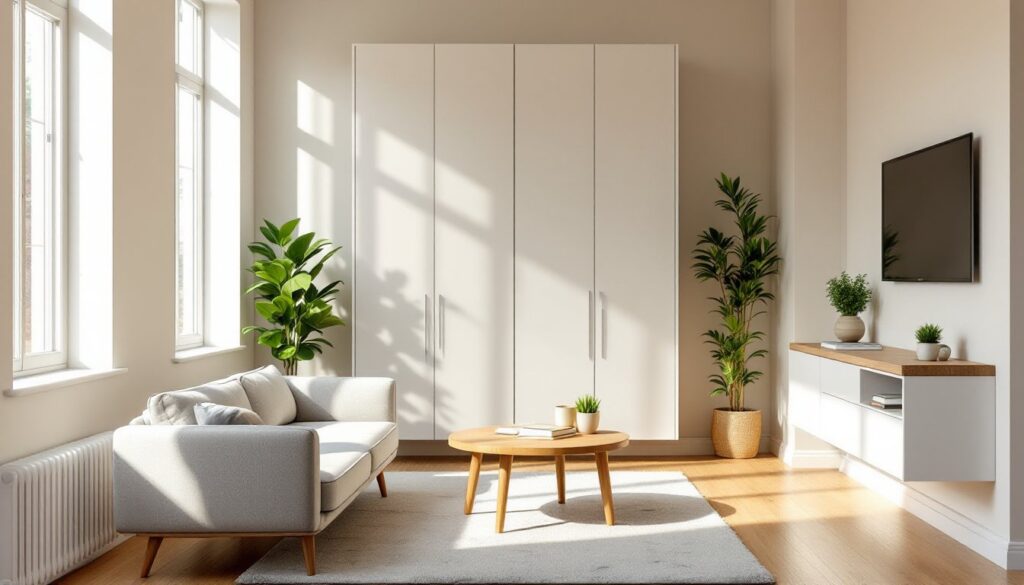
Start by anchoring the room with the largest piece, usually a sofa. Position it perpendicular to the main window or entry to maximize natural light paths. Avoid pushing all furniture against walls, which ironically makes small rooms feel smaller and blocks traffic flow. A floating layout, with a sofa pulled 12 to 18 inches from the wall and a small table behind it, creates defined zones and improves sightlines.
Maintain clear pathways, the main walkway through a room should be at least 24 inches wide. Tight corridors create a cramped, anxious feeling. Group seating pieces within 8 to 10 feet of each other for conversation: farther apart feels isolating in a small space.
Use vertical space aggressively. Stack shelves instead of spreading them horizontally. Mount the TV on the wall rather than using a floor stand. Hang curtains from ceiling to floor (even if the window is smaller) to draw the eye upward and expand perceived height.
Color and material choices amplify layout success. Light, neutral base furniture (ivory, gray, taupe) recedes, making rooms feel larger. Deep accent colors on pillows or art keep visual interest without overwhelming. Mirrors opposite windows bounce light around, a proven trick for brightening cramped apartments. Finally, avoid the “furniture showroom” look, one piece shouldn’t touch another unless it’s a sectional or built-in. Breathing room, even a few inches, changes everything.