
Table of Contents
ToggleWhen you’re shopping for bedroom furniture, the options feel endless, and most of it’s made overseas. But American-made bedroom furniture offers something that mass-produced imports can’t: built-to-last quality, transparent manufacturing, and local support. Whether you’re furnishing a master suite or a guest room, choosing domestically crafted pieces means understanding what goes into solid construction, where to find legitimate American makers, and why it matters. This guide walks you through everything a homeowner needs to know about selecting, identifying, and living with quality bedroom furniture made right here in the U.S.
Key Takeaways
- American-made bedroom furniture delivers superior durability and quality control compared to mass-produced imports, with direct access to manufacturer support and easier warranties.
- Solid wood construction with mortise-and-tenon joinery, dovetail drawer joints, and quality finishes are hallmarks of craftsmanship to inspect before purchasing bedroom furniture.
- Choosing American-made pieces supports local manufacturing jobs and regional economies while adhering to stricter environmental standards and sustainable sourcing practices.
- Verify authenticity by asking specific questions about production location, wood species, joinery methods, and requesting documentation—don’t assume Made in USA claims without verification.
- Quality American-made bedroom furniture costs more upfront but outlasts cheaper alternatives multiple times over, making it a smarter long-term investment despite higher initial pricing.
The Benefits Of Choosing American-Made Bedroom Furniture
American-made furniture delivers real advantages beyond patriotism. Domestically manufactured pieces typically use higher-quality materials, employ more rigorous quality control, and come with easier warranty support and returns. When a drawer slides off its rails or a joint cracks, you’re not fighting with a foreign customer service line, you can contact the maker directly or work with a local retailer.
Built-to-last construction also means fewer replacements over time. A solid wood dresser that costs $1,200 today might outlive three cheap alternatives purchased at half the price. That math favors American makers, especially when factoring in the environmental cost of shipping, replacement, and landfill waste.
Another benefit: transparency. You know where your money goes. American manufacturers typically pay livable wages, adhere to domestic labor standards, and often publish information about their sourcing and production methods. That accountability matters to homeowners who care about how things are made.
Supporting Local Manufacturing And Sustainability
Choosing American-made bedroom furniture directly supports local jobs and regional economies. Manufacturers in regions like North Carolina, Indiana, and California employ thousands of skilled workers, carpenters, finishers, engineers, and designers who’ve spent decades perfecting their craft.
Sustainability also ties in. American producers generally operate under stricter environmental regulations than overseas factories. Many use domestic hardwoods harvested sustainably, apply low-VOC finishes that don’t off-gas toxic fumes into your bedroom, and minimize transportation emissions by building close to where furniture gets sold. Some manufacturers even reclaim and recycle wood scraps, reducing waste. When you research eco-friendly mattress options, you’ll find American-made alternatives that pair well with domestically crafted bed frames and nightstands.
Key Materials And Construction Methods To Look For
Not all American-made bedroom furniture is created equal. The material and construction method determine durability, appearance, and long-term performance.
Solid wood is the gold standard. Look for hardwoods like cherry, walnut, maple, or oak rather than softwoods like pine or particleboard. Hardwoods are denser, more scratch-resistant, and age beautifully. Beds and dressers should use solid wood frames with mortise-and-tenon joinery (a woodworking joint where a protruding piece fits into a matching cavity) or dowel joinery, not just screws or nails. These connections are stronger and won’t loosen over time.
Plywood construction is legitimate for drawer boxes and panel backs, it’s stable and reliable, but the visible frame should be solid wood. Check underneath drawers: quality makers reinforce them with a center support rail or braces to prevent sagging.
Finishes matter too. Hardwood stain and polyurethane or water-based lacquer protect wood and look professional. Avoid cheap veneer over particleboard, which splinters and can’t be repaired. Real veneer over plywood is acceptable: it’s thin slices of quality wood glued to a plywood base, and skilled makers use it extensively.
Joinery details reveal craftsmanship. Dovetail joints (interlocking angled cuts) in drawers cost more labor but hold up for decades. Through-tenons, visible pegs, and mortise-and-tenon work show the maker isn’t hiding shortcuts.
When evaluating DIY furniture plans and woodworking tutorials, you’ll see how these techniques are applied by skilled builders. Compare them to mass-produced alternatives to understand why construction method affects price and longevity.
Identifying Quality Craftsmanship In Beds, Dressers, And Nightstands
Each piece of bedroom furniture has tell-tale signs of quality. Here’s what to inspect before buying.
Beds: Check the frame for solid construction, not flimsy rails. The headboard should sit flush against the wall or be intentionally designed for floating. Look at how the rails attach to posts, bolted connections are better than welded or glued alone. For wood frames, examine joints where headboard meets rails: they should be flush and solid. Bounce on the mattress: a quality foundation frame won’t creak or shift.
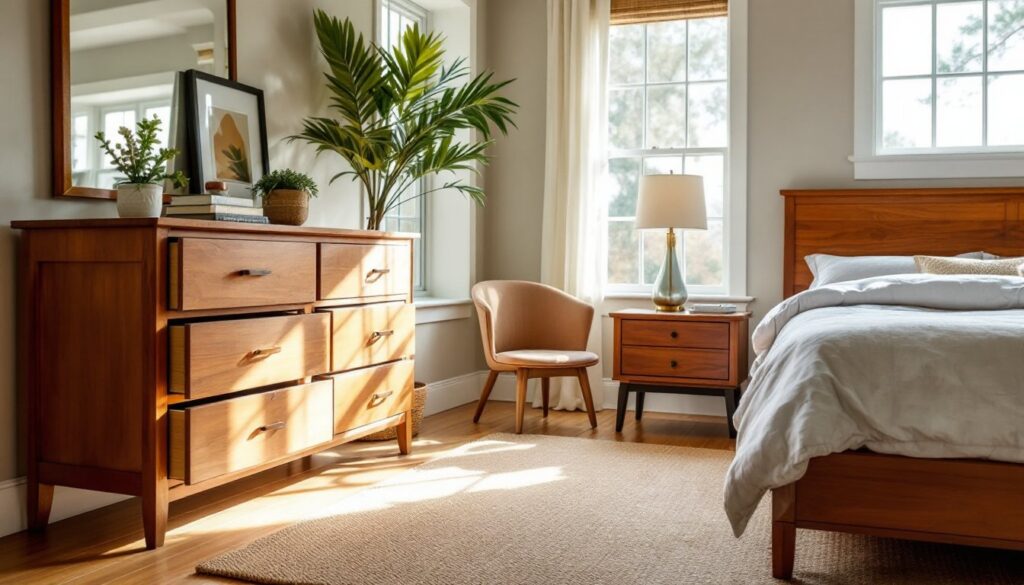
Dressers: Open every drawer. They should glide smoothly without binding or tilting. Feel the weight of the wood: quality pieces feel substantial. Check the back panel for solid wood or quality plywood, not just thin cardboard backing. Look underneath: reinforcement rails, corner blocks, and a solid base prevent racking (where the frame twists out of square). Hand-jointed drawers with dovetails are superior to stapled-together boxes.
Nightstands: Test the surfaces. Quality nightstands have rock-solid tops that don’t flex. Look at drawer slides, ball-bearing slides are smoother and more durable than cheap roller slides. Check if shelves are adjustable and well-supported.
Across all pieces, finishes should be smooth with no rough edges, drips, or inconsistent stain color. Run your hand across surfaces: a hand-rubbed finish feels silky, while cheap finishes feel sticky or rough. Ask about finish specifications: number of coats, sanding between coats, and protective topcoats all indicate quality.
Styles And Designs Available In The American Furniture Market
American makers produce everything from farmhouse and mid-century modern to contemporary minimalist and traditional styles. Unlike overseas factories locked into trending mass styles, many American furniture makers specialize in timeless designs that don’t become dated in five years.
Farmhouse and rustic styles lean on reclaimed or distressed wood, often sourced from old barns or salvaged lumber. These pieces work well in cottage or country settings and typically age gracefully as surfaces develop character.
Mid-century modern makes a strong showing from American makers, with clean lines, tapered legs, and minimal ornamentation. This style pairs well with contemporary homes and reads more expensive than it costs.
Transitional designs blend traditional craftsmanship with modern aesthetics, think classic wood construction with understated details and neutral finishes. These pieces fit most decor schemes and stay relevant for decades.
Custom and semi-custom options are where American makers shine. Rather than choosing from 12 colors in a catalog, you can often select wood species, stain finish, hardware, and dimensions. Some makers work directly with customers for one-off builds: others offer semi-custom lines through retailers. Interior design platforms like Homify showcase design inspiration that pairs well with custom American furniture, allowing you to visualize pieces in real rooms.
How To Shop For Authentic American-Made Bedroom Pieces
Finding legitimate American-made furniture requires knowing where to look and what questions to ask.
Direct from manufacturers: Many American makers sell online or operate showrooms. Brands like Ashley Furniture Warranty Claim processes can point you toward established producers. Buying direct often means better pricing and faster delivery since there’s no middleman markup.
Independent furniture retailers: Local or regional furniture stores often carry American-made lines exclusively. These retailers have relationships with makers and can answer detailed questions about construction, materials, and customization.
Verify “Made in USA” claims. Don’t assume: ask. Legitimate makers provide production location details and documentation. Some manufacturers operate facilities overseas and only do finishing in the U.S., that’s not fully American-made. Look for labels or certifications from organizations that verify domestic production.
Ask these questions before buying:
- Where is the frame built? (Specific state or region.)
- What wood species and grade are used?
- How are joints constructed?
- What finish is applied, and how many coats?
- Is the item in stock or made-to-order?
- What’s the warranty, and who backs it?
- Can you return it if it doesn’t fit your space?
Compare pricing carefully. American-made bedroom furniture costs more than particle-board imports, but compare apples to apples. A $2,000 dresser from a quality maker might cost $800 elsewhere, but that cheaper option might not last 10 years. Factor in replacement cost and satisfaction into your decision.
Read reviews, but cautiously. Online reviews tell you about shipping, customer service, and assembly, but not always about long-term durability. Look for multi-year reviews or ask retailers for references from customers who’ve owned pieces for 5+ years.
Conclusion
American-made bedroom furniture rewards thoughtful buying with durability, style, and the satisfaction of supporting skilled craftspeople. By understanding materials, construction methods, and where to shop, you’ll find pieces that fit your space, your values, and your budget. Start by inspecting local retailers, asking detailed questions, and comparing construction quality, not just price. Your bedroom deserves furniture built to last.