Table of Contents
ToggleA beach bedroom isn’t just for vacation homes anymore. Creating a coastal retreat in your master bedroom or guest room brings the relaxed feel of seaside living into your daily life, without requiring a move to the shore. Beach bedroom furniture emphasizes natural materials, light finishes, and an airy aesthetic that works beautifully in modern homes regardless of climate or location. Whether you’re drawn to the soothing blues of ocean waves or the warm tones of sun-bleached driftwood, beach-inspired furniture offers practical comfort paired with timeless style. This guide walks you through selecting, styling, and arranging furniture that captures the essence of coastal living while meeting the real-world needs of your bedroom.
Key Takeaways
- Beach bedroom furniture brings the relaxed feel of seaside living into your home through natural materials, light finishes, and an airy aesthetic that works beautifully in any climate or location.
- Coastal-style pieces using reclaimed wood, rattan, and woven seagrass are naturally durable and age gracefully while hiding dust and minor wear, making them practical for real-world bedrooms.
- A quality bed with a simple wooden platform or statement headboard serves as the anchor piece—measure headboards to extend 6 inches beyond the mattress on each side for visual balance.
- Nightstands should be 24–26 inches tall and paired with simple, open designs in whitewashed or natural wood tones, while dressers should be low and wide to reinforce the horizontal calm of coastal rooms.
- Layer textures with smooth linen sheets, chunky knit throws, and jute rugs; use warm-toned pendant lights instead of harsh overhead fixtures to shape mood and create a resort-quality atmosphere.
- Stick to a disciplined three-color palette (neutral base, secondary pale tone, and warm accent) and prioritize negative space—letting quality pieces carry visual weight rather than filling the room with accessories.
Why Beach Bedroom Furniture Works for Modern Homes
Beach bedroom furniture thrives in modern homes because it balances aesthetics with function. The coastal style emphasizes neutral color palettes, whites, creams, soft grays, and pale blues, that make rooms feel larger and more serene. These colors also serve as a backdrop for other décor elements, giving you flexibility to refresh the space without replacing furniture.
The materials used in beach furniture are naturally durable and age gracefully. Reclaimed wood, rattan, woven seagrass, and metal accents withstand moisture and humidity better than many furniture styles, making them practical for real-world bedrooms. Casual finishes hide dust and minor wear, which is realistic if you have kids or pets.
Beyond durability, beach-style furniture encourages a less-is-more mentality. Coastal design typically favors open space, minimal clutter, and functional pieces without ornamental excess. This approach reduces visual noise and promotes the relaxation that makes bedrooms restorative. Many homeowners find that beach furniture naturally supports better sleep hygiene and stress reduction compared to heavy, elaborate bedroom sets.
Essential Beach Bedroom Furniture Pieces
Beds and Headboards
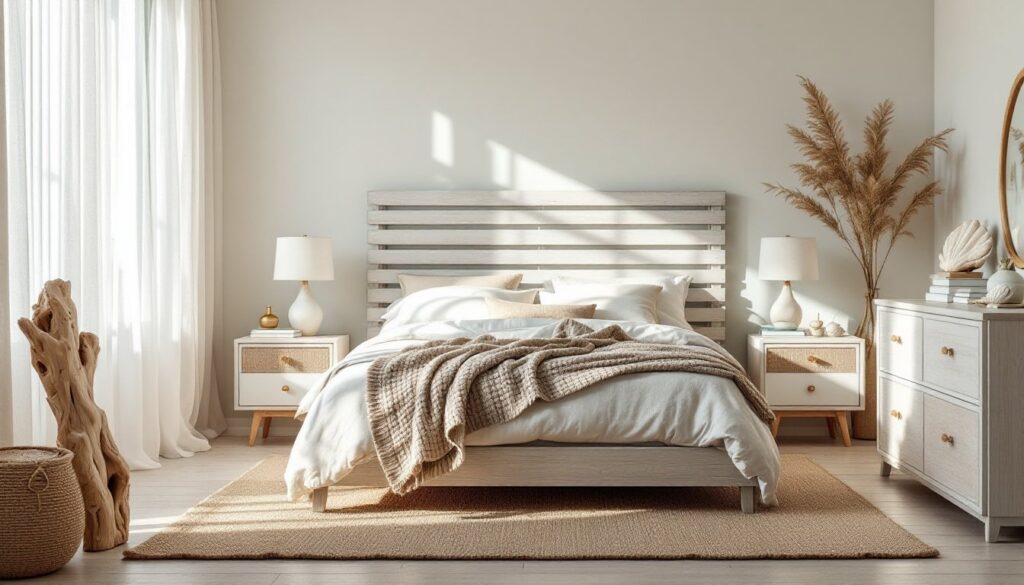
The bed is your bedroom’s anchor piece, and beach-style options range from simple to sculptural. A wooden platform bed with a natural or whitewashed finish pairs well with lightweight bedding in linen or cotton. Look for beds with exposed wooden slats rather than a box spring, this creates visual lightness and allows air circulation, keeping the room feeling fresh.
Headboards are where you can make a statement. Reclaimed wood slat headboards evoke a driftwood aesthetic and work with any bed frame. Upholstered headboards in natural linen or textured fabrics add softness, while woven seagrass or rattan panel headboards introduce organic texture without weight. Metal pipe headboards painted white or black offer an industrial-coastal hybrid if your taste leans modern.
Measure your bed’s width carefully, headboards should extend at least 6 inches beyond the mattress on each side to look intentional. Most standard queen beds run 60 inches wide, so a headboard around 70–80 inches wide provides visual balance. Wall height matters too: headboards anchored 6–12 inches above the mattress top feel proportional in rooms with standard 8-foot ceilings.
Nightstands and Dressers
Nightstands in beach bedrooms should prioritize simplicity and function. Open wooden nightstands with one shelf or drawer keep clutter contained while maintaining the airy feel. Rattan-front drawers add texture, and lighter wood tones (whitewashed, natural pine, or weathered gray) are beach-appropriate without being trendy.
Choose nightstands that align with your bed’s height, typically 24–26 inches tall so the surface sits level with the mattress top. This is practical for reaching bedside items without reaching down or up awkwardly. Pair with brass, rope-wrapped, or driftwood-finish handles that reflect your coastal aesthetic.
For dressers, scale matters. A low, wide dresser feels more spacious than a tall, narrow one and reinforces the horizontal line that makes coastal rooms feel calm. Solid wood dressers (pine, oak, or reclaimed lumber) work beautifully when finished in whites, soft grays, or natural tones. Rattan woven drawer fronts break up solid surfaces without overwhelming the space. Eight-drawer dressers typically range from 36–48 inches wide, so measure your wall and doorways before purchasing to avoid fitting issues.
Materials and Finishes for Coastal Style
Beach bedroom furniture succeeds or fails on material choice. Natural wood is foundational, pine, oak, and reclaimed hardwoods age beautifully and feel authentically coastal. Actual reclaimed barn wood carries a story, but quality new wood finished to look weathered is equally valid and often more affordable. Avoid high-gloss finishes: look for matte, satin, or hand-rubbed stains that suggest sun and salt.
Whitewashed finishes are staple in beach design. This technique involves applying white or light gray paint to wood grain, letting some natural color show through. It requires brushing paint into grooves and wiping before it dries, if you’re refinishing existing furniture, it’s doable with latex paint, a brush, and 30–45 minutes per piece. The effect softens wood tones while maintaining texture.
Rattan, woven seagrass, and wicker bring organic warmth to drawers, headboards, and accent furniture. These materials are lightweight, durable when protected from moisture, and instantly evoke coastal vibes. Pair them with wood or metal frames for structural support, loose woven panels alone won’t hold weight long-term.
Metal accents in brushed brass, oil-rubbed bronze, or aged iron complement beach palettes without fighting them. These finishes work on drawer pulls, bed frames, lamps, and shelving. Rope-wrapped handles or natural jute rope trim are budget-friendly alternatives that add nautical texture.
Fabrics matter too. Linen and cotton are the workhorses of beach bedrooms, they breathe, age gracefully, and wrinkle in a way that looks intentional. Avoid synthetic fabrics: they feel plastic compared to natural fibers. Upholstered pieces in oatmeal, cream, soft gray, or pale blue anchor the room without visual weight.
Styling Tips to Maximize Your Beach Bedroom
Once furniture is in place, styling elevates the bedroom from basic to resort-quality. Layering textures is key in beach design, combine smooth linen sheets with a chunky knit throw, add woven poufs, and layer a jute rug beneath the bed. Each element should feel touchable and natural, never plastic or overly decorative.
Lighting shapes mood dramatically. Swap harsh overhead fixtures for warm-toned pendant lights on either side of the headboard or a table lamp with a linen shade. Natural light matters equally, if your windows lack privacy, consider sheer white curtains that filter harsh sun while maintaining openness. Blackout liners can hang behind if you need dark mornings.
Color discipline matters in small spaces. Stick to a palette of three main colors: one neutral base (white, cream, or soft gray), one secondary (pale blue or sage), and one accent (warm wood tones or soft coral). This restraint keeps the room restful rather than chaotic. Coastal bedroom designs emphasize airy, light-filled spaces where color whispers rather than shouts.
Accessories tell the story without cluttering. One large piece of driftwood propped in a corner, a single piece of coral or shell arrangement on a dresser, and a few books stacked on a nightstand create personality without disorder. Window treatments, bedding, and wall color anchor the scheme: let those carry most of the visual weight.
Wall color sets the foundation. Whites and off-whites are safest, but soft blues (Benjamin Moore “Pale Oak” or Sherwin Williams “Sea Salt”), warm grays, or even a single accent wall in pale seafoam work beautifully. Most paint covers around 350 square feet per gallon at one coat: two coats are standard for bedroom walls. Test your color choice in morning and evening light before committing, coastal light changes throughout the day.
Another approach is looking at interior design tips from established coastal design resources to understand proportion and balance in completed rooms. This prevents the common mistake of buying individual pieces without considering how they work together spatially.
Conclusion
Building a beach bedroom comes down to choosing durable, light-finished furniture that reflects natural materials and an uncluttered aesthetic. Prioritize your bed and one or two quality pieces, a dresser or nightstand, rather than rushing to fill the room. Add textures, layer lighting, and let negative space do the work. A thoughtfully styled beach bedroom becomes a genuine retreat where you actually want to spend time, sleep well, and wake refreshed.