Table of Contents
ToggleYour patio should be an extension of your home, a place where you actually want to spend time, not just look at through a window. Lounge patio furniture sets the tone for outdoor living, whether you’re sipping morning coffee, hosting weekend gatherings, or unwinding after work. The right pieces transform bare concrete or grass into a functional retreat that suits your climate, space, and how you actually use the outdoors. This guide walks you through selecting, setting up, and maintaining lounge patio furniture that delivers comfort and durability year after year.
Key Takeaways
- Lounge patio furniture transforms outdoor spaces into functional retreats by selecting styles and materials that match your climate, space, and actual usage patterns.
- Choose weather-resistant materials like teak (premium, 20+ years lifespan), aluminum (lightweight and rust-proof), or synthetic wicker to ensure durability and minimize maintenance.
- Measure your patio carefully and match furniture to your space: small patios need intimate layouts, medium spaces work with sectionals, and larger areas can accommodate multiple lounging zones.
- Rotate cushions weekly during use, store them indoors during off-seasons, and clean all surfaces quarterly with mild soap and water to prevent deterioration and mildew.
- Set up lounge patio furniture on level surfaces with tight fasteners, use adjustable feet on uneven ground, and conduct annual inspections to address rust, splits, or loose components before they worsen.
- Budget between $300–$800 for entry-level sets, $800–$2,500 for mid-range options, or $2,500+ for premium pieces like designer teak lounge sets that deliver lasting comfort and value.
Understanding Lounge Patio Furniture: Styles and Materials
Popular Style Options for Outdoor Lounging
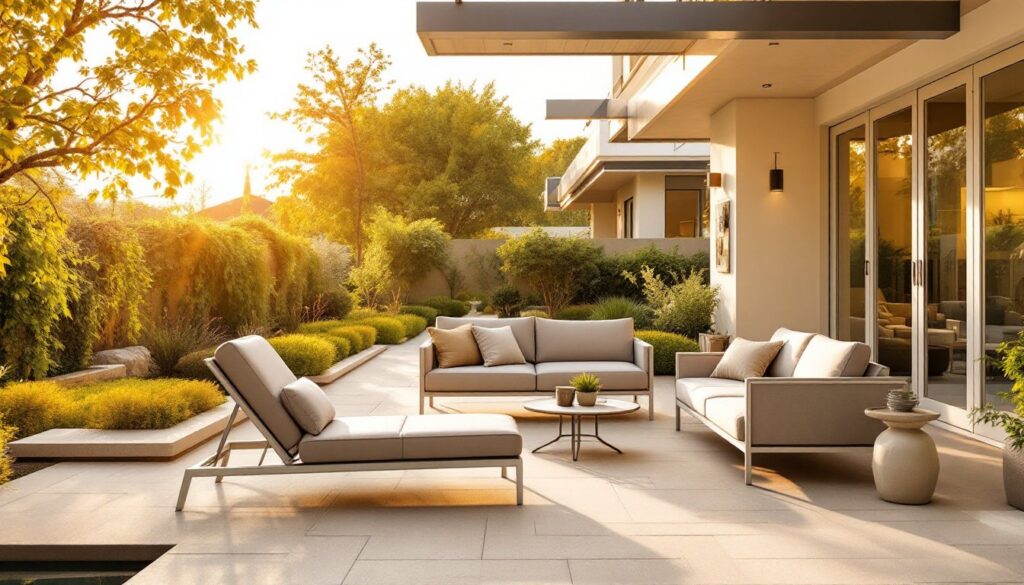
Lounge patio furniture comes in several distinct styles, each offering different aesthetics and functionality. Modern minimalist designs emphasize clean lines and low-profile seating, think sleek loungers with metal frames and weather-resistant cushions. This approach works well if you prefer uncluttered sightlines and contemporary décor.
Traditional and transitional styles blend classic comfort with updated finishes. These often feature cushioned chaise lounges, sectionals, or conversation sets in neutral tones that pair with most home exteriors. They’re forgiving with layout changes and work across design schemes.
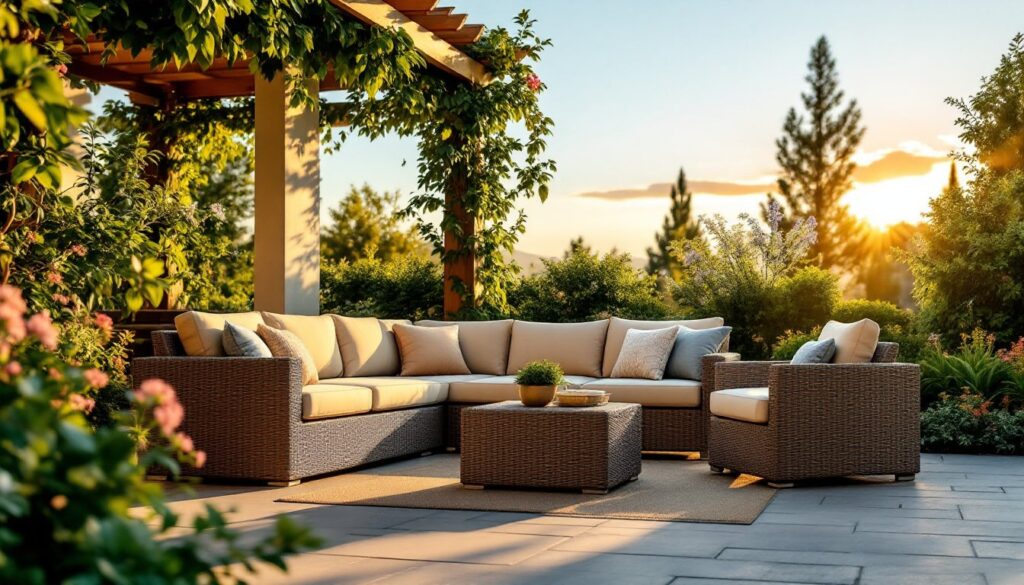
Mediterranean and coastal styles lean into relaxed, vacation-like vibes with woven textures, curved edges, and warm earth tones or weathered finishes. These suit poolside or beachside properties and pair well with potted plants and natural hardscape elements.
For small spaces or apartments, consider compact lounging options: ottomans with storage, small sectionals, or stackable chairs that tuck away when not in use. Discover the Ultimate Guide to explore one of the most versatile lounging pieces available.
Weather-Resistant Materials That Last
Material choice directly affects lifespan, maintenance, and comfort. Teak hardwood is the gold standard for outdoor furniture, naturally rot-resistant and beautiful as it ages to silver-gray. It requires minimal maintenance (occasional cleaning or yearly oiling) but carries a higher upfront cost. Teak sofas for outdoor living represent a premium investment that can last 20+ years.
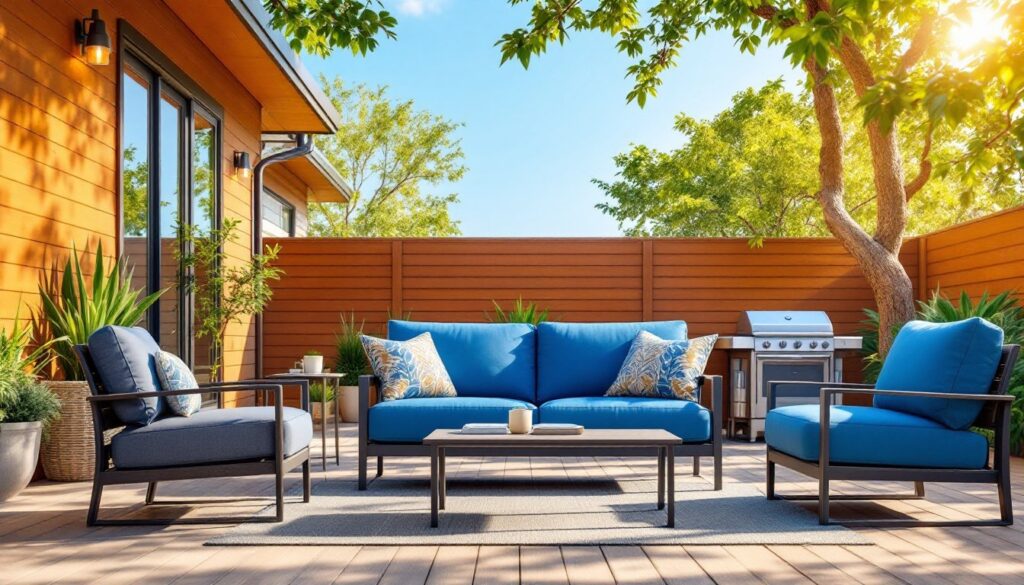
Aluminum frames are lightweight, rust-proof, and affordable. They pair well with cushions and won’t splinter or warp. Aluminum doesn’t weather dramatically, so it maintains its appearance with basic cleaning.
Wrought iron offers classic looks and solid construction but requires rust-prevention maintenance (paint touch-ups, sealers). It’s heavier than aluminum and demands a sturdy foundation.
Wicker and rattan (both natural and synthetic) create comfortable, textured lounging pieces. Synthetic wicker resists moisture and UV better than natural fibers. Ensure any wicker furniture is rated for outdoor use: indoor-grade wicker deteriorates quickly in sun and rain.
Cushion fabrics matter as much as the frame. Sunbrella and similar solution-dyed acrylic fabrics resist fading, mildew, and water absorption. They’re the industry standard for outdoor upholstery. Avoid standard indoor fabrics, they’ll mildew and break down within seasons.
Choosing the Right Pieces for Your Space
Assessing Your Patio Layout and Size
Before buying a single piece, measure your patio or deck carefully. Note dimensions wall-to-wall, including any roof overhang, steps, or architectural features. Account for traffic flow, you need clear pathways to doors and stairs, not furniture blocking exits.
Small patios (under 100 square feet) suit intimate layouts: a pair of loungers with a side table, or a single chaise plus seating. Don’t overcrowd: negative space makes small areas feel larger and safer to navigate.
Medium patios (100–300 square feet) can accommodate sectionals, lounge chairs with ottomans, and conversation groupings. Arrange furniture to face a focal point (fire pit, view, garden feature) rather than the house wall.
Larger patios have room for multiple zones: a lounging area away from the dining space, or clustered seating for different group sizes. This prevents the “floating furniture in a void” look.
Consider sun exposure and shade. Full-sun patios need durable, fade-resistant cushions and ideally a pergola or umbrella. Shaded areas under trees or roof overhangs are perfect for relaxation but may accumulate moisture, ensure furniture drains well and air-dries quickly.
Think about what you’ll actually do on the patio. Do you lounge solo during quiet mornings, host groups, or both? Single loungers with side tables work for solitude. Sectionals and groupings suit entertaining. Modular pieces offer flexibility as your needs change.
Ground surface matters too. Concrete or stone patios provide stable, level bases: grass or gravel may shift under heavy furniture legs, creating wobble and uneven legs. Use furniture pads or leveling feet on uneven surfaces to prevent tipping and protect finishes.
Budget realistically. Entry-level lounge sets (aluminum frames, basic cushions) run $300–$800. Mid-range pieces with better cushioning and finishes cost $800–$2,500. Premium teak, high-end wicker, or designer collections exceed $2,500. Regional availability, shipping, and seasonal sales all affect pricing. Interior design trends and regional preferences also influence what’s available locally versus what you’ll need to source online.
Setup, Maintenance, and Care Tips
Seasonal Storage and Protection
Proper setup and maintenance extend furniture lifespan dramatically. When you first receive lounge furniture, assemble it on a flat, level surface. Check that all fasteners are tight before use, vibration and settling loosen bolts over weeks, causing wobble or collapse. If legs don’t sit flush on your patio surface, invest in adjustable feet or shims rather than forcing the piece into place.
Cushions should be flipped or rotated weekly during active use to ensure even wear and prevent one side from compressing permanently. Store cushions indoors or in sealed bins when not in use for extended periods, even “outdoor” fabrics absorb moisture and develop mildew if left damp.
Seasonal storage depends on your climate. In mild regions with consistent weather, furniture can stay outside year-round with regular cleaning. In areas with freezing winters, heavy snow, or monsoon seasons, bring cushions indoors and consider covering frames with breathable furniture covers (avoid plastic, which traps moisture).
Before storage, clean all surfaces: use mild soap and water on teak and painted metal, gentle brushing on wicker, and fabric cleaner on cushions. Allow everything to dry completely before covering or storing. Damp furniture develops mold and mildew in closed storage.
For winter protection in harsh climates, move lounge pieces to a garage, shed, or covered porch if possible. If outdoor storage is your only option, elevate furniture on concrete blocks (not directly on wet ground) and wrap with breathable covers. Check periodically for moisture or pest damage.
Regular cleaning keeps furniture looking fresh and prevents dirt, algae, and salt buildup that accelerates deterioration. Quarterly cleaning is standard: more frequent cleaning (monthly) is wise near coastal areas or in humid climates. A soft-bristle brush, mild detergent, and a garden hose handle most outdoor furniture. For stubborn stains on fabric, refer to the manufacturer’s care instructions, harsh scrubbing can damage weaves and finishes.
Southern Living and Hunker offer regional perspectives on outdoor living, and design resources like Hunker provide maintenance schedules and troubleshooting guides tailored to different climates and furniture types. Consult these when tackling climate-specific challenges, coastal salt spray, desert UV intensity, or humid tropical conditions all demand slightly different care approaches.
Inspect furniture annually for rust, splits, loose cushion covers, or frame damage. Address small issues immediately: touch up paint scratches before rust sets in, re-stuff compressed cushions, or tighten fasteners. Preventive maintenance costs far less than replacement.