
Owning a pool is like having a slice of paradise right in your backyard, but without a proper maintenance schedule, that paradise can quickly turn into a swampy disaster. Imagine inviting friends over for a weekend swim only to find your pool resembles a science experiment gone wrong. Yikes! Keeping your pool sparkling clean doesn’t have to be a chore; it just takes a little planning and a dash of humor.
Importance Of A Pool Maintenance Schedule
A pool maintenance schedule safeguards the quality of water and equipment. Regular upkeep prevents algae growth and limits bacteria accumulation. Schedules support timely cleaning sessions, balancing chemical levels effectively.
Effective maintenance enhances safety by reducing risks of slips and falls. It promotes a pleasant swimming experience and encourages pool usage. Consistent schedules also extend the lifespan of pool features and systems.
Experience shows that following a structured timetable increases efficiency. Routine checks identify potential issues early, allowing for cost-effective repairs. Scheduling ensures professionals handle complex tasks, preventing owner overwhelm.
Regular maintenance preserves property value and market appeal. Homes with well-maintained pools attract potential buyers and command better prices. Keeping pools clean and functional reflects positively on the property owner’s commitment to care.
Overall, a defined pool maintenance schedule turns a daunting task into manageable routine. Prioritizing upkeep creates a welcoming atmosphere for family, friends, and guests. Adopting this proactive approach guarantees the pool remains a personal paradise.
Key Components Of A Pool Maintenance Schedule
A well-defined pool maintenance schedule enhances water quality and promotes a safe swimming environment. Key components ensure efficient upkeep and minimize potential problems.
Routine Cleaning Tasks
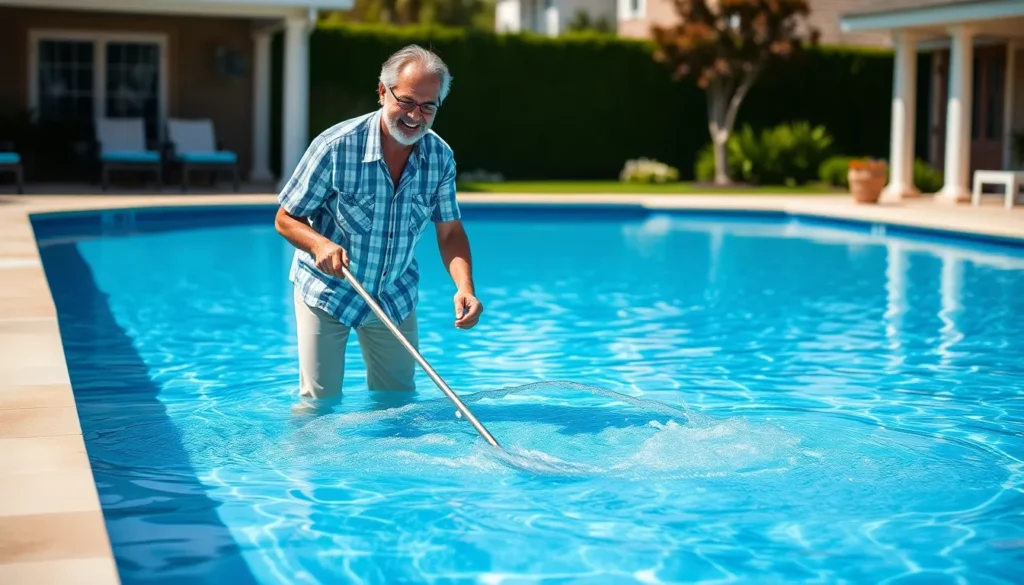
Daily skimming removes debris from the water surface. He empties skimmer baskets and checks the pump strainer to prevent clogs. Weekly vacuuming cleans the pool floor and walls effectively. She brushes the tiles and steps, removing dirt and algae. He controls the water level to maintain proper filtration. Monthly inspections for any leaks or damage help identify issues early. Regular maintenance translates to clearer water and a more enjoyable swimming experience.
Chemical Balancing
Testing water chemistry frequently ensures optimal balance. He evaluates chlorine levels, aiming for 1 to 3 parts per million (ppm). pH levels should stay between 7.2 and 7.8 for comfort and effectiveness. She adds algaecides weekly, especially during warm months, to prevent unwanted growth. Calcium hardness requires monitoring to maintain pool structure, with levels around 200 to 400 ppm. It’s crucial to adjust chemicals as necessary, fostering a safe environment for swimmers. Regular balancing contributes to the health and longevity of pool systems.
Seasonal Considerations For Pool Maintenance
Maintaining a pool requires awareness of seasonal changes that impact upkeep. Understanding these changes ensures proper care and a more enjoyable swimming experience.
Spring Start-Up
Spring marks the beginning of pool activity. Cleaning and inspecting equipment is essential as temperatures rise. Begin by removing covers, clearing debris, and checking for any damage from winter. Water chemistry testing becomes vital; adjust chlorine and pH levels accordingly. Filters and pumps should receive thorough cleaning to optimize performance. Preparing the pool for use involves balancing water and ensuring safety features function correctly. Implementing these tasks during spring contributes to a smooth transition into swimming season.
Winterization
Winterization protects the pool from cold weather damage. Begin this process before temperatures drop significantly. Draining water from the pool prevents freezing and potential pipe bursts. Thoroughly clean the pool surfaces to eliminate debris that can cause stains. Adding winterizing chemicals stabilizes water quality while preventing algae growth. Covering the pool securely shields it from environmental hazards. These steps facilitate easier spring start-up and preserve the pool’s longevity, ensuring an enjoyable experience each year.
Tools And Equipment For Effective Maintenance
Proper pool maintenance requires specific tools and equipment to streamline the process. Pool skimmers efficiently remove debris from the surface, keeping water clear. A reliable pool vacuum cleans the bottom, handling both dirt and algae. Maintaining brushes helps scrub walls and steps, preventing stains and build-up.
Testing kits play a pivotal role in monitoring water chemistry. They measure chlorine, pH, and alkalinity levels for precise adjustments. Pool chemicals, including chlorine tablets and algaecide, are essential for maintaining safe water. A floating chlorine dispenser simplifies the distribution of chlorine throughout the pool.
Water pumps ensure proper circulation, vital for water quality. Heaters maintain comfortable water temperatures, enhancing the swimming experience. Filtration systems clear contaminants, significantly improving clarity and hygiene.
When preparing for seasonal changes, pool covers protect the pool from leaves and debris during off-season. Winterizing kits assist in protecting equipment from freezing damage, ensuring longevity. Maintenance logs help track cleaning dates and chemical adjustments, fostering accountability.
By utilizing these tools and equipment, pool owners can maintain a clean, safe, and inviting swimming environment. Regular use of these items simplifies the maintenance routine, enhancing the overall pool experience.
Common Mistakes To Avoid
Ignoring water chemistry can lead to serious problems. Unbalanced pH levels or chlorine can create an unsafe swimming environment, affecting both comfort and health. Regular testing ensures optimal conditions.
Neglecting the pool’s physical cleaning can significantly impact its appearance. Failing to skim debris daily or vacuum weekly allows dirt to accumulate, which may cause clogs in the filtration system. Consistent cleaning maintains clarity and prevents algae growth.
Overlooking equipment maintenance can result in costly repairs. Pool pumps and heaters require regular inspections to ensure they operate efficiently. Scheduling routine checks prevents breakdowns and maintains system longevity.
Skipping seasonal preparations can lead to extensive damage. Not winterizing the pool properly can cause freezing and cracking during cold months. Cleaning, adding necessary chemicals, and securely covering the pool protects it from harsh weather conditions.
Delaying repairs often exacerbates issues. Addressing small leaks or cracks promptly prevents larger problems and costly repairs later. Being proactive with maintenance promotes a healthier pool environment.
Underestimating the power of a defined schedule hinders efficiency. A structured timetable facilitates timely tasks and avoids missed maintenance opportunities. Keeping a written schedule increases accountability and encourages consistent upkeep.
Prioritizing one aspect of maintenance over another can create imbalances. Chemical balancing, cleaning, and equipment maintenance all play critical roles in pool health. Ensuring each component receives attention leads to a well-rounded approach.
Establishing a pool maintenance schedule is key to enjoying a pristine swimming environment. By following a structured routine, pool owners can ensure water quality and equipment longevity while creating a safe space for family and friends. With the right tools and seasonal considerations in mind, maintaining a pool becomes a straightforward task rather than a daunting chore.
Prioritizing regular upkeep not only enhances the swimming experience but also preserves property value. A well-maintained pool remains an inviting oasis that adds charm and appeal to any home. By committing to a consistent maintenance plan, pool owners can truly enjoy their personal paradise for years to come.