

When it comes to pool maintenance, most people think of sunny days and cannonballs, but let’s face it—keeping that crystal-clear oasis in tip-top shape requires more than just a good floatie. Enter pool maintenance chemicals, the unsung heroes of backyard bliss. Without them, your dream pool could quickly turn into a swampy mess that even the frogs wouldn’t want to swim in.
Overview of Pool Maintenance Chemicals
Pool maintenance chemicals play a crucial role in ensuring water remains clean and safe. These chemicals address various aspects of pool upkeep, including sanitization, pH balance, and algae prevention.
Chlorine stands out as the most commonly used sanitizer. It effectively kills bacteria and other harmful organisms, keeping the water safe for swimmers. Typically, chlorine is available in liquid, tablet, or granular forms, allowing pool owners to choose based on their preferences.
Bromine serves as an alternative to chlorine, often preferred for indoor pools. It works effectively even at higher temperatures and has less odor than chlorine. Many find bromine gentler on the skin, making it a favorable choice for sensitive swimmers.
In balancing water chemistry, pH increasers and decreasers maintain optimal levels between 7.2 and 7.8. Maintaining pH helps prevent skin irritation and damage to pool surfaces. Alkalinity increasers stabilize pH levels, contributing to overall water balance.
Algaecides tackle algae growth, which can quickly turn a pool into an uninviting environment. Using algaecides proactively prevents outbreaks and reduces the amount of chlorine needed.
Water clarifiers improve overall water clarity. They achieve this by coagulating tiny particles, making filtration more efficient. Regular use ensures sparkling clear water, enhancing the swimming experience.
Shock treatments eliminate contaminants and restore chlorine levels after heavy pool use or rain. This quick and concentrated dose of chlorine can significantly improve water quality in a short time.
Understanding these chemicals simplifies pool maintenance and promotes a safe swimming environment. Regular testing and adjusting chemical levels leads to a consistently inviting pool.
Types of Pool Maintenance Chemicals
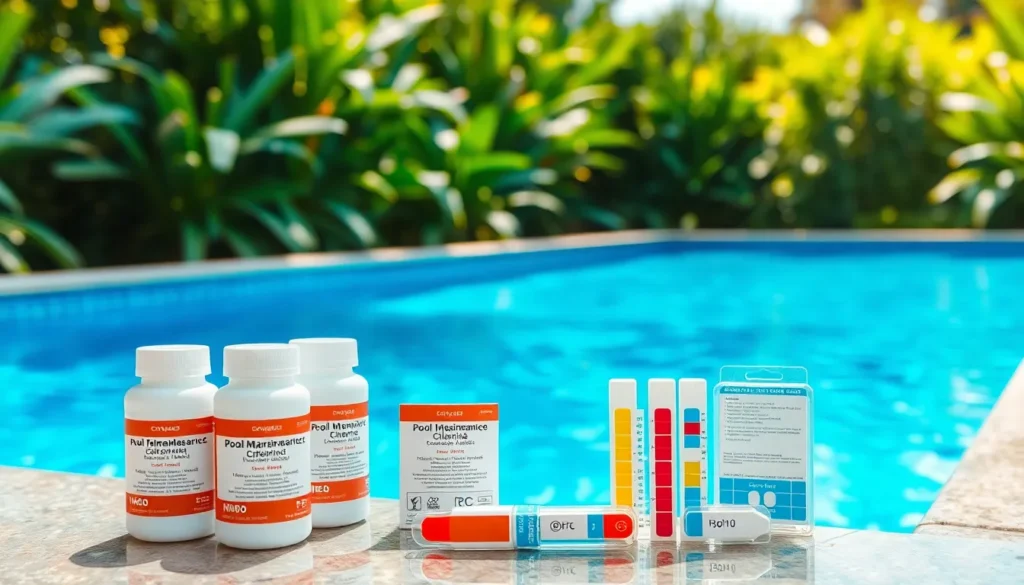
Maintaining pool water quality relies on a variety of essential chemicals. Each plays a critical role in ensuring a clean and safe swimming experience.
Sanitize Your Pool
Chlorine serves as the primary sanitizer in swimming pools. It effectively destroys bacteria, viruses, and other harmful microorganisms, promoting a healthy swimming environment. Bromine offers an alternative for indoor pools; it remains stable at higher temperatures and is gentler on the skin. Copper-based compounds may also assist in sanitization, particularly in minimizing algae growth. Regularly testing chlorine or bromine levels ensures they maintain effective concentrations, typically between 1 to 3 ppm.
Balance Your Pool Water
Balancing pool water involves managing the pH and alkalinity levels. Optimal pH, usually between 7.2 and 7.8, prevents skin irritation and enhances sanitizer effectiveness. Acidic conditions can cause corrosion, while alkaline conditions may lead to cloudiness. Alkalinity increasers stabilize pH levels and buffer sudden changes. Testing pool water weekly fosters consistent chemical balance. Using pH increasers or decreasers helps maintain proper water conditions and supports overall pool health.
Importance of Proper Chemical Use
Using pool maintenance chemicals correctly is crucial for achieving a safe, clean swimming environment. Proper chemical use prevents health risks for swimmers and reduces environmental harm.
Health and Safety Considerations
Health risks arise from improper use of pool chemicals. Chlorine exposure can irritate skin and eyes, resulting in discomfort for swimmers. Maintaining pH levels between 7.2 and 7.8 minimizes irritation and enhances sanitizer effectiveness. Regular testing keeps chlorine or bromine within safe concentrations, typically between 1 to 3 ppm. Recognizing the symptoms of chemical imbalance helps pool owners act quickly to protect users. Implementing shock treatments after heavy pool use ensures contaminants are eliminated, supporting a healthy swimming experience.
Environmental Impact
Environmentally, improper chemical use can harm local ecosystems. Excessive chlorine runoff often contaminates nearby water sources, affecting aquatic life. Using copper-based algaecides, while effective, requires careful application to prevent harmful accumulation in soil and water. Eco-friendly alternatives like natural enzymes or plant-based clarifiers offer less harmful options for pool maintenance. Reducing chemical overuse helps maintain biodiversity and protects water quality. Aquatic ecosystems thrive when pool owners prioritize responsible chemical management.
Tips for Effective Pool Maintenance
Regular testing ensures optimal chemical levels in the pool. Test strips or liquid kits should measure chlorine or bromine levels consistently, ideally maintaining between 1 to 3 ppm. Adjustments based on these readings improve water quality.
Balancing pH and alkalinity plays a critical role in maintaining a clear pool. pH levels between 7.2 and 7.8 prevent skin irritation while maximizing sanitizer effectiveness. Alkalinity increasers stabilize pH, making it easier to manage fluctuations.
Chlorine remains the primary sanitizer; however, bromine offers an effective alternative for indoor pools. Heavily chlorinated water can irritate eyes and skin, so switch to bromine for a gentler option.
Algaecides prevent algae growth, ensuring the pool remains inviting. Regular application helps stop algae before it becomes visible. Copper-based compounds also contribute to algae prevention with careful usage.
Shock treatments play a key role in eliminating contaminants. Utilize these treatments after heavy pool use or following rainfall. They restore chlorine levels quickly, refreshing the water.
Water clarifiers enhance clarity by improving filtration processes. Regular use aids in maintaining crystal-clear water. Proper chemical combinations can further amplify their effectiveness.
Educating oneself about chemicals promotes safer management. Understanding each chemical’s function helps in effective usage, minimizing health risks for swimmers. Seek eco-friendly alternatives when possible for sustainable practices.
Responsible chemical application protects the environment while ensuring swimmer safety. Excessive chlorine runoff can adversely affect local ecosystems. By prioritizing balanced chemical use, pool owners contribute to a healthier swimming environment.
Effective pool maintenance relies heavily on the proper use of chemicals. By understanding the roles of chlorine, bromine, and other essential compounds, pool owners can ensure a safe and enjoyable swimming experience. Regular testing and adjustments of pH and alkalinity levels are vital for maintaining water quality and preventing health risks.
Responsible chemical management not only protects swimmers but also safeguards the environment. By considering eco-friendly alternatives and minimizing chemical runoff, pool owners can contribute to a healthier ecosystem. Ultimately, a well-maintained pool reflects a commitment to safety and sustainability, making every swim a pleasure.