When summer rolls around, the last thing anyone wants is a pool that resembles a swamp more than a sparkling oasis. Keeping a pool pristine is easier than it sounds, but it does take a bit of know-how and a splash of dedication. With the right pool maintenance tips, anyone can transform their backyard into a refreshing retreat that’ll have friends and family diving in with glee.
From balancing chemicals to mastering the art of skimming, these tips will help keep the water clear and the fun flowing. So grab your floaties and sunscreen, because maintaining a pool doesn’t have to be a chore—it can be a splash-tastic adventure! Dive into these essential pool maintenance tips and make sure your summer stays cool, clean, and carefree.
Essential Pool Maintenance Tips
Regularly check chemical levels to maintain water quality. A balanced pool typically requires a pH level between 7.2 and 7.8. Use test strips or a liquid testing kit to measure these levels frequently, aiming for weekly tests during peak season.
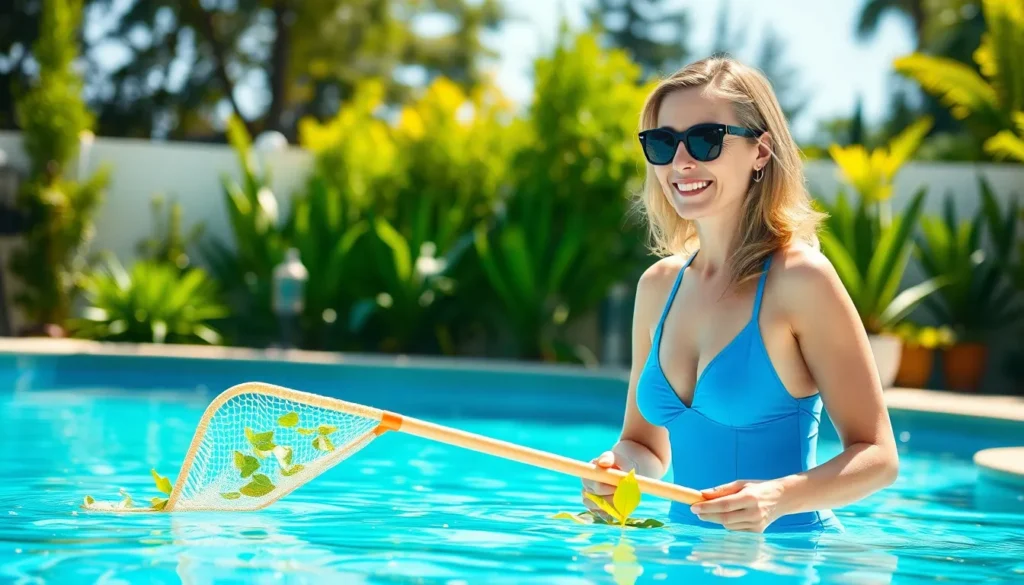
Skimming debris from the pool surface keeps the water clear and inviting. Utilize a skimmer net daily to remove leaves, bugs, and other floating debris. This simple task prevents unwanted buildup and aids in maintaining overall cleanliness.
Cleaning the pool walls and floors prevents algae growth. Use a pool brush to scrub these surfaces weekly. Vacuuming the pool once a week helps remove dirt and sediment that can accumulate.
Maintaining the filtration system is crucial for ensuring water circulation. Check filter pressure gauges weekly, backwashing or cleaning the filter when it exceeds the recommended level. This practice optimizes the filter’s efficiency.
Monitoring water levels prevents equipment damage. Keep pool water at the midpoint of the skimmer to ensure proper circulation. If water levels drop too low, add water immediately.
Schedule professional inspections and cleanings at least once a year. Experts identify potential issues that DIY methods might miss. Hiring a professional for a thorough cleaning ensures long-term pool health.
Winterizing the pool properly extends its lifespan. This involves draining equipment, covering the pool securely, and maintaining chemical balance. Preparing it for cold months can prevent freezing damage and reduce spring startup time.
Incorporating these essential tips makes keeping a pool clean and safe straightforward. Each task contributes to an overall enjoyable swimming experience for family and friends during summer.
Routine Maintenance Tasks

Regular pool maintenance includes several critical tasks that keep the water clean and inviting. Consistency in these activities ensures a safe swimming environment for everyone.
Skimming the Surface
Daily skimming removes floating debris, such as leaves and insects, before they sink and affect water quality. Using a skimmer net and moving it across the surface captures dirt effectively. This task prevents algae growth, which thrives in stagnant materials. Moreover, removing debris enhances the pool’s appearance, creating a more enjoyable swimming experience.
Brushing the Walls
Brushing the walls and tiles weekly helps eliminate algae buildup and grime. Utilizing a pool brush, he or she should scrub surfaces thoroughly, focusing on corners and stairs. This task not only keeps the pool looking clean but also protects the surface from damage over time. Regular brushing helps maintain the integrity of the pool’s finish, ensuring long-lasting beauty and functionality.
Vacuuming the Pool Floor
Vacuuming the pool floor once a week captures dirt and debris that settles at the bottom. Using a manual or automatic vacuum, he or she can tackle this task effectively. Accumulated dirt can cause water quality issues if left unattended, so thorough cleaning is essential. Consistent vacuuming ensures a sparkling pool ready for swimming at any moment.
Water Chemistry Management
Managing water chemistry is crucial for maintaining a safe and inviting pool. Proper water chemistry prevents unpleasant odors, skin irritations, and algae growth.
Testing Water pH Levels
Testing water pH levels should occur at least twice a week. Optimal pH falls between 7.2 to 7.8. A pH level below 7.2 leads to acidic water, which can erode pool surfaces and equipment. Alternatively, a pH above 7.8 may cause cloudy water and hinder chlorine effectiveness. Pool test kits often include pH strips or liquid reagents for accuracy. Regular testing ensures quick adjustments can maintain overall water quality.
Balancing Chlorine and Alkalinity
Balancing chlorine and alkalinity fosters a healthy swimming environment. Ideal chlorine levels range from 1 to 3 parts per million (ppm), effectively disinfecting the water. Regularly check chlorine levels and adjust as needed. Alkalinity should remain between 80 to 120 ppm, stabilizing pH levels and reducing fluctuations. Adding sodium bicarbonate can help raise alkalinity, while muriatic acid lowers it. Both adjustments contribute to a safer pool experience, ensuring optimal enjoyment for all swimmers.
Equipment Care and Maintenance
Maintaining pool equipment ensures longevity and efficiency. Regular attention to crucial components enhances overall pool performance.
Cleansing the Pool Filter
Cleaning the pool filter is vital for optimal circulation and water clarity. Different filters, such as cartridge or sand filters, require specific maintenance techniques. He or she should clean cartridge filters every 1 to 2 weeks for best results. Sand filters need backwashing when the pressure gauge rises by 8 to 10 psi above normal. Routine cleaning prevents debris accumulation and ensures efficient filtration. When filters remain clean, it reduces the workload on the pump. A well-maintained filter contributes to sparkling water and minimizes chemical usage.
Inspecting the Pool Pump
Pool pump inspection plays a key role in equipment maintenance. Regular checks for unusual noises, leaks, or vibrations can signal potential problems. It’s essential to ensure the pump’s motor runs smoothly. Disconnecting the power allows safe inspection of components. Visual inspections should occur monthly, focusing on electrical connections and hoses. He or she should also clean the pump strainer basket every 1 to 2 weeks. Keeping the pump in good condition enhances circulation and extends its lifespan. A properly functioning pump ensures efficient filtration and overall water quality.
Seasonal Pool Maintenance Tips
Seasonal maintenance ensures optimal pool performance and longevity. These tasks help keep water clean and safe, making the swimming experience enjoyable.
Preparing for Winter
Winter preparation is crucial for protecting the pool from cold damage. First, lower the water level to below the skimmer. Covering the pool with a solid winter cover helps keep debris out. Next, remove and store accessories like ladders and floats to prevent deterioration. There’s a need to add winterizing chemicals to prevent algae growth and balance the water chemistry. Finally, ensure all equipment is drained and stored properly, protecting it from frost damage.
Spring Start-Up Checklist
Spring marks the perfect time to prepare the pool for use. Begin by removing the winter cover and cleaning it thoroughly before storage. Check pool equipment, ensuring the pump and filter are in good working condition. Next, refill the pool to the appropriate water level and test the pH, alkalinity, and chlorine levels. Balance the chemicals as necessary to achieve safe swimming conditions. Weekly maintenance tasks such as skimming and vacuuming should start immediately, allowing for a clean and inviting pool for everyone.
Maintaining a pool doesn’t have to be a daunting task. With consistent effort and the right practices in place, anyone can transform pool upkeep into a rewarding experience. Regularly checking chemical levels and keeping the pool clean are essential for ensuring a safe and enjoyable swimming environment.
By embracing a routine that includes skimming brushing and vacuuming, pool owners can keep their water sparkling clear. Seasonal maintenance also plays a crucial role in extending the life of the pool and its equipment.
With these tips in mind, pool maintenance can become a simple and satisfying part of summer, providing a refreshing oasis for family and friends to enjoy.