A sparkling pool on a hot summer day is a dream come true, but a dirty filter can turn that paradise into a murky swamp faster than you can say “pool party.” Maintaining your pool filter isn’t just a chore; it’s your secret weapon against algae, debris, and that dreaded green monster lurking beneath the surface.
Understanding Pool Filters
Pool filters play a vital role in maintaining clear and inviting water. Proper knowledge about filter types and operations enhances pool care efficiency.
Types of Pool Filters
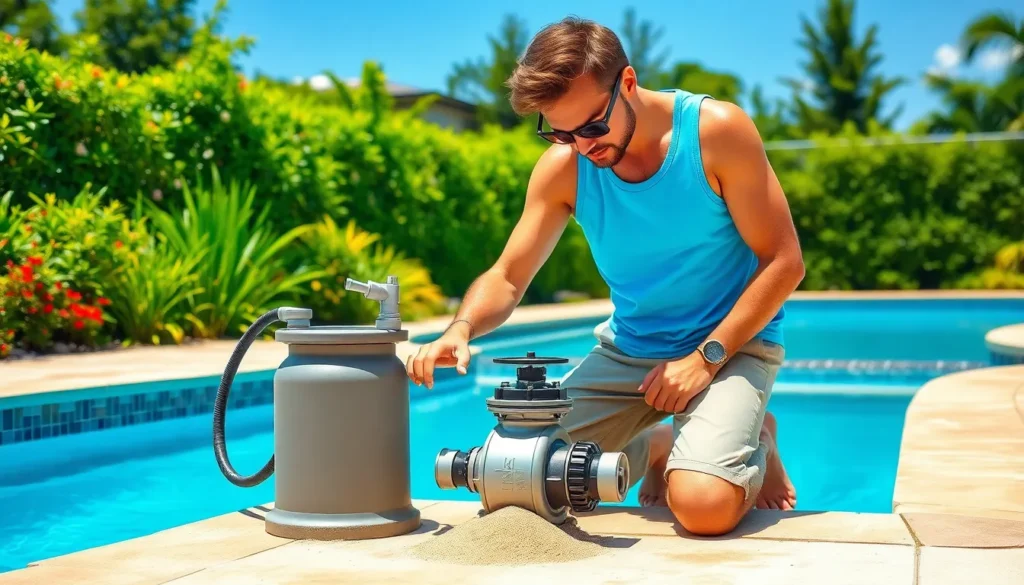
Different types of pool filters exist, each suited for specific needs. Sand filters use sand to trap debris and require backwashing for cleaning. Cartridge filters utilize replaceable cartridges and offer easy maintenance, as they don’t need backwashing. Diatomaceous earth (DE) filters offer fine filtration through fossilized remains of diatoms, making them effective at trapping tiny particles.
How Pool Filters Work
Pool filters function by circulating water through a filtration medium. Water skims from the pool’s surface and passes through the filter, which removes contaminants. Depending on the filter type, the cleaning process varies. Sand filters trap debris in the sand, while cartridge filters catch grime in the cartridge material. DE filters achieve fine filtration using DE powder. Regular maintenance of these filters ensures optimal performance and clear water.
Importance of Regular Maintenance
Regular maintenance of pool filters ensures a clean and enjoyable swimming environment. Consistently caring for filters directly impacts water clarity and overall pool health.
Benefits of Maintaining Your Pool Filter
Maintaining a pool filter offers several advantages. It promotes clear water that enhances the swimming experience. Clean filters prevent the growth of algae, contributing to a healthier pool ecosystem. Regular upkeep also prolongs the filter’s lifespan, saving on replacement costs. Additionally, efficient filters reduce energy consumption, leading to lower utility bills. Investing time in maintenance ultimately results in a more inviting pool.
Consequences of Neglect
Neglecting pool filter maintenance invites numerous issues. Dirty filters allow debris and contaminants to accumulate, resulting in cloudy water. Algae blooms may occur, posing health risks to swimmers. Over time, neglected filters can lead to costly repairs or replacements, burdening pool owners with unexpected expenses. Reduced water circulation affects chemical balance, making pool upkeep more challenging. Ignoring maintenance not only detracts from pool enjoyment but can also impact home value.
Pool Filter Maintenance Steps
Maintaining a pool filter involves several critical steps that ensure a clean and inviting swimming environment. Regular upkeep prevents issues like algae growth and cloudy water.
Cleaning the Filter
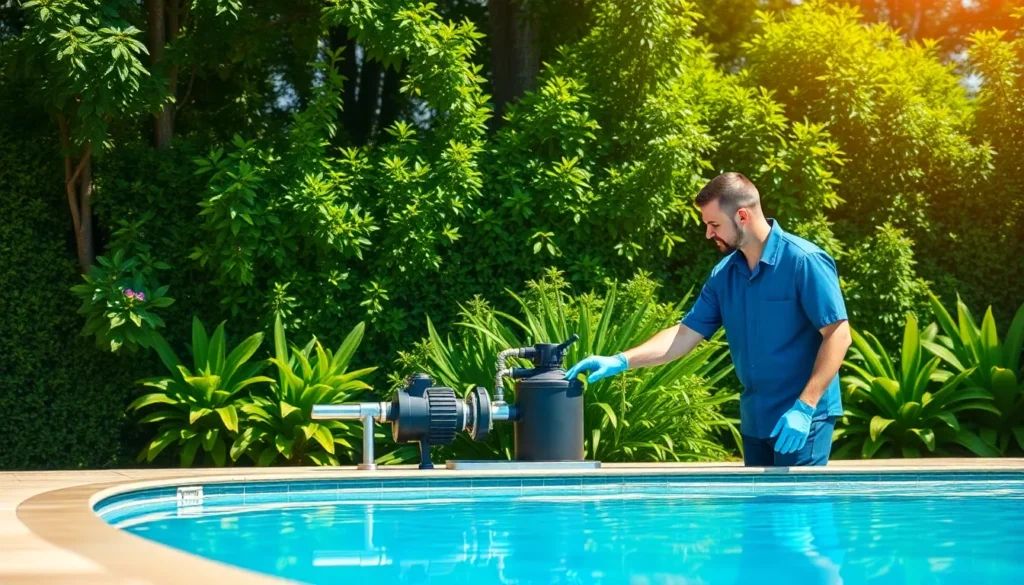
Cleaning the pool filter keeps it functioning efficiently. Begin by turning off the pump and releasing the pressure from the filter system. Remove the filter according to the manufacturer’s instructions. Rinse the filter with a hose to eliminate dirt and debris, ensuring all parts receive attention. For cartridge filters, soaking them in a solution of water and filter cleaner assists in removing stubborn buildup. After cleaning, allow the filter to dry completely before reinstalling it. This process enhances performance and prolongs the lifespan of the filter.
Checking and Replacing Filter Media
Checking and replacing filter media is essential for optimal filtration. Sand filters may require media replacement every 3-5 years, while cartridge filters typically need new cartridges annually. During maintenance checks, examine the condition of filter media for clogs and excessive wear. Diatomaceous earth (DE) filters need a replenishment of DE powder after cleaning. Using fresh media ensures improved filtration capabilities, maintaining clear pool water. Always follow guidelines specific to the filter type for effective results.
Troubleshooting Common Issues
Pool filters can encounter various issues that affect their performance. Identifying and addressing these problems promptly ensures optimal filtration and keeps the water sparkling clean.
Low Water Flow
Low water flow often indicates a clogged filter or a blockage in the plumbing system. Checking the filter’s pressure gauge is a good first step; a reading higher than the normal range suggests it’s time to clean or replace the filter. Inspecting the skimmer and pump baskets for debris can also resolve flow concerns. Cleaning the filter media ensures adequate water passage, while ensuring that the return lines are clear of obstructions promotes proper circulation. Regular maintenance can prevent low flow issues from becoming serious problems.
Unusual Noises
Unusual noises from the filter system may signal underlying problems. A humming or grinding noise typically stems from the pump, indicating potential motor issues or obstructions. Listening for rattling sounds may reveal loose parts or fittings that need tightening. Air bubbles can produce gurgling noises, often suggesting air is entering the system, which may occur due to poor sealing. Addressing these noises quickly helps maintain effective filtering and prevents further complications with pool equipment.